
EV uptake to cut Aussie emissions by 6%
New analysis by Beyond Zero Emissions shows that a shift over a 10-year period to electric vehicles (EVs) powered by 100% renewable energy will eliminate at least 6% of Australia’s greenhouse emissions.
Beyond Zero Emissions’ Zero Carbon Australia Electric Vehicles report says such a shift is not only realistic but affordable. It goes on to quantify the costs of replacing all cars in Australia with EVs within 10 years.
The report says that typical urban Australians drive around 35km a day, with almost half of trips taken being less than 5km. More than 99% of trips are less than 120km, within the range of a majority of EVs.
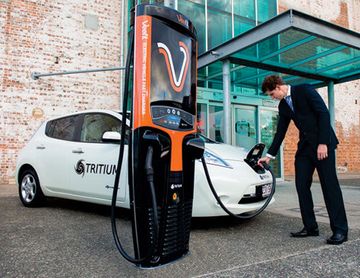
While the analysis envisions most Australians charging their EV at home, the modelling used incorporates publish charging infrastructure throughout Australia’s urban areas capable of charging up to 80% of an EV battery in 30 minutes.
 Applying conservative assumptions, the report states it would cost approximately 25% more than a business-as-usual scenario to transition to 100% EVs by 2025, equating to $20 more per capita per week.
Minister for energy Mark Bailey welcomes the launch of the report while noting that the Queensland
government has delivered on an election commitment by establishing an independent expert panel earlier in the year to investigate credible pathways to meet a 50% renewable energy target by 2030.
“The panel is made up of energy, environmental and business leaders and is on target to deliver their report by the end of the year,” Bailey says.
“We are also working with our state-owned energy businesses to deliver an electric vehicle super highway that will accommodate the installation of fast chargers from the Gold Coast to Cairns.
“With this infrastructure in place, people with EVs will be able to drive the length of Queensland confident that they can recharge at suitable points on their trip.”
The report also states that given the rapid decrease in costs associated with solar power, there are additional opportunities for charging EVs directly from rooftop solar panels.
“If managed carefully, co-locating generation (PV) with electric cars can limit negative cost impacts of either technology on the distribution grid,” the report states.
With regard to 100% electric bus transport for urban areas, the report states this would cost just 10% more than business as usual – $0.72 per capita per week. However, under the most optimistic scenario, the analysis finds that a shift to 100% electric buses in ten years could cost almost 30% less than business as usual.
Earlier this year, UQ started offering offer free EV recharging after installing four Tritium solar-powered EV chargers at its St Lucia and Gatton campuses.
The Queensland government recently awarded Brisbane’s Tritium $2.5 million to support development of its fast charging technology.


Join the conversation