
Tesla updating Autopilot feature
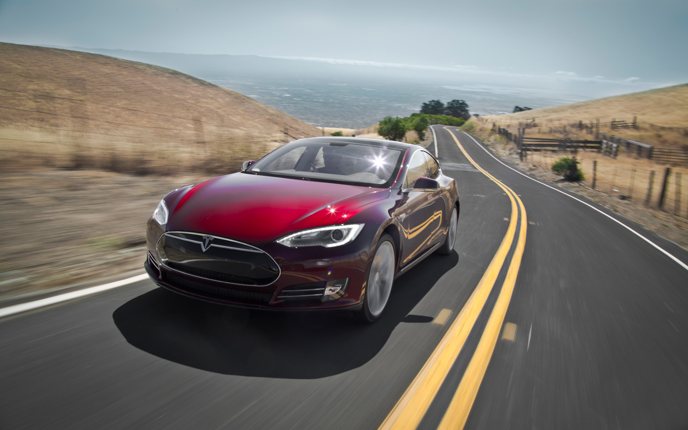
Tesla Motors chief executive Elon Musk said on Sunday the automaker was updating its semi-autonomous driving system Autopilot, which could potentially have prevented a fatality in May.
Musk said the update, which will be available within a week or two through an “over-the-air” software update, would rely foremost on radar to give Tesla’s cars a better sense of what is around them and when to brake.
New restrictions of Autopilot 8.0 are a nod to widespread concerns that the system lulled users into a false sense of security through its “hands-off” driving capability. The updated system now will temporarily prevent drivers from using the system if they do not respond to audible warnings to take back control of the car.
“We’re making much more effective use of radar,” Musk says. “It will be a dramatic improvement in the safety of the system done entirely through software.”
Tesla’s Autopilot, introduced in October, has been the focus of intense scrutiny since it was revealed in July that a Tesla Model S driver, Joshua Brown, was killed while using the technology in a May 7 collision with a truck in Florida.
Musk said it was “very likely” the improved Autopilot would have prevented the death of Brown, whose car sped into the trailer of a truck crossing a highway, but he cautioned that the update “doesn’t mean perfect safety.”
“Perfect safety is really an impossible goal,” Musk adds. “It’s about improving the probability of safety. There won’t ever be zero fatalities, there won’t ever be zero injuries.”
Radar and fleet learning on the horizon
One of the main challenges of using cameras and radars for a braking system is how to prevent so-called false positives, in which a car might think an overhead highway sign, for example, was an obstacle to be avoided.
“Using radar and fleet learning, rather than relying primarily on cameras, would solve that problem,” Musk notes. “Anything metallic or dense, the radar system we’re confident will be able to detect that and initiate a braking event.”
The revised system will sound warnings if drivers take their hands off the wheel for more than a minute at speeds above 72 kph when there is no vehicle ahead.
The warning will sound after the driver’s hands are off the wheel for more than three minutes when the Tesla is following another car at speeds above 45 mph. The dashboard also will flash a pulsing light.
If the driver ignores three audible warnings in an hour, the system will temporarily shut off until it is parked.
Musk said he had wanted to improve Autopilot’s capabilities last year but was told it was impossible to do so without incurring more “false positives,” such as a car braking suddenly for a harmless tin can.

Join the conversation