
Toyota sets sight on EVs as profits drop
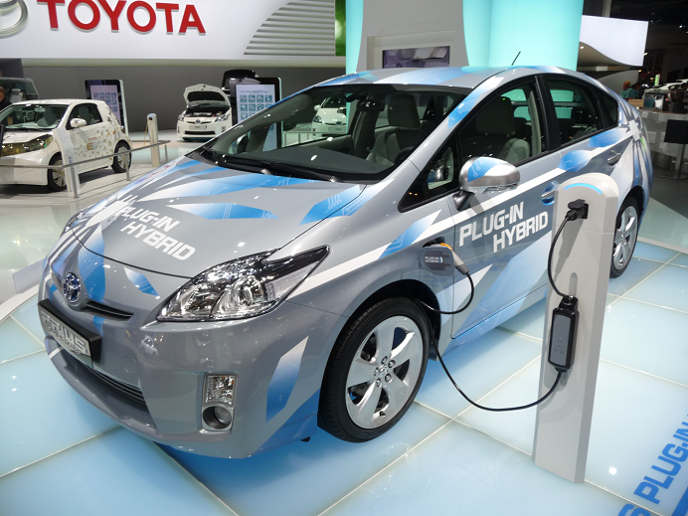
Toyota has given its strongest signal that it intends to pursue electric vehicles (EVs) after it revealed its hybrid cars have not sold as strongly as it was expecting.
Yesterday AutoTalk reported that Toyota had done an about face in moving to long range EVs in the future.
The move toward cars with north of 300km range is being interpreted as an implicit backing away by Toyota – or at least a hedging of its bet – on fuel cell technology.
By creating alternate technology long-range zero-emission vehicles, Toyota will be effectively competing with fuel cell cars like its Mirai and other fuel cell vehicles in the pipeline.
By the time these long-range EVs arrive in the next three to four years, their actual battery capacity and range could be competitive with others now being developed like the Chevy Bolt and Tesla Model 3.
 Toyota’s move thus also mirrors where several other carmakers are going technologically.
Previously the carmaker has said battery EVs were best for short-range commuting and that costs were too high while charging times too long.
News of Toyota’s technology shift came as its latest results, released on Tuesday, showed the company’s profits were eroded by a stronger yen and the shift by American car buyers toward trucks and sport-utility vehicles.
The company is turning to its regular playbook of trimming costs to bolster earnings, and it slightly boosted its profit forecast for the year ending March 2017.
Toyota’s strategy is getting buffeted by market trends in the US where sales of its eco-friendly flagship Prius hybrid are tanking as cheap gas encourages US consumers to reject gas-electric hybrids.
Meanwhile, eco-minded car buyers are lining up for battery-powered models like those from Tesla Motors.
“Though EVs have many issues such as range and the length of recharging time and battery performance, depending on the energy situation in each country and region, and infrastructure, we would like to get ourselves ready to commercialise them,” says Takahiko Ijichi, Toyota’s executive vice president.
Net profits on the way down
Net profit for the July-September quarter fell 36% to 393.7 billion yen (AUD$4.97 billion) from 611.7 billion yen a year earlier – Toyota’s second consecutive decline.
The company maintained its sales guidance but raised its net profit expectations to 1.55 trillion yen from 1.45 trillion yen as a result of cost-cutting plans.
The company still expects net profit to decline by a third in the current financial year, which ends in March 2017, after three years of record-breaking profits buoyed by a weak yen.
Toyota has previously said that it will develop EVs based on consumer demand and maintained that battery-powered cars lack mass market appeal because of their short range and long recharging time.
Toyota now believes that car buyers will show increasing demand for vehicles powered by hydrogen fuel cells, which it says have similar range and refuelling times to conventional vehicles.
But it has faced infrastructure challenges. Delays in construction of hydrogen refuelling stations in California are hampering sales of its Mirai hybrid in a market known for its green car sales.
Toyota says it plans to sell 30,000 fuel cell vehicles a year by 2020, in time for the Summer Olympics in Tokyo, which it hopes to use as a platform to demonstrate the prowess of the technology.
Its short-term plans are to improve fuel economy in conventional vehicles, and roll out a broader array of hybrids, including the coming Prius plug-in hybrid.
Join the conversation