
Driverless future on the horizon
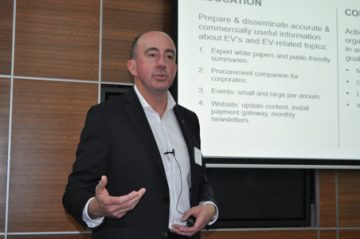
Dean Sheed
Vehicles that can drive themselves might seem like something straight out of a science fiction film.
But new research from Drive Electric shows autonomous vehicles will be a reality much sooner than many people think.
The not-for-profit group’s latest white paper The Road to a Driverless Future shows just how quickly the technology is progressing.
Many brands have developed cars that already feature Level 2 “partial automation” where steering and speed can be controlled by one or more driver assistance systems.
Drive Electric board member and Audi New Zealand general manager Dean Sheed says that technology is only set to improve in the next few years, with an eventual push towards full automation in the 2020s.
“Eventually, autonomous vehicles won’t have a steering wheel or pedals,” says Sheed, who contributed to the white paper.
And it is inevitable that autonomous vehicles will be fully electric.
“There’s no need for an autonomously driven car to be electric, but there’s a deep connection. From a manufacturer’s point of view, most of the R&D expenditure is going into electric drives and autonomous vehicles.
“These things will merge, and the cars that they’re designing today for market launch in three years’ time will likely be electric to some degree, and have elements of autonomous drive.”
Another key enabler will be the vehicle’s ability to communicate with each other and infrastructure and to take action based on that communication, he says.

Phil Carter
“We’re trying to progress as quickly as we can, but it’s fair to say we don’t have all the answers just yet.”Urban and transport planner Phil Carter, who works for consultancy firm ARUP, has worked with the idea of autonomous vehicles since 2011.
Carter says the technology has the potential to change the way people travel if it is used in the right way.
“It could create problems if there’s just one person in each vehicle. Congestion doesn’t get fixed that way.
“AVs could be used to complement existing public transport options, particularly if people are prepared to ride-share.”
The technology also has the potential to disrupt other parts of the transport sector, he says.
“Early adopters will include the commercial operators that move freight or people.
“Expectations are that car ownership will also go down. We will be renting or leasing cars instead.”
Go to driveelectric.org.nz for more information about the white paper.
Join the conversation