
Artificial intelligence world changing
Artificial intelligence (AI) is changing the world.
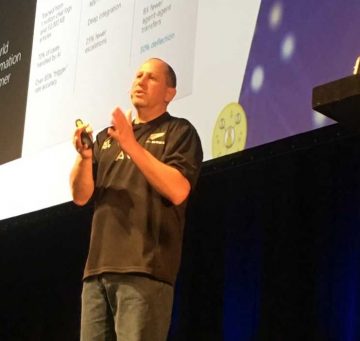
Experts told more than 500 people at the AI-Day event in Auckland on March 28 just how those changes are being made.
AI applies to all, from individuals to businesses and projects like autonomous vehicles.
It’s part of everyday life, and about to become more so.
Keynote speaker Steve Guggenheimer, Microsoft Corporate vice president AI business says; “We’re really at the beginning of the next phase”.
With growth in data continuing apace, AI can process it. Guggenheimer, known as “Guggs”, says by 2020 data worldwide will reach 44 zettabytes, or about six terabytes of data for every person.
In other words, huge amounts.
Storage will adapt, and people will be conversing more with robot assistants (like Siri, Cortana and other chatbots) – passed on to a human if they don’t get the response they want.
Guggs talks about the instant ability to translate languages, to connect with multiple devices, medical assistance via face recognition or other smart device (medication arriving by drone), helping businesses such as improving customer service and providing virtual meetings, and using “AI for Good” to improve the planet (eg, combat global warming).
Privacy, legal and other ethical matters around AI need more work, and Guggs referred attendees to a 146-page Microsoft book “The Future Computed” about how AI is expected to help people in all facets of life.
“In 2038, a driverless vehicle will take you to your first meeting while you finalise a presentation on the car’s digital hub,” the book says. “Cortana will summarise research and data pulled from newly published articles and reports, creating infographics with the new information for you to review and accept.” It says Cortana will automatically reply to routine emails, reroute others and request a due date.
The conference heard that AI will take care of the more mundane data and information, allowing humans to optimise their time.
“The next generation is growing up with new tool sets.”



Join the conversation