
New Zealand businesses preparing for EVs
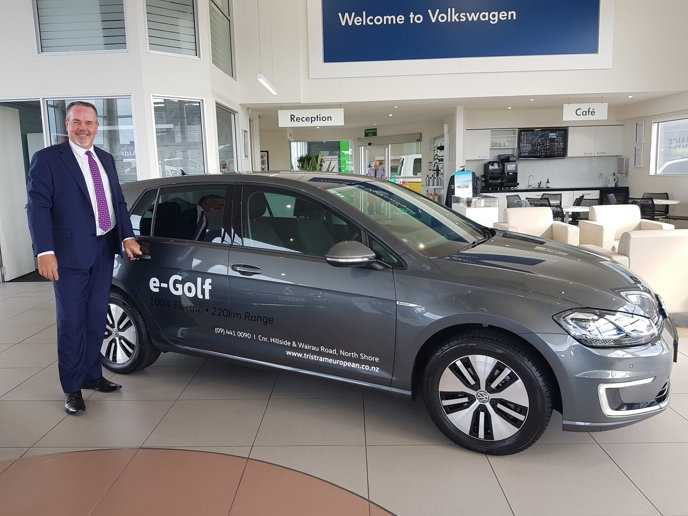
New Zealand businesses are increasingly embracing more sustainable transport options to get their employees from A to B.
Businesses are safeguarding their future by adding a small number of electric vehicles (EVs) to their fleets – preparing for when EVs could be the norm, says specialist vehicle leasing and finance company Driveline.
Its latest figures show 286% growth in the first quarter of this year, compared to the first quarter of 2017.

Lance Manins.
“We’re seeing genuine interest from small to medium New Zealand companies keen to embrace electric vehicles. They recognise the benefits EVs bring beyond reducing their carbon footprint and the associated marketing benefits,” Driveline chief executive officer Lance Manins says.
Other advantages for companies switching to EVs are no fuel costs, and health and environmental benefits. Maintenance is reduced – an EV has only 20 moving parts, on average, compared to about 2000 in an internal combustion engine (ICE).
The volume of enquiries for EVs at Driveline this quarter has already exceeded the number for the year to December 31, 2017.
Manins expects this trend to continue as companies research EV ownership, but he doesn’t expect a blanket uptake of EVs in Kiwi businesses without challenges.
“The reality is we’d need to see major changes from vehicle manufacturers to make the cost more attractive if we are to have more EVs on our roads.
“Until we see the mass production of EVs internationally which would lead directly to a significant pricing shift, then I think the current targets for EV sales will be a struggle to achieve. “
Fuel price increases could bolster EV sales, but Manins says no major rises are foreseen.
Recent power cuts in Auckland also highlight some potential problems around EV charging, he says.
Manins predicts more companies will add WorkSafe-compliant intelligent EV charging infrastructure to the workplace. This will enable staff to charge up during the day, helping to solve the problem around charging logistics on vehicles that typically need a recharge at around 200km.
In 2016, 30 of New Zealand’s leading corporates committed to filling at least 30% of their fleets with EVs by 2019. Manins thinks this shift will take longer to filter down to smaller and privately-owned companies.
“For SMEs to feasibly add EVs to their fleets they may have to look at second-hand vehicles released into the market at around three years or 75,000km after the corporate’s replacement policy expires.”
There’s more choice when it comes to choosing a suitable EV too.
Manins says Government plans to introduce a Zero Carbon Bill later this year and its national target of 64,000 electric vehicles by 2021 could be a step towards following countries which have committed to a future ban on ICE vehicle sales.
Join the conversation