
Electric buses shocking the oil industry
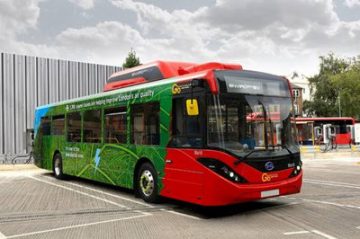
Seven years ago, BYD’s electric bus model shown at a conference was scoffed at.
No-one’s laughing now, least of all the oil industry which could see electric buses this year avoid the need for about 279,000 barrels a day of fuel.
For every 1000 battery-powered buses on the road, about 500 barrels a day of diesel fuel will be displaced from the market.
And China is adding a London-sized electric bus fleet every five weeks, Bloomberg reports.
China had about 99% of the 385,000 electric buses on the roads worldwide in 2017, accounting for 17% of the country’s entire fleet. Every five weeks, Chinese cities add 9500 more—the equivalent of London’s entire working fleet, according Bloomberg New Energy Finance.
Conventional buses consume 30 times more fuel than average sized cars, so their impact on energy use has become marked.
BNEF calculates that for every 1000 battery-powered buses on the road, about 500 barrels a day of diesel fuel will be displaced from the market.
This year, the volume of fuel buses take off the market may rise 37% to 279,000 barrels a day, about as much oil as Greece consumes, BNEF says.
“This segment is approaching the tipping point,” Bloomberg LP London research unit advanced transport head Colin Mckerracher says. “City governments all over the world are being taken to task over poor urban air quality. This pressure isn’t going away, and electric bus sales are positioned to benefit.”
Paris, London, Mexico City and Los Angeles are among 13 authorities that have committed to only buying zero emissions transport by 2025.
London is transforming its fleet to ensure all buses are emission-free by 2037.
Across the UK there were 344 electric and plug-in hybrid buses in 2017.
BYD has partnered with a Scottish bus-maker to provide the batteries for 11 new electric buses that hit the city’s roads in March.
Falkirk-based manufacturer Alexander Dennis began making electric buses in 2016 and has quickly become the European market leader with more than 170 vehicles operating in the UK alone.
It’s also helping with electric buses in New Zealand.
Join the conversation