
Shell opens first Canadian hydrogen bowser
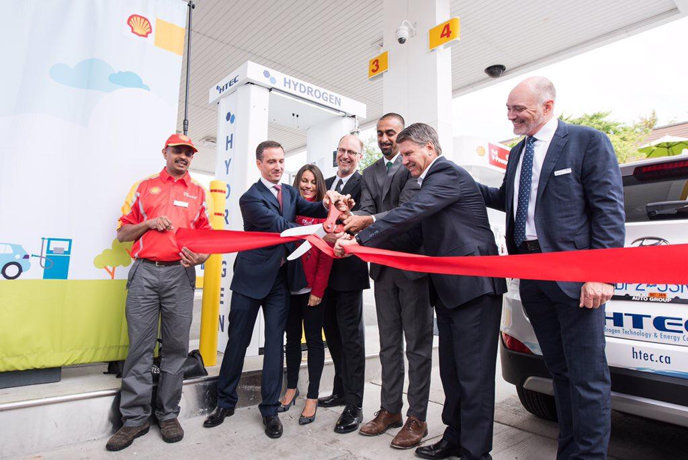
Shell Canada has opened the country’s first retail hydrogen fuel station in Vancouver, British Columbia.
General manager of Shell Hydrogen, Oliver Bishop says it’s the first of its kind in the country and is the result of joint stakeholder involvement.
“Huge thanks to the provincial and federal government of BC and Canada respectively, to LGM Finance and to HTEC’s Colin Armstrong as well as leaders from Toyota, Honda and Hyundai,” Bishop says on LinkedIn.

“It’s also Canada’s first hydrogen station integrated in a publicly accessible retail forecourt,” he adds.
Colin Armstrong is the president of Hydrogen Technology and Energy Group (HTEC) which built the infrastructure and plans to do the same with another five stations in a network in Vancouver on Canada’s west coast.
The hydrogen refueller has opened exactly 111 years after the city’s first petrol station.
“Back then, even with only a few cars on the road, demand for gasoline was increasing and it made sense to build a fuelling station to support a growing network of automobiles,” Armstrong says.
“The same is true today: infrastructure must be in place to support FCEV (fuel cell electric vehicle) rollouts, and HTEC is proud to be working with our partners to build the first wave of hydrogen refuelling stations in Canada, starting here in BC.”
British Columbia’s minister of energy, mines and petroleum resources, Michelle Mungall, says it’s a gain for a growing, low-carbon energy industry.
“This is another milestone that will help us reach our climate goals,” she says.
“We are already well-positioned to be a major player in the worldwide low-carbon economy, and we’ve been pleased to provide support to HTEC and Shell for opening Canada’s first retail hydrogen refueling station.”
Toyota has secured a fleet procurement with the east-coast Quebec government for 50 Mirai fuel cell sedans, with a range of 483km per tank. It has also previously announced plans for a dedicated fuel cell production facility to be built by 2020.
JW Energy has confirmed the HTEC hydrogen supply is currently produced using highly energy-intensive steam methane reforming (SMR) which uses super-heated methane gas to produce carbon monoxide and hydrogen.
HTEC says it will move to electrolysis-made hydrogen connected to BC Hydro power generation.
According to HTEC, the discarded amounts of bi-product hydrogen in North America could fuel one million fuel cell vehicles.

Join the conversation