
Nissan Leaf 30kWh checks continue
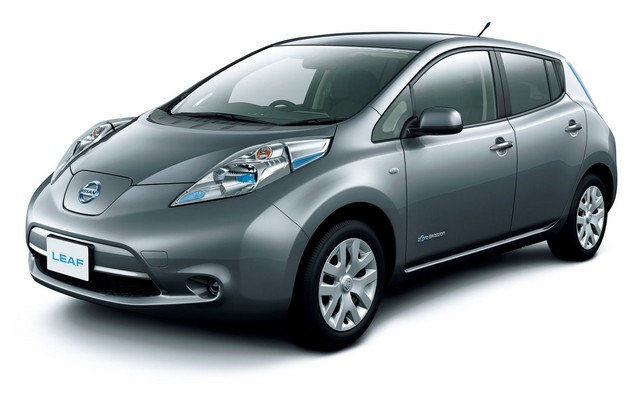
Flip the Fleet and electrical engineer Walter Larason of EVs Enhanced have responded to EVtalk’s
story about a software upgrade being issued for the Nissan Leaf 30kWh.
Nissan says the update will “fix the 2016 and 2017 Nissan Leaf 30kWh battery controller’s inaccurate calculations of state of health (SoH) and range”.
But Henrik Moller of Flip the Fleet says “there is as yet insufficient information available to form any reliable scientific conclusion about whether Nissan’s instrumentation error is a sufficient explanation for the observed declines in reported battery health of 30kWh Leafs”.
 He hopes Nissan will share its technical data.
“In the meantime, we invite New Zealand’s Leaf owners to supply their monthly battery health records to Flip the Fleet’s community data base so we can monitor what happens to the battery indicators over the coming months.”
Flip the Fleet has asked Nissan New Zealand if and when the firmware patch will be available here.
Nissan New Zealand managing director John Manley says the company is awaiting more information from its parent firm.
Flip the Fleet’s report, released on March 16, alleged some of the 30kWh Leaf battery packs at two years of age were reportedly degrading at about three times the rate of the 24kWh variant, and appeared to be accelerating.
Walter Larason of EVs Enhanced in Christchurch says he’s spent considerable time accurately measuring the actual battery capacity of 30kWh Nissan Leafs and comparing that to the reported battery capacity from the car’s battery management system (BMS).
“That testing has shown that the BMS was reporting accurately in many cars, but there were also cars that were heavily over-reporting or under-reporting,” he says.
“With heavily under-reporting cars, the owner was seeing the loss of battery capacity ‘bars’ when they should not have been. Also, under-reporting cars were typically resulting in lower usable range as some capacity was being hidden below the car’s very low battery warning. In these cases the car was telling the owner they needed to stop and charge when there was actually more capacity left in the battery than calculated.”
Larason hopes the revised BMS firmware will help provide more clarity.
EVs Enhanced has completed several of the 30kWh BMS firmware updates on United Kingdom and Japanese sourced test vehicles.
“We are monitoring these. However, an early discovery regarding fast charging has been made,” Larason says.
“Originally, the 30kWh Leaf did very little to protect its battery from being overheated if multiple fast charges were completed the same day.”
Nissan says the 2018 Leaf has charging safeguards to protect the battery during repeated fast charging sessions in a short period of time, but charging times may increase after multiple fast charging sessions.
With the 30kWh BMS update, it appears a temperature controlled fast-charging strategy has been implemented, Larason says.

Join the conversation