
Promising but needs a bit of polish
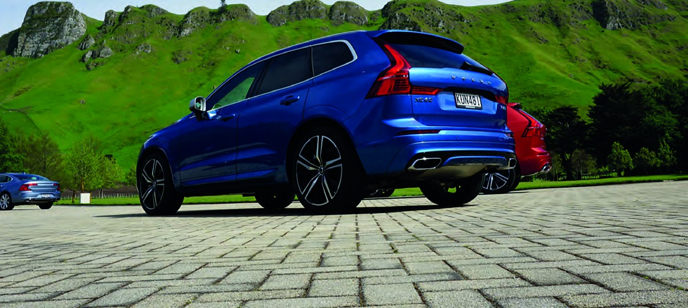
This story first appeared in the March issue of EVtalk – CLICK HERE to download the magazine FREE
Volvo has huge aspirations for its electric vehicles.
By early next decade, every model will be electrified and Volvo has already indicated its performance arm – Polestar – will also concentrate on electric propulsion.
So far, its local plug-in efforts extend to two vehicles, a plug-in hybrid version of the XC90 SUV, and now its midsize SUV offering, the XC60, a development of the same drivetrain but smaller.
There is a crucial difference, with the battery growing to 10.4kWh, but otherwise the drivetrain is mostly the same.
The bigger battery means a slightly longer charging time of two and a half hours at its fastest, and an electric-only range of up to 40km. Rated fuel consumption is the same, at 2.1 litres per 100km.
Called “Twin Power” in Volvo speak, the drivetrain features a 235kW 2-litre turbocharged and supercharged engine driving the front wheels and an electric motor driving the wheels.
The front engine outputs 235kW through an eight-speed automatic transmission and the electric motor adds an extra 64kW. Volvo claims that gives it an overall rating of 300kW – and we would believe it. The XC60 is a ferret off the line – it feels very quick away from the lights.
 There’s a range of drive modes to select from.
The default is a hybrid system and there are Eco, Performance, and EV-only options. The car won’t default to EV at startup; it will always kick off in hybrid, requiring driver intervention to stick just to the battery.
Even when in EV mode, the engine can still kick off if it’s asked for more power than the rear motor can offer. Thankfully, Volvo replaces the tachometer in the digital dash when in the hybrid or EV modes with a clever active gauge that shows how far it can be pushed on the greener power source.
We baulked at Volvo’s claim of 2.1 litres per 100km initially but it’s achievable over for moderate distances provided it’s charged frequently.
Some city running around and a run from Greenlane to Albany and we saw only 0.9 litres per 100km on the Volvo’s dash.
Longer trips varied between 7-9 litres per 100km, not bad for a substantial, high-performance vehicle.
On the flipside, getting and keeping fuel on board the Volvo is a little bit of a challenge. There’s a type-one charging port forward of the passenger door – type two is on the way.
The onboard charger is rated at 3.5kW, which means the Volvo can’t take advantage of any of the higher-powered AC charging options becoming available. Even a 7kW charger would have allowed a full charge in the length of a long lunch at Sylvia Park. It would increase the car’s electric-only usability immensely.
Another area that also needs review is the brakes. Like most plug-in brakes, regeneration makes them feel a little firm and aggressive but in the T8 that goes to the level of unrefined. We would struggle to make smooth stops in traffic at times. Our hope is that some wear, and perhaps a software update from the factory, will ultimately fix this.
Like the rest of the XC60 range, the T8 is a great car to drive, with firm and stable handling. The steering is not as responsive as competitors like the BMW X3 but it can still be hustled along a twisty road at pace.
The interior feels well laid out and premium. The seats are electrically adjustable and incredibly supportive and comfortable – Scandinavians know a thing or two about furniture.
Fit and finish feels excellent, and comfort in the front of the car is great – these are some of the best seats fitted to any car in the market. Rear legroom is a little tight but a six-foot passenger can still sit behind a six-foot driver.
Volvo has replaced most interior buttons with an iPad-like 9-inch tablet, which can be connected to the internet to power a range of apps. Apple CarPlay and Android Auto are standard.
Also standard is lane keeping aid, oncoming lane mitigation and steer assist. These join the standard “Intellisafe City Safety” system, which includes pedestrian, cyclist, vehicle and large animal detection with automatic emergency braking.
Volvo’s Pilot system is up there with the best semi-autonomous vehicle systems on the market, and one of the easier to activate – hit the cruise control button then toggle across to your preferred level of assistance.
Options including nappa leather seats with ventilation and massage, Bowers & Wilkins Premium Sound and four-corner air suspension provide XC60 customers with the opportunity to add even more personalisation.
Optional air suspension is priced at $4200 though be aware this system lowers the car when you switch it off and if you sit with your foot on the brakes, they can creak, a little alarmingly at first.
The small niggles with the car are outweighed by how good it is overall – and we think they are items likely to be polished with software updates over the lifecycle of the vehicle.
The T8 R-Design is priced at $117,900.
Join the conversation