
Connected cars UK test will benefit NZ
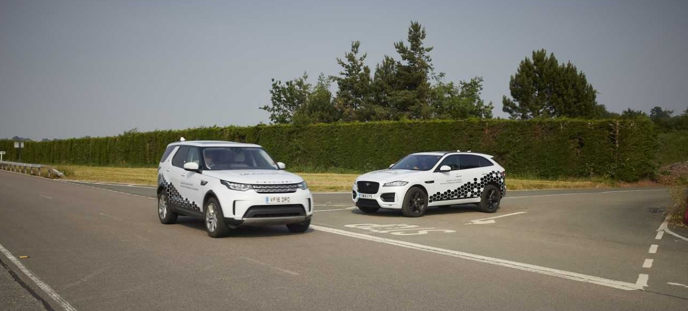
Jaguar Land Rover’s testing of connected cars that can ‘talk’ to each other on United Kingdom roads will benefit Kiwi motorists too.
So says the brand’s NZ general manager Steve Kenchington.
“There are tens of thousands of Jaguar Land Rover vehicles on New Zealand roads at any one time – in the future they will be able to alert each other about upcoming road hazards which will make driving safer for all road users,” he says.
The trials are part of $13.7 million UK CITE Project creating the country’s first fully connected road infrastructure to prepare for self-driving cars.
Road infrastructure and vehicles, including Discovery Sports, Range Rovers and F-Paces, have been kitted out with a world-first combination of wireless technologies.
The research fleet of connected cars talk to each other and their surroundings to improve safety, avoid accidents and prepare for self-driving.
More than 60km of the M40, M42, A45 and A46 British highways will benefit from a world-first combination of wireless technologies (DSRC, 3/4G mobile networks, wi-fi and fibre optic networks).
The latest connected technology complements other vehicle sensors and extends a vehicle’s ability to ‘see’ further down the road and ‘speak’ to other vehicles, infrastructure, pedestrians and the network.
For instance, warning that a car too far ahead to see has applied its brakes allows a following driver to avoid a potential accident.
The system will work on both manual and autonomous driving.
“To realise the full benefit of self-driving cars, we need to understand the infrastructure that’s required to support them,” Jaguar Land Rover connectivity manager Colin Lee says.
“Connectivity not only takes us a step closer to making self-driving cars a reality but it also creates the platform to bring more connected safety features to our customers within the next few years.”
Trials include a range of intelligent connected features such as emergency electronic brake light warning, emergency vehicle warning, and in-vehicle signage for roadworks and traffic condition warnings.
Join the conversation