
WEL, WEL! Fast-charging the Waikato

This story first appeared in the April issue of EVtalk – CLICK HERE to download the magazine FREE
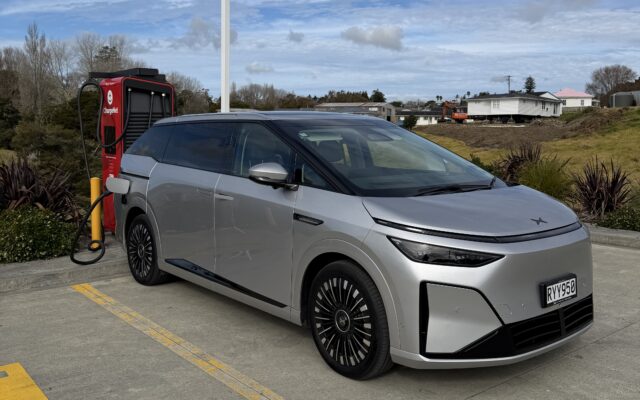
When the first of WEL Networks’ bright blue slim-line electric vehicle fast-charger boxes sprouted around the Waikato, people said they boosted the region’s reputation as a centre of growth, opportunity and innovation.
They’re right.
But the free charging stations are more than that.
They are also the start of a WEL Networks’ regionwide rollout remedy for “range anxiety”, a recognised condition that afflicts EV drivers.
Its symptoms aren’t so different from the sweaty palms and accelerated heart rate of a petrol or diesel vehicle driver when the fuel gauge needle hovers just above “empty”. But there the comparison ends.
Petrol stations are everywhere. If the worst happens, there’s always the gas can and that universally recognised SOS, the hitchhiker’s thumb.
“Fast-chargers give electric vehicle drivers comfort,” WEL Networks assets management manager Paul Blue says.
“The Waikato is one of the fastest growing regions in New Zealand and we need to provide our communities with innovative energy solutions that will support this growth.”
The distinctive fast-chargers have been installed across the region from Raglan to the Hamilton city centre and Te Kauwhata.
Blue (no, the charger colour isn’t in his honour) says their numbers will increase as EV popularity grows in the Waikato.
The WEL chargers can be found on the international electric network app Plug Share, a free device for EV owners which provides real-time information on where to find chargers throughout the world.
Blue is in no doubt EVs will dominate on Waikato roads sooner rather than later.
“It may not look like they are coming fast but they are,” he says.
“In 2015, there were 900 EVs in the country. By mid-2017 there were 5000. By 2030 you won’t be able to buy a new Audi, BMW or Mercedes car that has a petrol or diesel engine. In the UK in 2040 you won’t be allowed to buy a petrol or diesel vehicle from anyone.
“The arrival of the electric vehicle is not an ‘if’, it’s a ‘when’.”
As Blue says, in the New Zealand context EVs are not just a great use of renewable energy, they marry up perfectly with this country’s 80% energy source – renewable electricity.
“Electricity and electric vehicles is a really good news story for New Zealand. It means we are no longer dependent to the same level we were on oil-producing countries. We are independent of them.
“This is good for the stability of the country. It’s good because profits made in New Zealand stay in New Zealand. Electricity companies are predominantly owned by New Zealanders.“
Range anxiety will disappear as car manufacturers improve the capability of cars, Blue says.
“It’s very fast-moving technology which every manufacturer of cars is looking at.”
Providing for mass EV use is high on the list of new technology-driven challenges facing Waikato community-owned WEL Networks, whose sole shareholder is the WEL Energy Trust.
As the region’s only electricity lines provider, WEL Networks is front-footing the challenges laid down by fast-moving changes in household technology use and demand. It is also meeting the demands of a growth explosion in the Waikato business sector.
Blue anticipates the galloping pace of change will result in WEL Networks building a much closer, and more active, connection with its nearly 90,000 customers.
In the past, because of the structure of the power industry, Waikato people’s contact with the electricity industry had mostly been through electricity retailers.
But with the uptake of the electric car, the community’s increasing adoption of electrically charged batteries (in cars and homes) and growing dependence on electricity provision 24/7 ensures WEL Networks will become “WEL” known, he says.
Join the conversation