
Entry level charm – BMW’s i3
This story first appeared in the October issue of EVtalk – CLICK HERE to download the magazine FREE
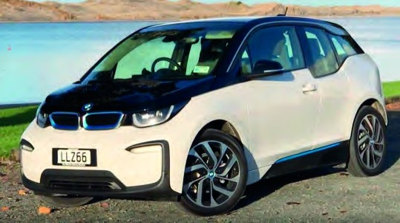 When BMW updated the i3 range earlier this year, most of the attention went on the sporty “S” model.
You can read about that car in our June issue – more power, a tweaked chassis, styling enhancements and a higher spec.
But it also means a higher price – the standard i3 is $77,200 ($86,100 with the range extender petrol motor), while an S starts at $85,900 with a similar bump to the range extender on that model.
Now with a specification and performance bump, many may consider the additional $8000 worth it for the S model.
For others, $77k is a lot for a small hatchback, and it will be the limit.
For fleets, the i3 has found favour in this area, the standard model will be the obvious choice.
So, is it a hardship not going for the S? No, not at all, in fact, the i3 retains the full i3 charm.
Aside from styling tweaks, the most significant changes to the updated i3 are in the safety and driver assistance area.
Now standard is the driving assistant-plus system, while includes a collision and pedestrian warning system, and an autonomous emergency braking system with stop and go.
LED headlights, front and rear parking sensors and a reversing camera also feature.
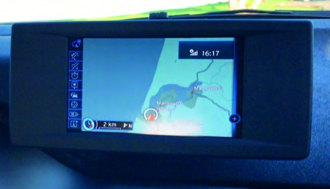
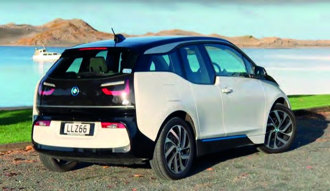 Usability-wise, the most significant loss is a smaller “Business” infotainment screen for the BMW iDrive system – versus the larger “Professional” unit in the S.
It does look a little odd sitting in the raised panel sprouting from the centre of the dashboard – but it is usable.
Real-time traffic information is handy.
The i3 interior remains a unique – yet appealing – place to be.
BMW has left a lot of the composite construction of the vehicle on show, which works well with the mix of interior finishes.
The front seats are upright yet comfortable, and with a considerable range of reach on the steering column – which also carries the small instrument cluster – you can quickly get comfortable.
The rear seat is accessed through the cool yet not-so-convenient rear opening doors.
Its roomy enough for two – though feels a little closed in.
If there is an area where the car’s size traps it a little is in the boot.
It is big enough for a few carry on cases or at a push, a week’s shopping.
While the S gets a 135kW electric motor, the i3 makes do with “just” 125kW and 250Nm of torque.
In the real world performance suffers little, the 0-100kmh time only slightly higher at 7.3 seconds to 6.9.
To me the i3 feels far more sprightly than the numbers suggest any way – there is a solid push in the back when you hit the pedal, and with the short wheelbase, the nose lifts slightly in a satisfying way.
Nissan may have their iPedal system, but BMW was there first with aggressive regen – you can one-pedal this car in most conditions.
Handling is not bad considering the skinny tyres the i3 runs on.
The steering is quick and responsive, and a firm yet reasonably comfortable ride keeps body roll to a lower level than you would expect.
 OK, it’s not a sports car on the open road, but nor is it unenjoyable to drive.
Around town, the “Mega City Vehicle” is in its element.
The i3 offers three drive models to influence performance and battery range.
Comfort is standard i3, Eco Pro dulls acceleration and limits the top speed to 115kmh – fine for NZ driving – while Eco Pro+ reduces responsiveness further and limits speed to 90kmh.
The big step up in range offered by the shift to the 94Ah, or 33kWh if you prefer it in the more common term, makes a real difference to how usable the car is.
Depending on the testing programme you listen to, the official range for the car extends to around 300km.
BMW NZ wisely suggests a real-world range of a little over 200km instead – and that is on the money.
It does not take a lot of thought to hit that target, and we did on mostly open road, work at times using the heating and cooling system.
Charging options have progressively improved for the model.
While the original model was type-1 AC only, then CCS combined for DC charging, now, you get a CCS type two port.
 The AC charging rate has now been raised from 7.
7kW to 11kW, keeping the charge time on some level 2 units as low as three hours.
DC charging is 50kW, so expect to spend around 35-40 minutes to get to 80%.
The last question to ask is the i3 expensive? Maybe – but not as much as you would think.
It sits between the two Kona EV models – on a range to dollars the best value new EVs you can currently buy – and while it doesn’t offer anywhere near the range, it provides cachet and style they don’t match.
When the i3’s battery receives a 9kWh boost next year the range argument will also reduce.
What the i3 is that the Kona isn’t, however, is a demonstration of what can be done when you clean sheet design.
It is not a petrol car with an electric motor; it has a unique format that allows for a lot of space on a small footprint, a construction style generally reserved for supercars and interacts with its driver in new and exciting ways.
For these reasons, it may just be worth the price.
Solar source for i3’s tyres
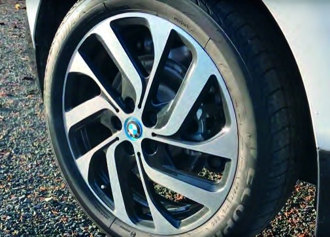
The i3’s tyres have an interesting story in their own right – and that is aside from the fact that they are on substantial 19-inch rims and yet are the width of the hoops on most small cars.
The Bridgestone EP500’s use ologic technology.
This was designed to reduce rolling resistance and improve aerodynamics through two key features – a large diameter and a narrow tread pattern.
Bridgestone tested the technology with a team in the 2013 Solar Challenge – an event where teams of engineers race through the Australian outback powered by nothing but the sun.
They also incorporate Bridgestone’s Ecopia compound which, in passenger vehicle applications, reduces the production of harmful carbon dioxide emissions by up to 5.8% and helps improve fuel efficiency up to 5.7%.
Join the conversation