
Hydrogen interest ballooning
This story first appeared in the December issue of EVtalk – CLICK HERE to download the magazine FREE
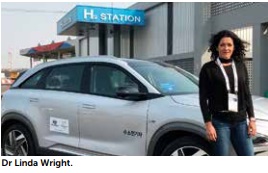
Industry appetite for joining the New Zealand Hydrogen Association has “astounded” its chief executive Dr Linda Wright.
The association’s membership has jumped from nine to 25 since September.
“That’s quite incredible,” Wright says.
New Zealand is in the process of developing a hydrogen road map. Hyundai has also just released its FCEV Vision 2030 plan.
Hyundai New Zealand was the first vehicle manufacturer to join the association, showing how serious it is about hydrogen in the transport sector.
In fact, Hyundai is a global leader in hydrogen technology, with the 2013 ix35 FCEV being the first mass-produced commercial hydrogen fuel cell vehicle in the world. Earlier this year it also revealed the all-new Nexo, Hyundai’s flagship eco car which has 800km range, and a five-minute refuelling time.
While Hyundai New Zealand general manager Andy Sinclair is keen to bring the Nexo here, the fuel cell industry still lacks suitable infrastructure in New Zealand to supply the hydrogen.
It has to be stored, transported and dispensed safely.
Australian trials prove hydrogen can be transported by turning it into ammonia to eliminate its flammability, then converting it back to hydrogen using special membrane technology for pumping into fuel cell vehicles.
The breakthrough technology, which CSIRO researchers had been working on for years, was revealed in August.
Hyundai Motor Company aims to supply 1000 hydrogen fuel cell trucks to the Swiss commercial vehicle market for five years, starting in 2019. The 18-tonne trucks have a 400km range and can be fully recharged in seven minutes.
Hyundai is also leading in EVs, New Zealand’s electric offering including the best-selling all-electric the Ioniq – and New Zealand’s first compact electric SUV, the Kona.
“It’s an incredibly exciting time for New Zealand and we look forward to the continued growth of EVs and other alternative fuel technology in New Zealand,” Sinclair says.
Toyota New Zealand has now taken up association membership and chief executive Alistair Davis says it’s a first step towards developing an eco-system for hydrogen-fuelled vehicles in New Zealand.
Another new member, Ports of Auckland has announced it should have a hydrogen production and refuelling facility ready by the end of 2019.
In a New Zealand first, the station on Auckland’s Waitemata Harbour waterfront land will be used for hydrogen fuel cell vehicles such as cars, buses, tugs, straddle carriers and other port equipment.
It could be used for trains, and Auckland Transport chief executive Shane Ellison says it may be used for AT’s fleet of buses and harbour ferries too.
Ports of Auckland will soon start stakeholder engagement before applying for resource consent for the hydrogen station early next year.
Auckland airport is also looking at where it would use hydrogen in its operations.
The hydrogen association is facilitating hydrogen opportunities for business, Wright says.
H2 is best suited to long distance transport, and Wright says there’s considerable technical development around transport such as trucks.
“We also need to get more H2 and electric buses on the road in New Zealand.”
Wright says she’s “avidly” following hydrogen developments overseas.
The Scottish Hydrogen and Fuel Cell Association (SHFCA) will be very helpful in spreading the knowledge base for instance, Wright says.
“We’re looking to learn from processes they have been through,” she says.
Aberdeen has one of the biggest bus fleets in the European fuel cell project, with 10 added to double its fleet in the city under a Jive initiative aiming to supply almost 300 H2 buses in 22 European cities.
Another Scottish city, Dundee, gets 12 H2 buses under the project.
November saw the British launch of the world’s first double-decker fuel cell bus, Wrightbus saying its ready to begin production of the Streetdeck FCEV.
Meanwhile, universities like Victoria University of Wellington are also indicating interest in the New Zealand Hydrogen Association.
Universities tend to attract research and development funding, so Wright sees an opportunity to engage with them and make such studies relevant to New Zealand industry and infrastructure.
The association acts has a workshop planned in March for all members and expects to consider a framework to find the best national standards to adopt, how to help the Government develop an H2 road map, review standards around gas reticulation, consider funding of H2 infrastructure and much more.
The association’s next AGM will appoint new directors to the board with four board positions available, including two new ones.
The board has five members now and will be extended to seven.
Although she lives in Queenstown, Wright says with the technology available now it’s easy to work globally.
“I have conversations with a wide range of people. I have Skyped Norway and Germany, for instance, and presented at a hydrogen conference in Norway (where she met Norwegian EV Association secretary general Christina Bu).
A 20-year background in the sustainability sector, mainly as a director of One World Consulting and involving a wide variety of work, ensures Wright has plenty of experience to support her hydrogen association role.
“It’s amazing what opportunities are available in New Zealand, and the EV and hydrogen revolution is coming sooner than most people think.”

Join the conversation