
Spark moving to PHEVs
This story first appeared in the March issue of Evtalk – CLICK HERE to download the magazine FREE
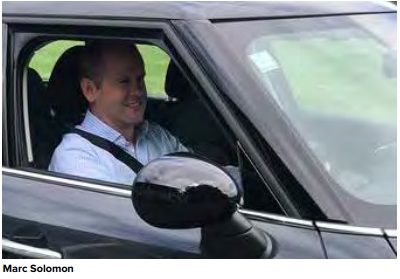
Digital services provider Spark is introducing Mini Countryman plug-in hybrids (PHEVs) to its vehicle fleets – probably the first in Australasia to do so in bulk.
The first 30 are due towards the end of March, with a further 40 also ordered, then another 60 or 80 leased PHEVs could be added depending upon demand.
It’s part of the company’s EV strategy co-ordinated by Marc Solomon, Spark’s sourcing business partner in charge of fleets.
When the strategy was first conceived about three years ago, EV selection was minimal compared to today and first-up prices too high.
Spark also had to consider how its people would use them.
“We had a couple of more experimental EVs, including some old Peugeots,” Solomon says.
These were Ions – rebadged Mitsubishi i-MiEVs.
Coincidentally, an electric Peugeot e-208 supermini with nearly 340km range is likely to be out later this year – although Spark isn’t considering this vehicle at this stage.
Solomon describes the EV strategy’s first stage as like “dipping your toes in the water”.
That was followed by obtaining some second-hand Nissan Leafs from the United Kingdom, but some difficulties with servicing and other factors led Spark to rule them out.
“We looked at the total package in each case, right down to the tyres.”
Spark has about 470 vehicles throughout New Zealand and aims to have about 150 switched.
Staff have been involved in helping test vehicles and provided feedback, which explains why Spark is moving to PHEVs.
“PHEVs bridge the gap between ICE vehicles and BEVs – you don’t want staff running out of battery in the middle of nowhere or a problem could develop,” Solomon says.
“Early adopters might say ‘BEV or nothing’, and we accept that position.
“The vehicles we have been looking at bridge the divide and look like a normal car.
We wanted something that people could drive without too much of a cultural change.
“We’ve done testing on EVs over the last couple of years and range anxiety is alive and well,” Solomon says.
PHEVs, BEVs “and even a Tesla” were tested over nearly nine months, including the vehicle’s ergonomics, safety, the ride, costs and more.
“We had a whole range of feedback,” Solomon says.
“Some didn’t have great viewing angles, and in some instances the reach across to a touch screen brought up safety issues.”
It’s mostly Spark sales staff who use the vehicles, so stopping to charge EVs for lengthy periods is something both staff and the company want to avoid.
“Electrics are brilliant for around town, but once people drive beyond 50km they call up and ask for something other than an electric,” says Solomon, who explains that some staff have to drive reasonable distances.
The Mini Countryman PHEV is a popular choice as it’s a four-door which can readily accommodate four adults and their gear, such as laptops, has a 40km electric range yet can do up to 498km with the help of its combustion engine.
“Our test vehicle is doing an average of 1.1 litre per 100km which is better than its factory specs of 2.3 litres per 100km,” Solomon says.
“If someone had said we’d get better than factory specs I would have laughed at them.”
While many might expect a Mini to be small, the Countryman has plenty of room and is comparable to the Toyota Corolla and Mazda ICE vehicles Spark has already been using, Solomon adds.
He says Spark has a mix of pool vehicles, mainly in its metro centres like Auckland, Hamilton, Wellington, Christchurch and Dunedin.
A number of vehicles are also allocated to staff as part of their job package, and business-to-business hubs have lease vehicles too.
Solomon says the plan is swap over vehicles to PHEVs in the metro regions first.
Covering regional areas involves longer distances and more difficult terrain so any switch to PHEVs or EVs there is unlikely at this point, he says.
“Charging infrastructure is also not so widely available in those areas.
”
While Solomon says he will be looking at ways to electrify more of Spark’s fleet, he says hurdles exist around that, such as the charging infrastructure, the time it takes to charge up, costs and more.
Staff are also on a learning curve during the switch.
The test group has had to almost relearn how to drive with electrics and PHEVs, Solomon says.
“Gliding into a stop is better than rushing in and braking hard for an EV, for instance,” he adds.
While the changeover might generally be straight forward, drivers also need to understand charging and the battery functions, read instruments and know how EVs and PHEVs work.
Many will learn as the PHEV roll-out proceeds.
Spark will continue to monitor progress around switching the fleet and aims to be adaptable to change.
Feedback will also be passed on to the manufacturers.
Join the conversation