
Bosch looks to trucks and cars with fuel cell partnership
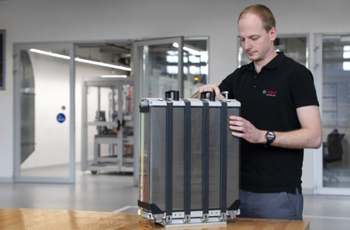
Bosch is entering the hydrogen fuel cell market in an effort to have the technology in trucks and cars.
The German-owned multinational firm is teaming up with Swedish fuel-cell manufacturer Powercell for the development of fuel stacks which converts hydrogen into electricity.
Under the agreement, the two partners will work jointly to make the polymer-electrolyte membrane fuel cell ready for production. Bosch will then manufacture the technology under license for the global automotive market.
The stack, which currently provides an output of up to 125 kilowatts, will complement the Bosch portfolio of fuel-cell components, and is to be launched no later than 2022, the company says.
Dr. Stefan Hartung, member of Bosch board of management and chairman of the mobility solutions business sector, says partnering with Powercell makes for a strong alliance.
“Commercialising technology is one of our strengths. We are now going to take on this task with determination and develop this market,” Hartung says.
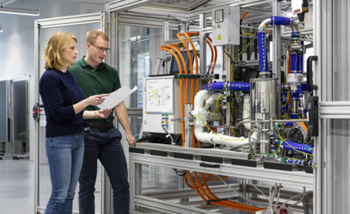 Bosch says the mobile fuel-cell business is potentially worth billions of euros for the company. It estimates as much as 20% of all electric vehicles worldwide will be powered by fuel cells by 2030.
Powercell chief executive Per Wassén says Bosch’s “clout and expertise” will provide fuel-cell technology “with the chance to gain a foothold in the automotive market”.
Bosch believes the best opportunities for broad adoption of fuel-cell technology are in the commercial-vehicle market.
The EU’s fleet requirements for trucks call for a reduction of CO2 emissions by 15% on average by 2025, and 30% by 2030.
One of the biggest costs in fuel-cell systems is the stack technology, accounting for nearly two-thirds of the total cost of a fuel-cell system.
“Through commercialisation and widespread marketing of this technology, Bosch will achieve economies of scale and push down costs,” Hartung says.
Currently, hydrogen fuel is mainly produced for industrial applications, at a kilogram price that often exceeds five euros. This price is expected to fall as production grows.
One kilogram of hydrogen contains the same energy as about three litres of diesel. For 100 kilometres, a modern 40-ton truck requires seven to eight kilograms of hydrogen.
Bosch says the production of hydrogen can be climate-neutral and there are a number of industrial enterprises working to perfect the process.

Join the conversation