
Porsche accelerates towards CO2 neutral Taycan production
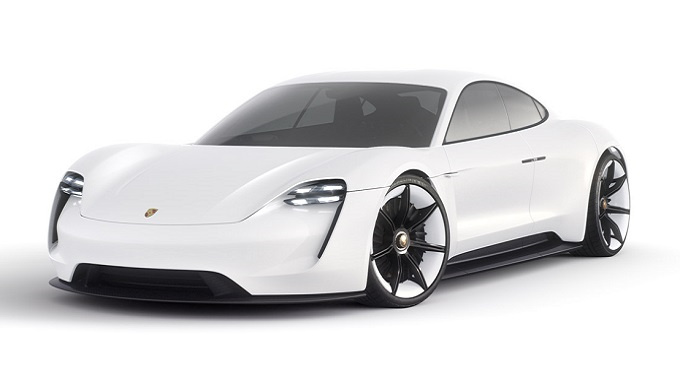
Porsche wants to produce its fully electric Taycan in an environmentally friendly way as possible.
So it’s launched two new cogeneration plants in Stuttgart-Zuffenhausen to provide CO2 neutral production.
The heat and power plants, each of which has an output of around 2mW, run exclusively on biogas and residual products produced from organic waste.
In contrast to conventional power plants, cogeneration plants are used to generate heat and power in parallel.
They do not emit the heat generated as part of energy production into the environment, but use it for heating in-house. Their efficiency can be maximised by operating them close to the area in which heat is constantly required, such as the paint shop, immersion baths and drying areas.
About 90% of the heat generated will be used to provide hot water for the office and production buildings at the Porsche Zuffenhausen site, where almost 12,000 people work.
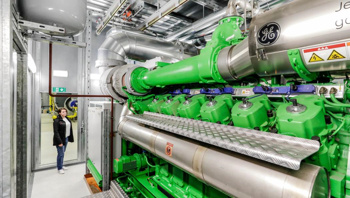
“The new cogeneration plants have a total efficiency of over 83%,” Porsche environmental and energy management’s Stephan Hartmann says.
Two natural gas plants at the site will also be switched to biogas. In addition, Porsche in Stuttgart is on track to use bioenergy from the city’s organic waste plant as soon as the City of Stuttgart commissions the plant in 2021.
The Taycan, Porsche’s first fully electric four-door sports car, will be launched at the end of 2019.
“Our objective is not merely to produce a CO2-neutral zero-emissions car, but rather to ensure that we do not leave any environmental footprint at all,” Porsche production and logistics executive board member Albrecht Reimold says.
“To this end, we are pursuing the vision of a ‘zero-impact factory’. The new cogeneration plants are an important step in the right direction.”

Join the conversation