
Learning to live with a battery only vehicle

This story first appeared in the April issue of AutoTalk – CLICK HERE to download the magazine FREE
David Crawford
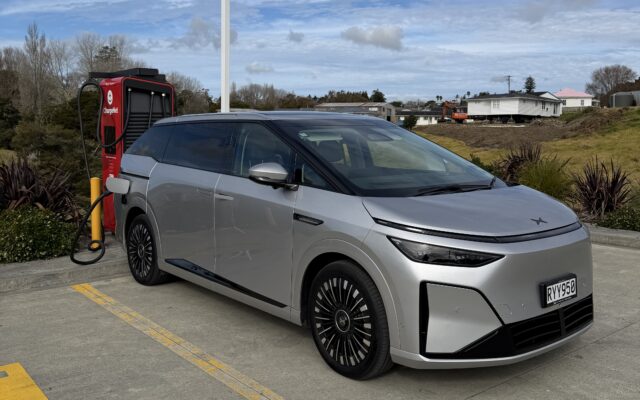
As the title suggests, I have recently been driving a full electric vehicle
It is my work vehicle for the time being, which means it needs to easily travel beyond city limits, quite considerably so.
Did I have some apprehensions before taking on a battery only vehicle for a while? Did I have reservations about driving long distance, knowing where to find charge stations and when getting there whether there would be a queue.
I would be lying if I said no because I most certainly did.
I squirmed, hesitated and just about said no thanks, please give me a PHEV.
So, this month’s column is dedicated to my learning curve about driving a BEV, a vehicle where there is no backup hydrocarbon driven motor to be seen for love or life.
Just a battery and an electric motor.
I labour this point, as the absence of a petrol backup option was at the heart of my hesitation.
This is my honest assessment warts and all.
No glossing up the EV image and ignoring little idiosyncrasies as is so often the case when others promote EVs.
Starting at the end, I am enjoying the BEV.
It is cheap to charge up, easy to drive and generally a liveable and useable vehicle.
It has a smugness value that feels good, not conceited.
I wish I could keep it, for both on the open road and around town it is a pleasure to drive.
I don’t need to say anymore in its praise than that.
But the transition to this point was not without some frustrations and I think the transition needs to be easier than what it is.
To prepare I had a new dedicated line wired out to the garage, single phase/32 amp.I was unable to hook up a three-phase capability as I don’t have that option at my switchboard in the house and the expense of putting it in was considerably more than I was prepared to pay.
At the moment I have just a three-pin plug option wired to the new fuse board in the garage, with the option of fitting a 32-amp socket at some point in the future.
Being a stand-alone garage and running a 32-amp cable from the house to the garage meant the cable had to be encased.
Total value of the work was around $1400 and the car had not yet even arrived.
I picked up the vehicle and had a full and helpful orientation session with the dealer.Then I drove away.
Charging at home is easy,
although occasionally the charge controller in the cable faults out and I’ve learnt I need to hang around for a minute to ensure once the car has done all its diagnostics checks the green charging light comes on, not the orange fault light.
Charging away from home is now easy.
It was not at first, in fact it was quite a hassle.
The hassle came in two forms – firstly finding where these fast charge units actually reside, and secondly once having located them, getting them to work.
When I was telling an EV owner while waiting to charge my car my story of the challenge in finding charging outlets, he said don’t you have the app.Of course I have the app.That is not enough though.
Finding petrol stations is easy.They are always on the main road and well sign posted.
Charging stations are invariably tucked away in strange locations and when you get there it is not immediately obvious where they are.
On a recent trip from Lower Hutt to Palmerston North and return via the Wairarapa, I made a point of stopping at each place a charging unit was located, just for future reference.
In my experience, the easiest ones to find are at the i-site locations.
Ones tucked away in supermarket carparks can be a right royal pain in the backside to get to.
Surely we can do better than this?
Now that I know how to find them, and that I need to leave sufficient time to locate these oddly placed units, plugging it in and charging the car was the next challenge.
I count myself as being app savvy.However, starting and controlling your charging session by an app is not as straight forward as it could be.
Firstly, if there are two units at the locations, the name of the unit on the app is not necessarily on the physical unit you are staring at.It’s a bit of a guessing game.The solution is to buy a fob.I did.
The good news is fobs are fabulous.I now rock up to a charging unit and flash the fob and suddenly the unit knows all about me, what card to sheet home the cost and Bob’s your uncle.
As time passes I have increasingly stopped plugging it in each night, preferring to let the charge run down to about 30% left and then visit a fast charge station, plug in and go and get a coffee while it charges.Like filling up a car with petrol only slightly longer.As BEV battery capacity increases, the need to top up each night diminishes.
The last frustrating bit of my experience to date is at my nearest home location there are two fast charging units.One of them has had a fault on it for over four weeks and it is still not fixed.
It remains unusable while the fault remains.
Fast servicing of faults at charging stations is going to be essential if we want the masses to convert.
Faulty units slow to be serviced is a big turnoff.
If we want to mainstream EVs my experience suggests we have a little way yet to go to make it easy for the masses.
None of this surprises and change is coming.
Join the conversation