
Air New Zealand goes electric – but not for planes yet
This story first appeared in the May issue of AutoTalk – CLICK HERE to download the magazine FREE
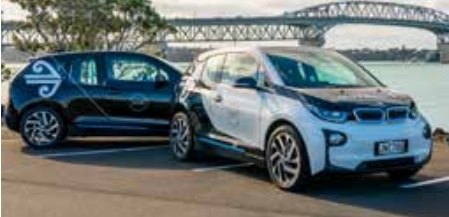
Air New Zealand is flying into its commitment to switch its vehicles to electric.
“We have converted to 100% EVs where options exist – all 77 of our on-road light vehicles are electric for instance,” company sustainability head Lisa Daniell says.
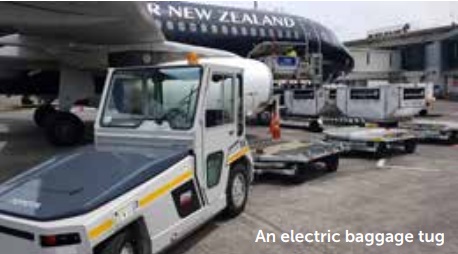
“What many people don’t know is we’ve also set ourselves a separate target to move our ground service equipment – aircraft tugs, loaders and golf carts, etc – which operate airside at airports to 100% electric where viable options exist.
At present, 52% of the New Zealand-based ground service equipment is powered by electricity.
“We are on track to convert 92% of this equipment to electric by the end of 2020,” Daniell says.
Air New Zealand’s ground service fleet includes three electric Kalmar TBL190 pushback tugs capable of handling widebody aircraft – including its Boeing 777 fleet and 787-9 Dreamliners.
These are the first of their kind in the Asia Pacific region and five more units have been ordered, which will complete the conversion to electric pushback tugs in Air New Zealand’s network for this aircraft size.
 Three electric container loaders – the only ones of their kind in Australasia – transfer large containers to and from larger aircraft.
“We will be replacing a further 33 (out of 56) by the end of 2020,” Daniell says.
“Other large equipment types we are transitioning to electric include baggage tugs and belt loaders which transfer baggage and cargo to and from smaller aircraft.”
As for charging infrastructure, Air New Zealand has a total 59 charging spots across Auckland, Wellington and Christchurch.Of these, six are available for customer use and the rest are for employee use.
“All of our fleet is either fast charged on Air New Zealand premises or by employees overnight at home,” Daniell says.
The EV fleet comprises the Mitsubishi Outlander PHEV, BMW i3 and Renault Kangoo.
The BMW i3s are used by Air New Zealand’s Corporate, Tandem Travel and Cargo sales team members who use them for city-based driving.
These vehicles are able to be recharged at the company’s larger corporate bases.
Its Mitsubishi Outlander PHEVs are used mainly by the company’s regional sales teams who are based throughout New Zealand’s regions and are required to travel longer distances.
The Outlander PHEVs allow these teams to use electric while in town and petrol for their longer journeys.
Air New Zealand’s Renault Kangoo EVs are used by operational and support teams to move between site locations and within the company’s operation for tasks that do not require a larger van or truck, such as delivering paperwork and pets to aircraft.
When a viable electric van option is available Air New Zealand also intends replacing its Toyota Hiace diesel vans with them.
It’s the lack of large electric vans in the market which are proving a barrier to changing out the vans used by airport and engineering teams.
“Any van that does come into the market in the future will need to have adequate range and be fit for purpose for our operational requirements prior to transitioning,” Daniell says.
Air New Zealand’s people and their commitment and passion to the brand extends to sustainability initiatives like the switch to electric vehicles.
“I can think of several examples of staff members approaching us with a great sustainability idea which has been implemented,” Daniell says.
“This overarching ‘can do’ culture means people have reacted really positively to us making the switch to EVs where possible.”
Join the conversation