
EV tipping point 2020-2021 in Europe
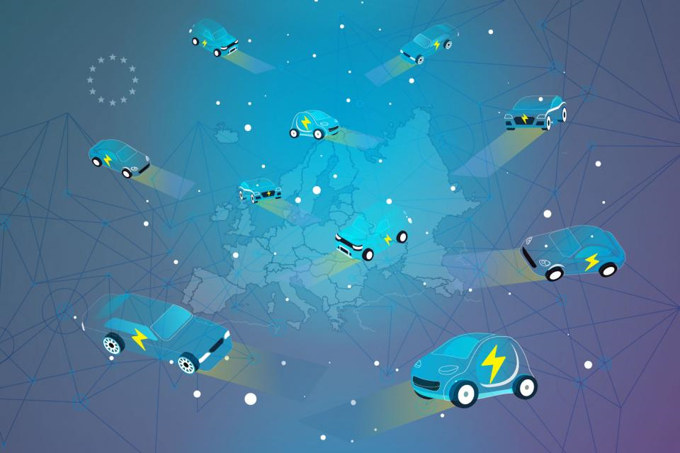
Electric cars will soon go mainstream in Europe with 2020-2021 put at the likely tipping point in a new report from Transport & Environment (T&E).
Until recently, the EV market was limited to early adopters, but tomorrow’s landscape will be very different as EVs enter a new phase and near the mass market with EV production surging from 60 BEV/PHEV/FCEV models in 2018 to 176 in 2020, 214 in 2021 and 333 models expected in 2025, T&E says.
This report
shows where the future electric cars and batteries will be produced in Europe, and analyses the expected production trends, and whether these are enough to meet the EU demand up until 2025.
“The current production forecasts show that most carmakers are ready to embrace electrification and are leaving behind the ‘technology neutrality’ approach, focusing on scaling up electric car volumes instead,” T&E says.
It adds that the mandatory EU CO2 target of 95g/km starting in 2020/21 “is no coincidence”.
The production of light EVs in Europe is expected to multiply six-fold between 2019 and 2025, reaching more than four million cars and vans, or more than a fifth of the EU car production volumes, based on T&E data from IHS Markit and in-house analysis.
“T&E modelling shows that if carmakers stick to their plans, this will be more than enough to comply with the EU Car CO2 standards for 2025 recently agreed, or a minimum of 15% in 2025.”
It also expects EU-made EV battery supply to be sufficient after 2023, “provided the current plans are delivered”.
At least 16 large-scale lithium-ion battery cell manufacturing facilities exist or are likely to come online across Europe.
“The confirmed plans alone will deliver up to 131gWh of battery production capacity in 2023 (growing to 274gWh in 2028).“
The 2023 demand needed to electrify vehicles (cars, vans, buses and trucks) and for stationary storage batteries is estimated by T&E at around 130gWh, or within the planned capacity provided it comes online on schedule.
Volkswagen Group is expected to have the biggest impact of the automotive brands, according to T&E.
VW aims to have about 70 new electric models by 2028, planning for 22 million EVs in the next decade and for full decarbonisation by 2050.
T&E earlier issued a warning that rising carbon dioxide (CO2) is a ‘stark reminder’ about the need to accelerate EV roll-out.
CO2 emissions from new cars are rising, and are back over 120 grams per kilometre, according to provisional data from the European Environment Agency. Vans also produced more CO2 in 2018.
T&E blames the rises on “carmakers maximising profits from gas-guzzling SUVs in the remaining years before stricter standards force them to sell cleaner vehicles from 2020”.
Join the conversation