
Counties Power gets EV tech funding
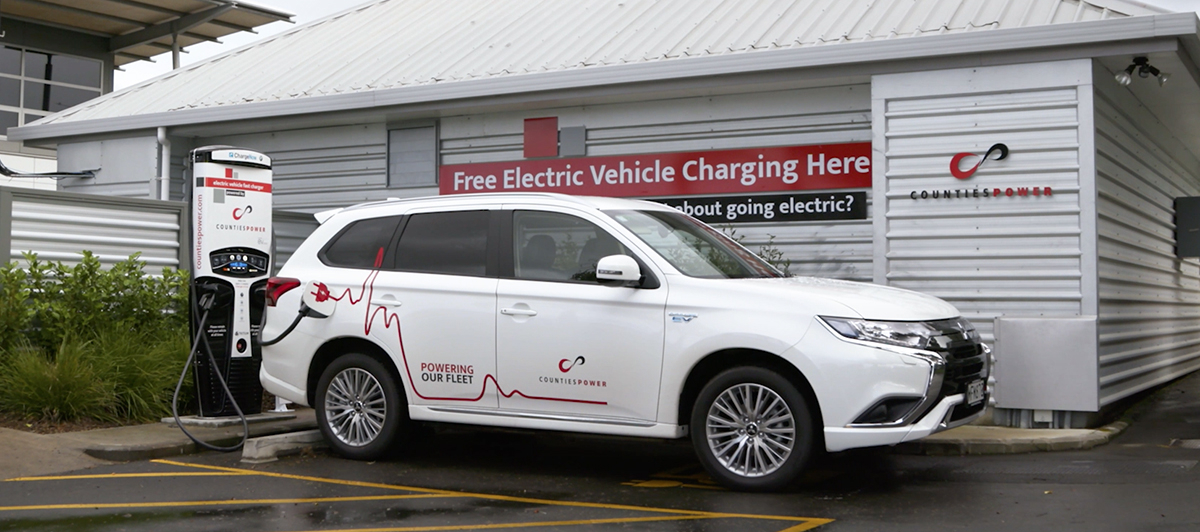
Projects to demonstrate sustainable driving technology and how battery and solar energy solutions can manage peak demand electricity use cost effectively have been given a boost.
Counties Power has secured co-funding for the two new initiatives in the Waikato from the government’s low emission vehicles contestable fund, administered by the Energy Efficiency and Conservation Authority (EECA).
“As a company we’ve been at the forefront of sustainable energy usage in New Zealand, as early investors in electric vehicle fleets and charging systems, along with battery technology,” Counties Power chief executive Judy Nicholl says.

“We’re huge supporters of promoting electric vehicle usage within our region, while also investigating how we prepare for the future of electricity distribution using smarter energy technologies,” she says.
“These projects achieve both outcomes, and we’re grateful to EECA and the fund for supporting us in our vision to deliver enhanced energy solutions to our community.”
Counties Power will demonstrate smart vehicle-to-grid technology integrated with solar generation and load balancing capability.
This project, using a Nissan Leaf and solar-powered charger, aims to increase EV use and showcase consumer energy independence, energy savings and the optimisation of utilities peak demand management.
The solar panels would allow the Leaf to charge directly using energy from the sun and the smart vehicle-to-grid capability will enable the energy to be released back into the building when required. This transforms EVs into mobile power sources for homes and businesses.
Together with smart vehicle-to-grid technology, a 40kWh Nissan Leaf could power an average household for 13 hours.
As part of the second initiative, Counties Power will install two high-power EV chargers at Mercer on the Waikato Expressway together with a 240kW second life EV battery system to optimise the use of electricity capacity and demand on the electricity network during peak power use times.
The battery system will use 18 repurposed Nissan Leaf batteries to store electricity taken from the network at lower demand periods to use for higher demand EV power charging.
The fund will contribute up to $112,000 towards the Mercer High-Power Chargers initiative and $32,000 towards the Smart Vehicle-to-Grid initiative.
Counties Power announced in December it was working with Australian battery technology company Relectrify to deploy New Zealand’s largest battery system repurposing EV batteries, combining Relectrify’s BMS+Inverter technology with batteries from nine Nissan Leaf EVs to store more than 120kWh of energy.


Join the conversation