
Hydrogen fuel is the problem, not fuel cells – IDTechEx
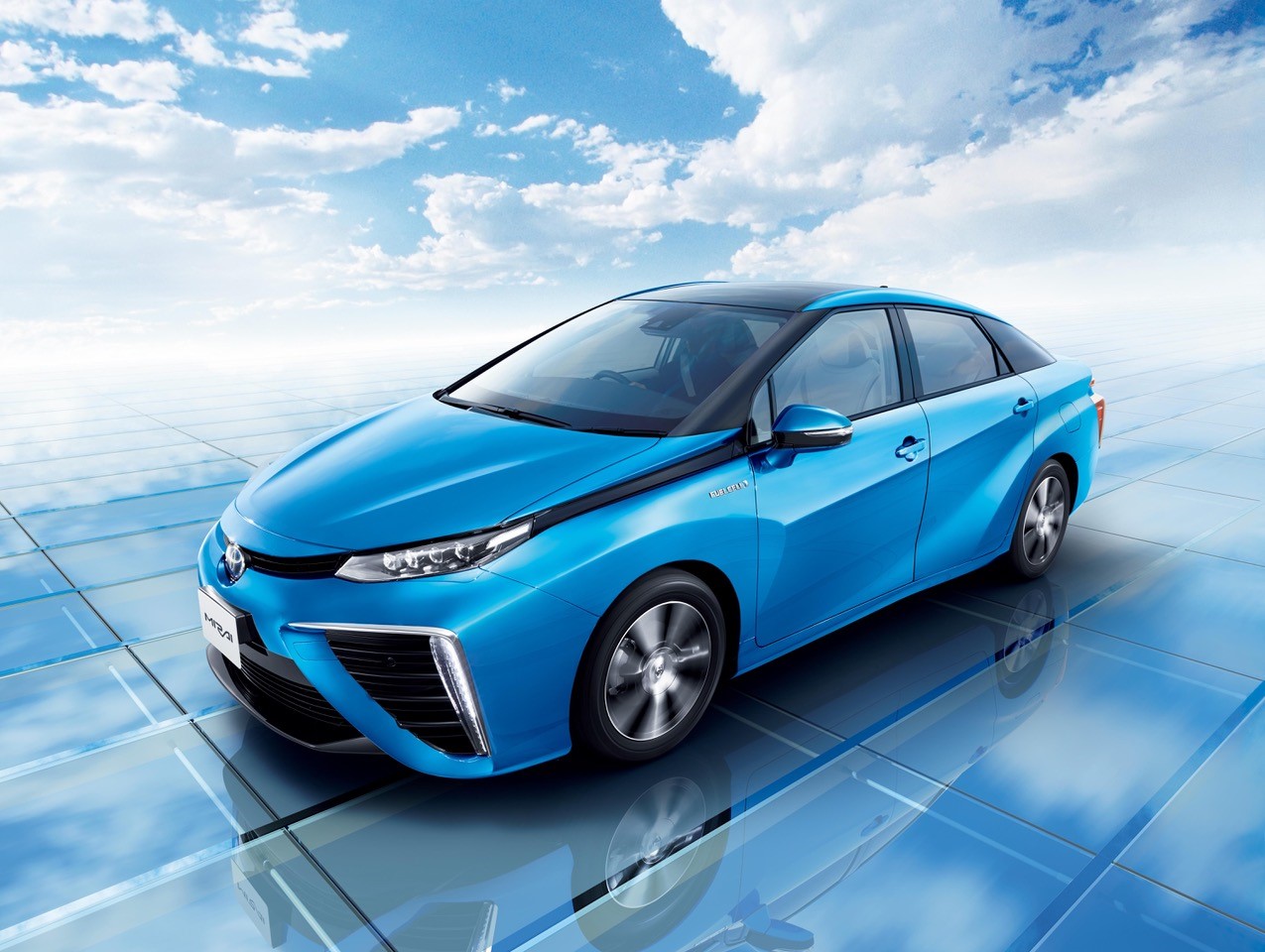
On the face of it, 2021 was a good year for fuel cell electric vehicles (FCEV) in passenger car markets. Toyota, with its second generation Mirai FCEV, and Hyundai, with its Nexo FCEV, both had record sales, says IDTechEx in releasing its report Fuel Cell Electric Vehicles 2022-2042.
That largely made up for Honda announcing in June 2021 that it had decided to pull the plug on production of its Honda Clarity FCEV (citing the lack of hydrogen infrastructure and weak demand), it explains.
For both Toyota and Hyundai, the increase in sales makes for impressive reading. The release of the second generation Mirai saw Toyota’s global fuel cell car sales more than triple from 1770 vehicles in 2020 to 5918 in 2021.
That eclipsed Toyota Mirai’s previous best sales year in 2017 when 2741 were sold.
Similarly, for Hyundai, it built on a strong 2020 where 6781 Nexo sold, increasing sales by 42% to 9620 vehicles in 2021.
At face value, this seems positive for the fuel cell industry. But when you look closer at the drivers for this growth, it shows the lengths to which Toyota, Hyundai, and the governments supporting the rollout of FCEVs are having to go to build this momentum.
For example, in California, the Mirai was reportedly available at a 65% discount from its more than US$50k list price. With Toyota offering a US$20k discount in addition to US federal and state-level tax incentives totalling a further US$12.5k, the Mirai was available in the US in 2021 for a shade under US$18k.
To sweeten the deal further, Toyota also offered a US$15k fuel credit for the first three years of operation. A US$50k car for less than US$20k with 100,000km of free fuel is undoubtedly an appealing deal.
A lease arrangement on Toyota Mirai has also been offered to selected agencies and people in Australia.
Of the 9620 Hyundai Nexos sold globally in 2021, 88% were in South Korea. South Korean national and state incentives in 2021 meant the sale of each US$60k Nexo was supported with a subsidy provision of around US$30k. An attractive 50% discount.
“It is hard to envisage how such support is viable for any sustained period,” IDTechEx says.
The deployment of Mirai and Nexo vehicles is demonstrating that the use of proton-exchange membrane (PEM) fuel cells in automotive applications is technologically sound (although Hyundai did recall 15,000 Nexo in August 2021 to fix a rattling problem), IDTechEx adds
PEM fuel cells, using pressurized gaseous hydrogen as fuel, can deliver a greater range and quicker refueling time than equivalent battery electric vehicles (BEVs). However, for FCEVs it is not the fuel cells nor the lack of hydrogen refuelling infrastructure (although this too is poor), that is the main problem – it is high emissions and cost of the hydrogen itself, IDTechEx explains.
Its report contains an analysis of the gCO2/km well-to-wheel emission of FCEVs and BEVs, referencing it against the tank-to-wheel emission of internal combustion engine (ICE) cars.
Like electricity generation, production of hydrogen (H2) has a carbon emission footprint. Low carbon green hydrogen is produced by the electrolysis of water. Electrolysis requires around 50kWh of electricity to produce 1kg of H2, so the carbon footprint of H2 produced via electrolysis is primarily tied to the carbon intensity of the electricity used, IDTechEX says. Produced using 100% renewable electricity, green H2 can provide an extremely low carbon fuel.
“The problem is green H2 is not yet produced in any great volume and when produced it is comparatively expensive.
“The vast majority (~95%) of today’s hydrogen is generated by the steam methane reforming of natural gas, a process that is cheaper but results in significant CO2 emission. This ‘grey H2’ has an emission footprint of around 10.9 kgCO2/kgH2.”
Toyota gives the new Mirai fuel consumption at 0.86 kgH2/100km, so running on grey H2 the Mirai emits around 94 gCO2/km, whilst the Nexo (1 kgH2/100km) emits around 109 gCO2/km, IDTechEx says.
“These figures are only a marginal improvement on the CO2 tailpipe emissions of modern combustion engines.
“For all those eco-minded individuals who have purchased FCEV cars, they can relax in the knowledge that their zero-emission on-road (only water and heat) is improving local air quality, but on saving the planet there is still a way to go,” ICTechEx adds.
“The conclusion is that to be truly ‘green’ FCEVs need green H2.”

Join the conversation