
Hyundai targets 7% of global EV market by 2030

Hyundai aims to sell 1.87 million battery electric vehicles (BEVs) annually by 2030 by strengthening its line-up.
That includes introducing 17 new BEV models by 2030 – 11 for Hyundai models and six for its Genesis luxury brand – and securing a 7% global market share by 2030.
It will boost BEV production capability centred on high-demand regions and the company is considering adding a new dedicated BEV production facility in Singapore.
Hyundai’s 1.87 million BEVs plan exceeds its previous goal of 560,000 units by 2025.
Hyundai Motor president and chief executive Jaehoon Chang unveiled the company’s electrification roadmap and strategies at its 2022 CEO Investor Day virtual forum.
It plans to invest 95.5 trillion Korean won (KRW) or NZ$116.9 billion (A$108.8 billion) in future business by 2030 and to spend 19.4 trillion KRW on electrification.
Technology for next-generation batteries will be developed as part of the company’s comprehensive battery strategy, and it aims to strengthen competitiveness in BEVs through hardware and software capabilities, also introducing an integrated modular architecture (IMA) in 2025.
The IMA is being developed to standardise not only a chassis but also the battery system and motor, says Hyundai.
“The innovative architecture can be used for BEV models in all segments, improving driving range.”
About 12 trillion KRW is earmarked to boost software competitiveness in areas such as connectivity and autonomous driving.
The company targets 10% or higher operating profit margin in BEVs.
“Hyundai is successfully accelerating its transition to electrification and becoming a global leader in EVs in spite of a challenging business environment caused by the global chip shortage and ongoing pandemic,” says Chang.
“Along with our seamless efforts to improve EV value, Hyundai Motor will continue to secure its business sustainability as a ‘Mobility Solutions Provider’ through advanced technologies of not only hardware but also software.”
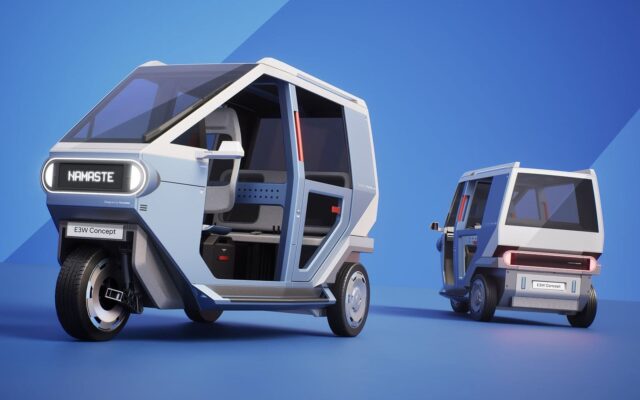
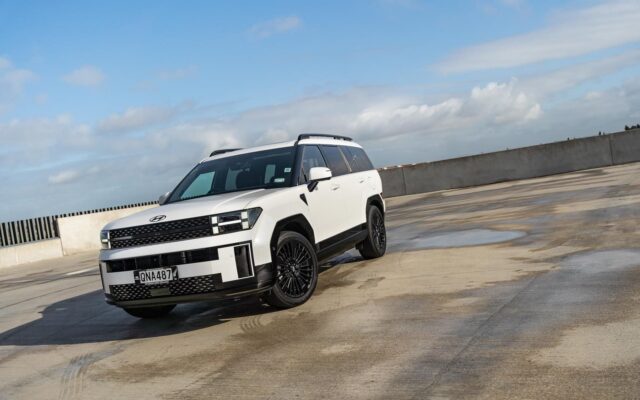
The new Hyundai BEV models will include three sedan models, six SUVs, one light commercial vehicle as well as one new type model.
This year, Hyundai begins sales of its Ioniq 6, followed by the Ioniq 7 in 2024.
Genesis’s BEV line-up comprises two passenger cars and four SUVs, including the electrified GV70 launching this year. Starting in 2025, all newly launched models from Genesis will be electrified.
Beyond existing BEV production facilities centred in Korea and the Czech Republic, Hyundai plans to gradually expand its BEV manufacturing bases, starting with an Indonesian plant that recently began operations.
As BEV production bases expand, the company is trying to increase the local procurement rate of batteries through strategic alliances with battery companies in major regions, including the US, to secure sufficient battery supply. Through these alliances, the company expects to obtain more than 50% of its next-generation lithium batteries for BEVs starting in 2025.
In addition, Hyundai will also diversify battery sourcing. It has secured sufficient battery supply to meet its sales targets by 2023 and plans to continue cooperation with various battery companies with the aim of securing 170GWh of batteries for its models, including Genesis, by 2030.
Hyundai is cooperating with various global partners to improve energy density and cost efficiency for next-generation batteries such as solid-state ones.
The company plans to apply an over-the-air (OTA) update to new models to be launched starting at the end of 2022, and expand it to all Hyundai models by 2025. In addition, the number of integrated control units can be reduced by one-third by 2030.
For autonomous driving technology, the Highway Driving Pilot (HDP), a Level 3 autonomous driving function, will be applied to the Genesis G90 starting in the second half of this year.
The Motional, the autonomous driving joint venture between Hyundai Motor Group and Aptiv, plans to expand the service area of an Ioniq 5-based robotaxi following its commercial service commencement in 2023 and start self-driving delivery services this year through partnerships with Uber Eats.

Join the conversation