
Audi unveils A6 Avant e-tron concept – more to come
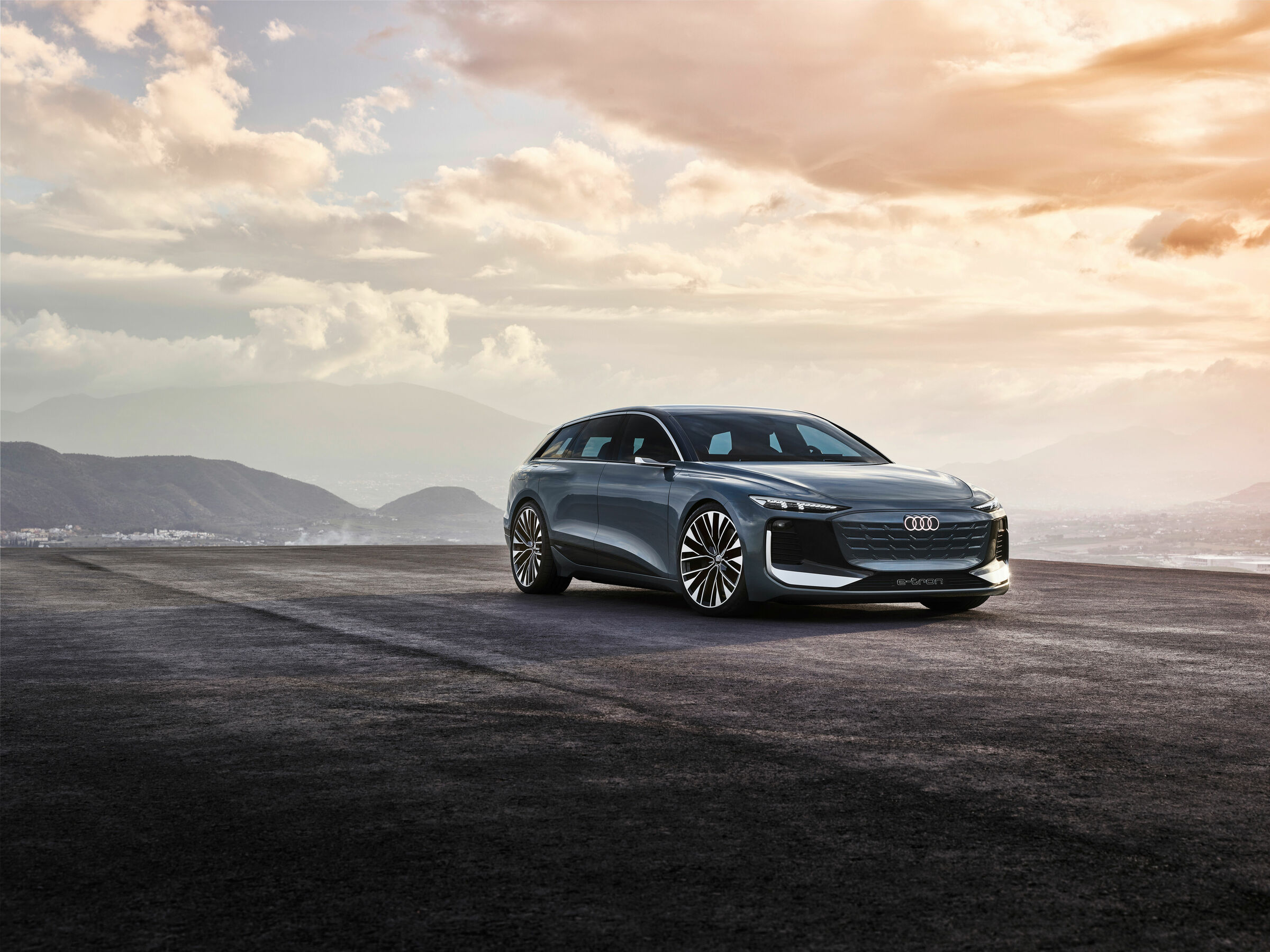
The electric Audi A6 Avant e-tron is expected in showrooms by early 2024.
Based on the Porsche Premium Platform Electric (PPE) it will offer up to 700km range (WLTP) from its 100kmh battery with 350kW of power and 800Nm torque, depending on the model.
Capable of 270kW DC fast charging through its 800-volt technology, the new e-tron can add about 300km range in 10 minutes.
Audi New Zealand general manager Dean Sheed says it’s an “awesome vehicle and the partner to the Sportback concept revealed late last year”.
“It will form the future of our next range of Allroad and performance RS models based on this platform.”
Audi has indicated more EVs are to come, including the possibility of an electric ute.
Chief executive Markus Duesmann is reported as saying Audi isn’t promising an electric ute but that it is considering one.
Audi introduced its A6 Sportback with an electric drive system almost a year ago at the Shanghai Auto Show in April 2021.
“The production-oriented A6 Avant e-tron concept car now illustrates the synthesis of pioneering drive technology and Audi’s traditional design world: the Avant,” it says.
Its new EV is 4.96 metres long, 1.96m wide, and 1.44m high, its body putting it in the luxury business class.
“With the Audi A6 Avant e-tron concept, we are offering a completely tangible look at future production models on our new PPE technology platform,” says Audi board member for technical development Oliver Hoffmann.
Avant is a term derived from avant garde and a 1995 Audi ad slogan.
It can get from zero to 100km/h in under four seconds.
Large 22-inch wheels and short overhangs, the flat cabin, and a dynamic roof arch give the Avant proportions reminiscent of a sports car.
Also typical of Audi e-tron models are the sleek, camera-based virtual exterior mirrors at the base of the A-pillar.
The showcar’s sporty silhouette is emphasized by its warm shade of gray called Neptune Valley.
The flat headlights and taillights are slim and flush while digital Matrix LED and digital OLED technology makes it possible to achieve maximum brightness and a wide range of features even with a minimal surface area, while at the same time offering customisable light signatures.
Three small, high-resolution LED projectors are built into each side of the body, transforming the ground beneath t into a stage when the doors are opened – small, extended, dynamic lighting effects greet the occupants with messages in their own language.
They also display warning symbols on the ground – to warn a bike rider that the car door is about to open, for example.
Another four high-resolution LED projectors – inconspicuously integrated into the corners of the vehicle – generate turn signal projections. The design of these projections can be modified to address different markets and approval regions as required.
The Digital Matrix LED front headlights achieve almost cinematic quality. If, for example, the Audi A6 Avant e-tron concept is parked in front of a wall during a break to recharge the battery, the driver and passengers can pass the time playing a video game projected onto it. – all via the Digital Matrix LED headlights.
The rear end of the concept car features a new generation of digital OLED elements that, as a continuous strip of lights, act like a display which can be adapted to the customer’s taste.
Projections around the vehicle allow its communication range to be extended beyond the vehicle for the first time. With the help of intelligent connectivity in the vehicle, the A6 e-tron concept provides information to other road users with visual signals.
The e-tron family will include basic versions optimised for minimum consumption and maximum range – in this case, propulsion will come from a single electric motor mounted to the rear axle.
The front wheels are connected via a five-link axle specially optimised for EVs with a multi-link axle in the rear. The concept car features Audi air suspension with adaptive dampers.
Audi can effectively expand the range of EVs in its portfolio – via the high-volume B and C segments. In addition, economies of scale will allow luxury-class technology and various different model versions to be incorporated into a wide-ranging line-up of models.

Join the conversation