
EVs cheaper than petrol – Gen Less
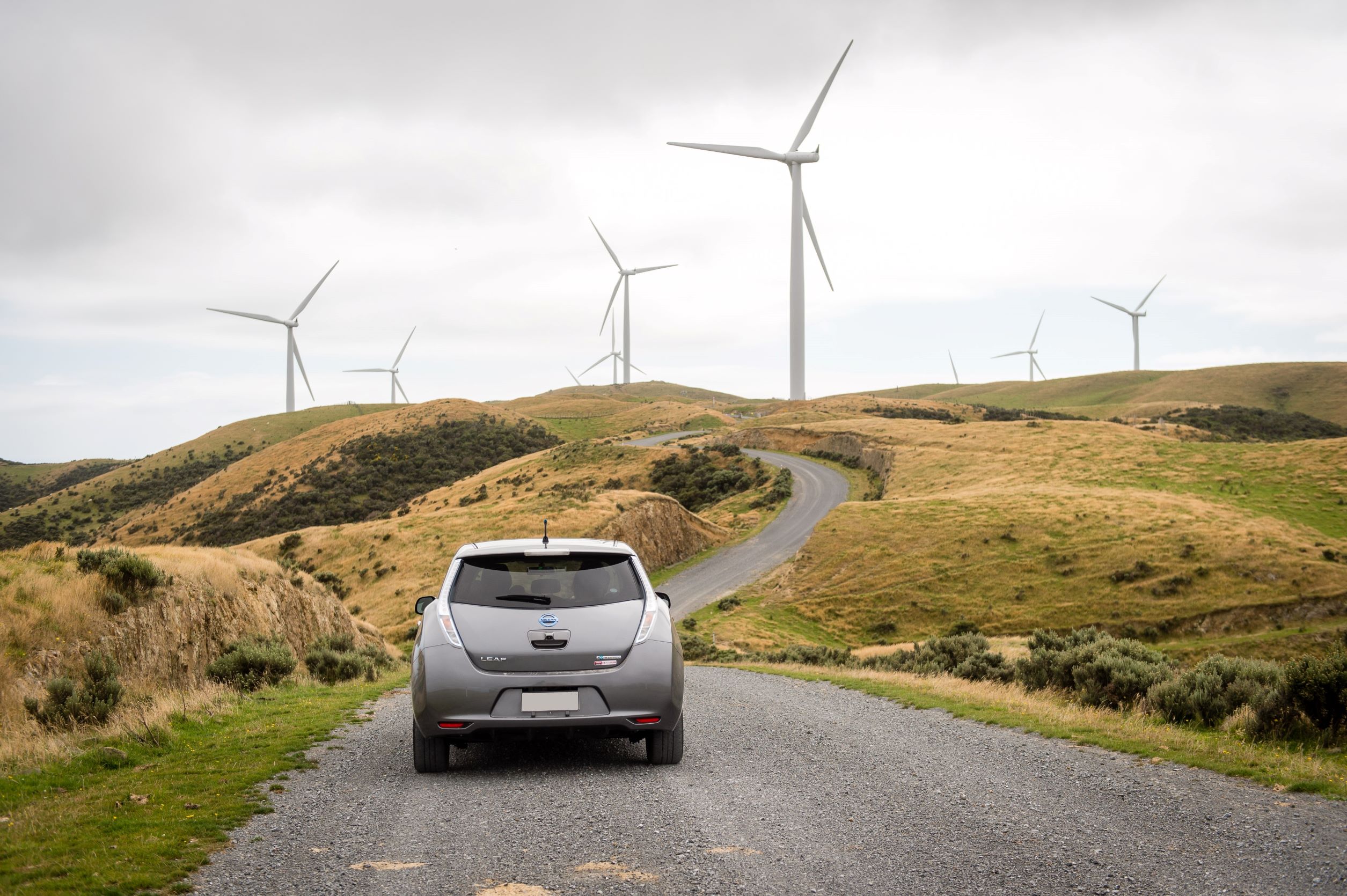
EVs work out cheaper than petrol vehicles on total cost of ownership, a new Gen Less tool reveals.
While the purchase price is one thing to consider when looking at buying a car, a newly refreshed tool developed by the Energy Efficiency and Conservation Authority (EECA) can help New Zealanders consider the total cost of ownership.
The Gen Less Total Cost of Ownership calculator adds up all the costs related to buying and operating a vehicle, and then subtracts the residual value of the vehicle (the price it can be sold for) to give users a clearer idea of the total cost of owning the vehicle over a term.
The calculator is primarily designed for business use, with fuel and electricity costs excluding GST. Everyday Kiwis can use it too.
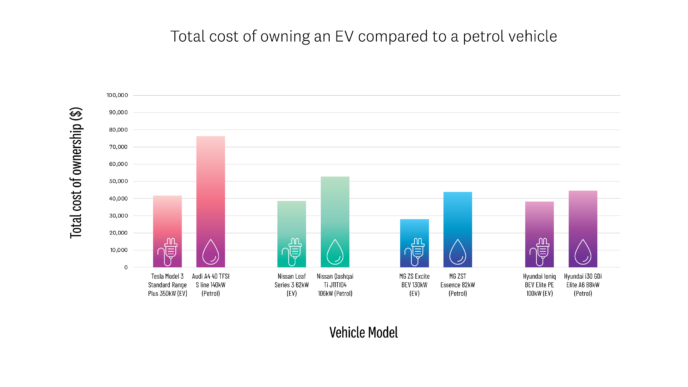
The default cost variables can be adjusted in the calculator to suit personal circumstances – like the cost of electricity at home, the current cost of fuel and tax rate (which for personal use needs to be set to 0%).
Using the tool to compare four commonly available EVs with similar petrol models, EECA has found the cost of owning an EV to be significantly less than owning a petrol car.
“Many New Zealanders are interested in the possibility of switching to electric, but the purchase price has frequently been a sticking point,” says EECA transport manager Richard Briggs.
“Our TCO tool reflects that the average total cost of ownership for the four EVs right now, based on five years of ownership, is 67.5% of the total cost of owning the petrol alternatives, at $36,772 for the EVs compared to $54,473 for the petrol cars.”
The average electricity cost per 100km for the EVs was $2.43 (or $2.79 including GST) while the average fuel cost per 100km was $18.02 (or $20.72 including GST) for the petrol vehicles, based on Unleaded 91.
Fuel price is based on the national average pump price, but this can be adjusted in the calculator.
The tool recognises the four EVs as having a higher residual value after five years of ownership, whereas the petrol vehicles generally lost value faster.
“After five years, the four EVs can be expected to sell for, on average, 50% of their original purchase price,” says Briggs.
“The petrol cars can be expected to sell for, on average, 43% of their original purchase price.”
While the cost is a clear benefit, New Zealand is also set to gain from a reduction in carbon emissions, as Kiwis’ EV consideration grows.
“More than a third of a New Zealand household’s carbon footprint is transport-related, on average,” says Briggs.
Te Manatu Ministry of Transport reported that in 2020, there were around four million registered light vehicles in Aotearoa New Zealand – including cars, vans, utes, and SUVs – and 97% were petrol or diesel.
“We have one of the highest rates of vehicle ownership in the world,” says Briggs.
“With most of the cars on our roads being petrol or diesel, it follows that almost half of New Zealand’s energy-related emissions come from transport.
“Those emissions can be reduced through uptake of active transport such as walking or biking, or public transport. Another high impact way to reduce transport emissions is by switching to electric vehicles.”
EVs produce almost 80% less CO2 emissions than petrol or diesel vehicles, and 60% less CO2 emissions across their lifecycle.
Some people looking at buying an EV might feel a bit of ‘range anxiety’ and worry the car won’t go the distance, but Briggs doesn’t see that as a cause for concern.
“The average travel range for the four EVs was over 300km on a full charge. Given the average length of a car trip in New Zealand is less than 10km, that range will cover day-to-day driving needs for the vast majority of people and give plenty of scope for those longer trips.
“EVs at the higher end are also now typically reaching 500km with advances in battery technology, and there are now EV fast chargers every 75km across almost all New Zealand’s state highway network.”
With the increase in petrol and diesel costs, combined with the improvement in EV technology and the roll-out of chargers across New Zealand, Briggs says the outlook for EVs has never been better.
Click here for the Gen Less TCO calculator.


Join the conversation