
First three emissions budgets announced
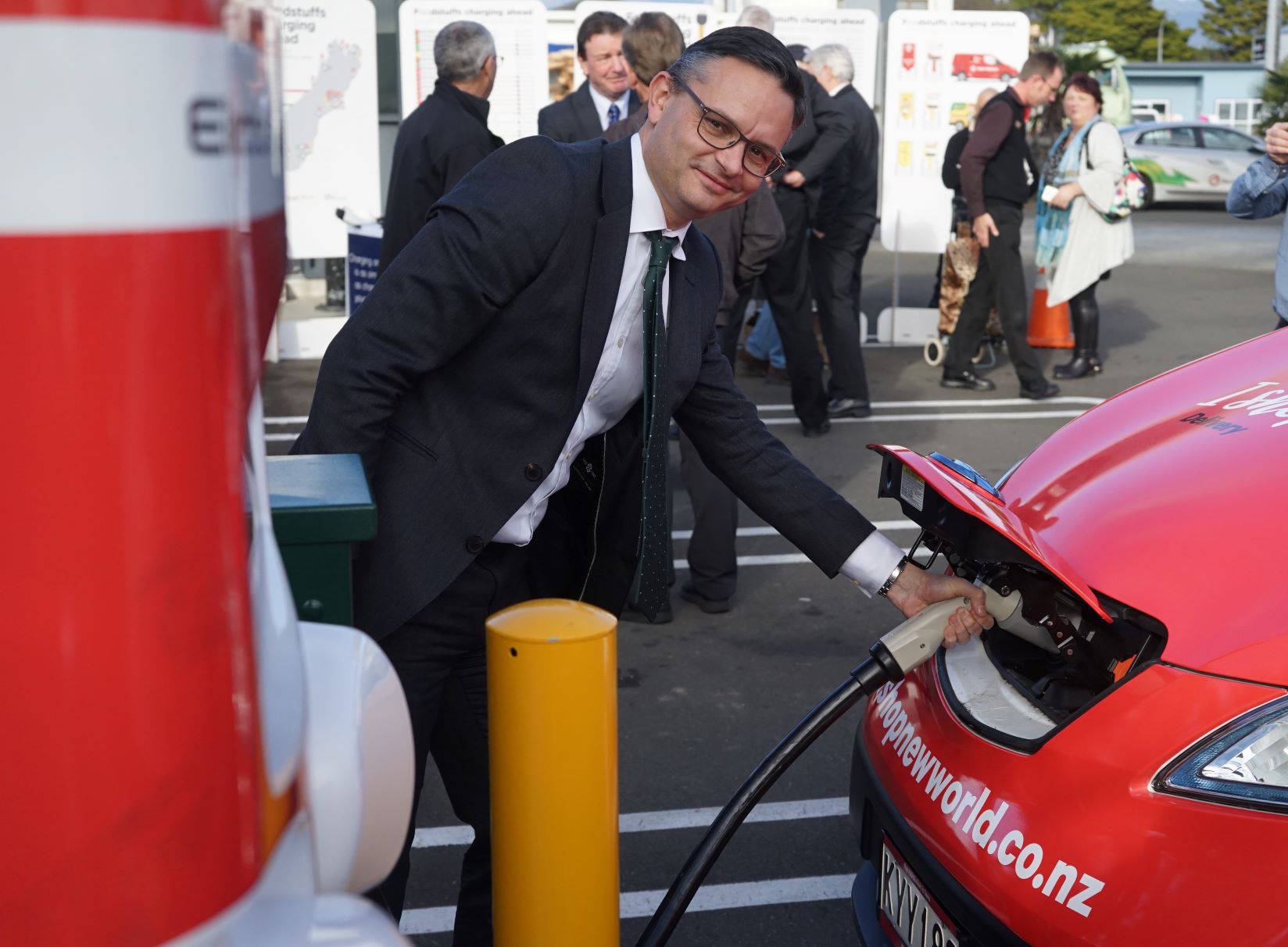
The Emissions Reduction Plan to be released on Monday May 16 will set out how the Government plans to deliver on the first emissions budget, with climate change minister James Shaw already announcing the first three emissions budgets.
Finance minister Grant Robertson will also outline the first investments from the Climate Emergency Response Fund on May 16 too, prior to announcing the 2022 Budget on May 19.
Shaw says meeting the emissions budgets will, among other things, help create new industries and high-value jobs, lower household energy bills, provide cost savings for businesses and greater resilience during increasing global uncertainty.
He says it means less exposure to international fossil fuel prices and greater energy security at home, fast, frequent and convenient buses and trains; safe city walkways and cycle lanes, and cars and trucks powered by wind and sun at a fraction of the cost of imported fossil fuels.
“The science tells us that limiting global warming to 1.5˚C above pre-industrial levels gives us the best chance of avoiding the worst effects,” Shaw explains.
“As temperatures have already risen more than 1˚C, we must act now to prevent further atmospheric warming and the catastrophes that come with it.”
The three emissions budgets set out the total amount of emissions New Zealand must cut over the next 14 years to help ensure net-zero by 2050 and are part of the worldwide effort to keep global warming to 1.5 degrees.
“That is why the Emissions Reduction Plan I will publish next week is so important – because it requires nearly every part of Government to act to reduce emissions right across the country and to ensure all New Zealanders benefit from the transition,” Shaw explains.
“The Emissions Reduction Plan will be a blueprint for a more equitable, more prosperous, and more innovative future – and all within planetary limits.”
In its advice to the Government, the Climate Change Commission recommended a special Parliamentary debate on the first three emissions budgets, prior to the publication of the Emissions Reduction Plan (ERP) itself, with that debate happening Thursday, May 12.
• Emissions Budget 1 (2022–2025): 290 megatonnes of carbon dioxide equivalent greenhouse gasses (72.4 megatonnes annually, equal to two megatonnes per year less than the five-year average leading up to this point 2017-2021, and 3.1 megatonnes less than projected emissions for 2022 to 2025).
• Emissions Budget 2 (2026–2030): 305 megatones (averages 61 megatonnes annually, nearly 20% average annual emissions from 2017 to 2021) in principle
• Emissions Budget 3 (2031–2035): 240 megatonnes (48 megatonnes annually, about 35% less than the average annual emissions from 2017 to 2021) in principle.
The emissions budgets are not the same as New Zealand’s Nationally Determined Contribution (NDC) under the Paris Agreement, which is also managed as a multi-year emissions budget (from 2021 to 2030).
The Climate Change Commission will review the latest evidence and update their advice, in advance of Cabinet finalising the next emissions budget in 2024 and then in 2029.
Shaw says the Government has contributed to emissions reductions in various ways, including bringing in the Clean Vehicle Discount and vehicle emission standards which have led to a 300% increase in EV imports, supported the roll-out of hundreds more EV charging stations – including on the Interislander Ferry, made major investments in public transport and rail infrastructure, built new cycleways and walkways and increased funding for Bikes in Schools.

Join the conversation