
Li-ion batteries blamed for rubbish truck fires
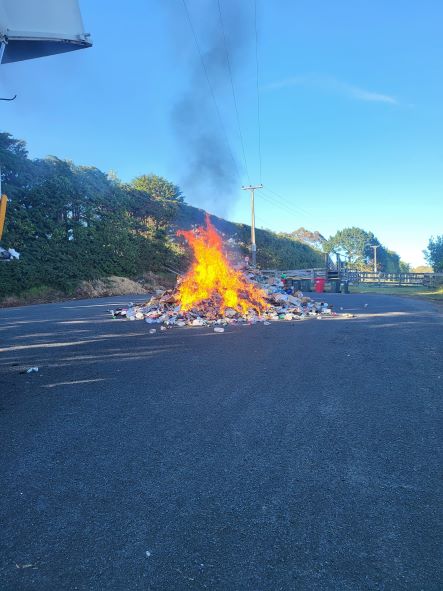
Warnings not to biff lithium-ion batteries in household roadside rubbish collections comes after a spate of rubbish truck fires around Auckland.
That includes a large fire in Waimauku, West Auckland, on October 11 for which the cause was a battery, says Auckland Council waste contracts and compliance team leader Graeme Young.
“It’s concerning that these rubbish truck fires are happening more and more frequently, at the rate of about one every six weeks at the moment.”
Large llthium-ion (li-ion) batteries are generally the cause of the fires – like those used in cordless power tools and more recently “banks” such as those used in electric vehicles (EVs) – not the smaller disposable AA, AAA type batteries, says the council.
A li-ion battery on its own is not considered dangerous, but when disposed of inappropriately – such as under compaction in a recycling truck or, as is suspected in the case of the Waimauku fire coming into contact with exposed copper wiring from an electric deep fryer (also inappropriately disposed of in the recycling), they can be the source of ignition, it adds.
Rubbish truck drivers are alerted to the fire when they see smoke in the hopper, Young explains.
They then have to find a safe place to tip the rubbish out and call the fire brigade to extinguish the fire.
“The fires are a potential hazard to drivers and also their trucks and we ask everyone to dispose of batteries the correct way and not put them in household rubbish to stop any further fires,” says Young.
A range of batteries can be dropped off free for recycling at Bunnings, Supercheap Auto and Repco stores.


Join the conversation