
Mercedes-Benz EQB first drive: The 7-seater we’ve been waiting for?
It seems that, in this part of the world anyway, the nominated electric vehicle ‘final frontier’ is the electric ute. Once EV utes are a thing in the market, it’s expected that we will have reached some sort of mythical kind of customer tipping point and the floodgates will open.
But the humble ute isn’t the only segment where electric options are few and far between. One could argue that things are just as sparse in the 7-seater SUV space.
You can grab the Tesla Model X as either a six or seven seater, but being priced from $174,990 they’re not exactly cheap. Three-row options from LDV and BYD could come our way, but the emphasis there is on the could.
For the moment it’s a baron segment, save for the new Mercedes-Benz EQB.

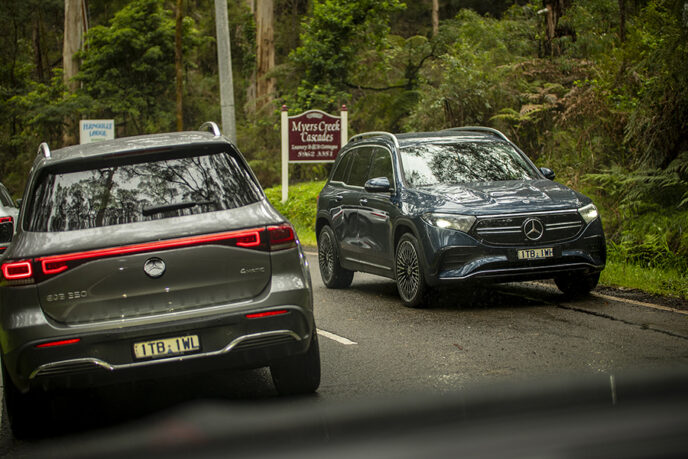
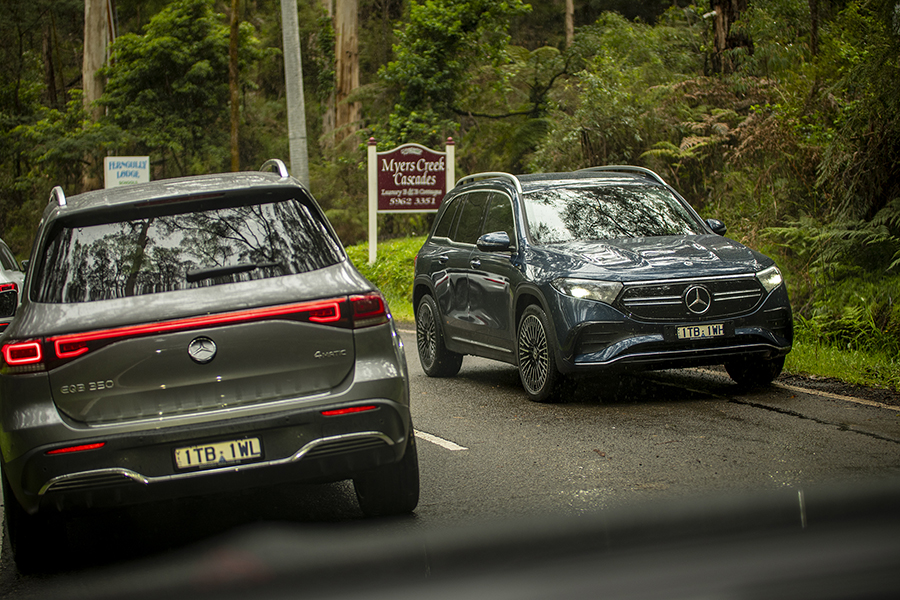
EVs & Beyond were recently invited to the EQB’s launch in Melbourne, which included a drive loop around the city through the Yarra Valley and it’s accompaniment of tight and twisty country roads.
The freshly landed EQB is offered in New Zealand in two trim levels; the 250 and 350 4Matic. Both make use of the same 66.5kWh battery; the former pairing it to a single 140kW/375Nm motor and rear-wheel drive and the latter packing all-wheel drive and dual motors making 215kW/520Nm.
Pricing starts at $99,900 for the 250 five seater (add $2900 to get seven seats), with the 350 priced from $109,900. For full pricing and spec details, click here.
As with the EQB’s petrol equivalent that it shares its platform with, the GLB, the new model doesn’t necessarily fill a neat logical void between the EQA and EQC. It’s longer and more practical than the EQC, while being more affordable. You could claim it as the best value proposition of the three.
Practicality? Yes, well, the EQB’s boot can host up to 1710L with everything folded flat. In five-seater models the boot offers 650L with the seats up, and in seven-seater models you get 670L or 130L depending on whether the third row is in action. That’s much more than the 500L in an EQC or the 510L in a BMW iX3, although it’s also a little short of the 664L an Audi etron gives you.
It sadly lacks a ‘frunk’; a concept that German carmakers still can’t quite wrap their heads around. Although in this case, the EQB’s ICE architecture might also be a factor.
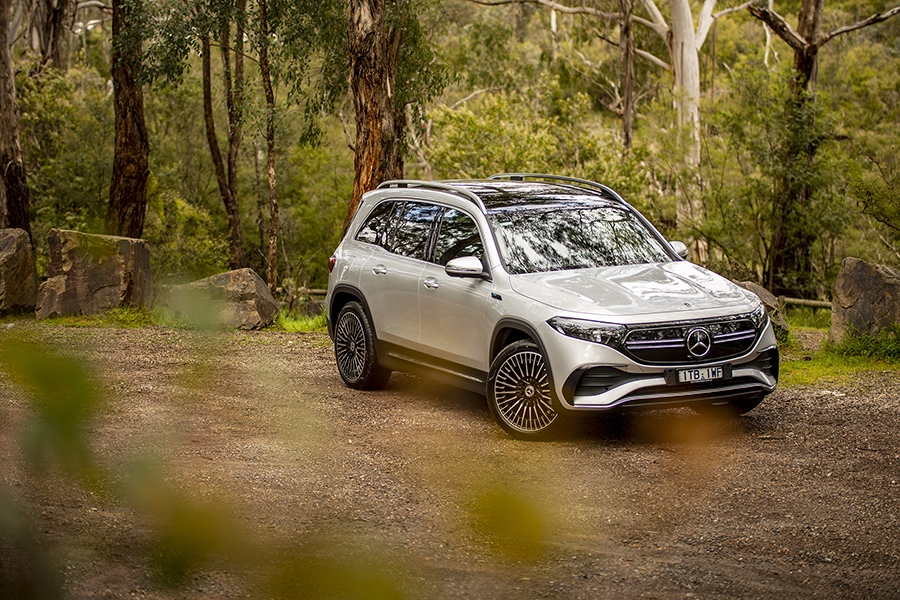
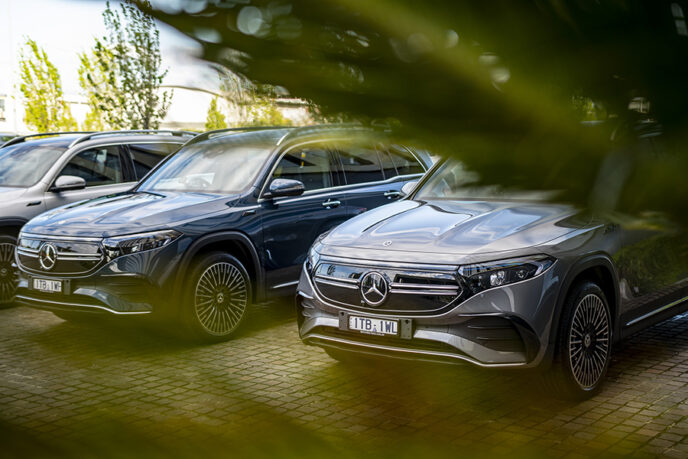
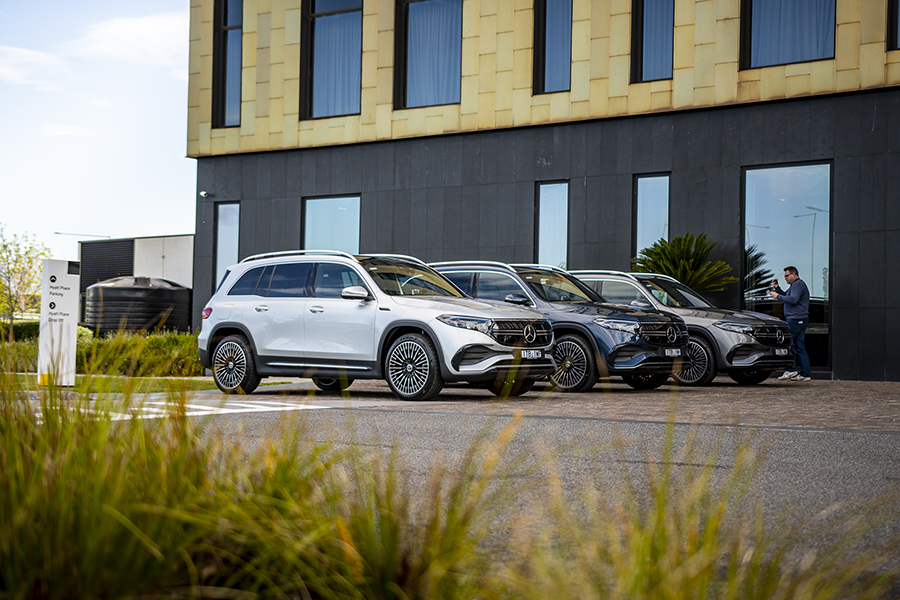
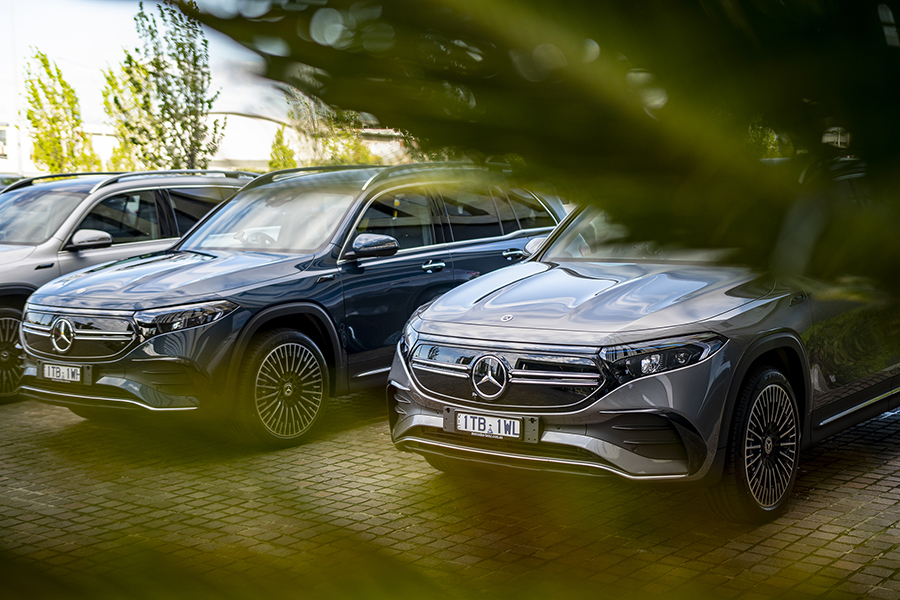
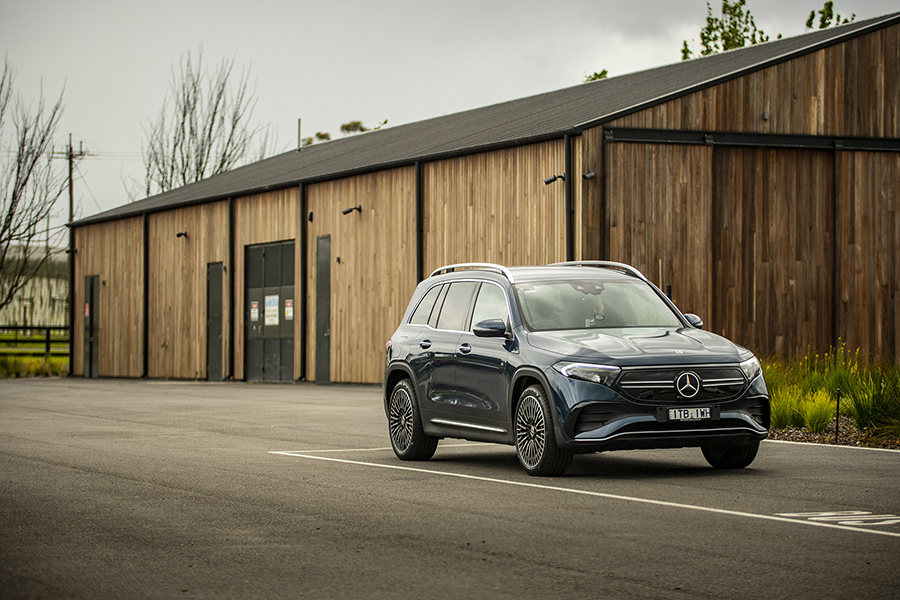
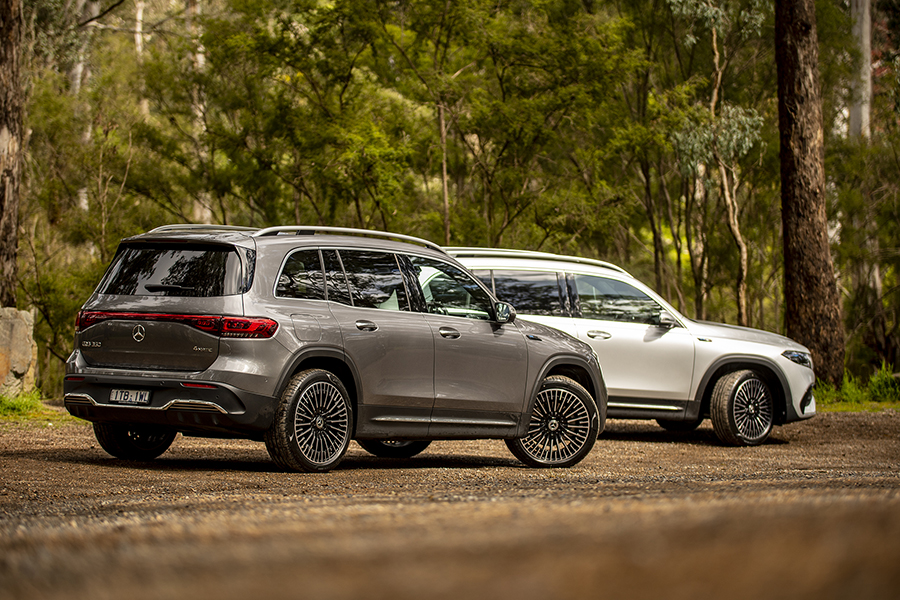
In terms of its design, the EQB shed some of the more unique elements of the GLB’s styling (like the more squared off nose) in order to adopt the signature EQ front fascia and full-length curved LED tail light. A sensible and suave looker it might be, I feel the changes have taken away some of the GLB’s unique chunky visual character.
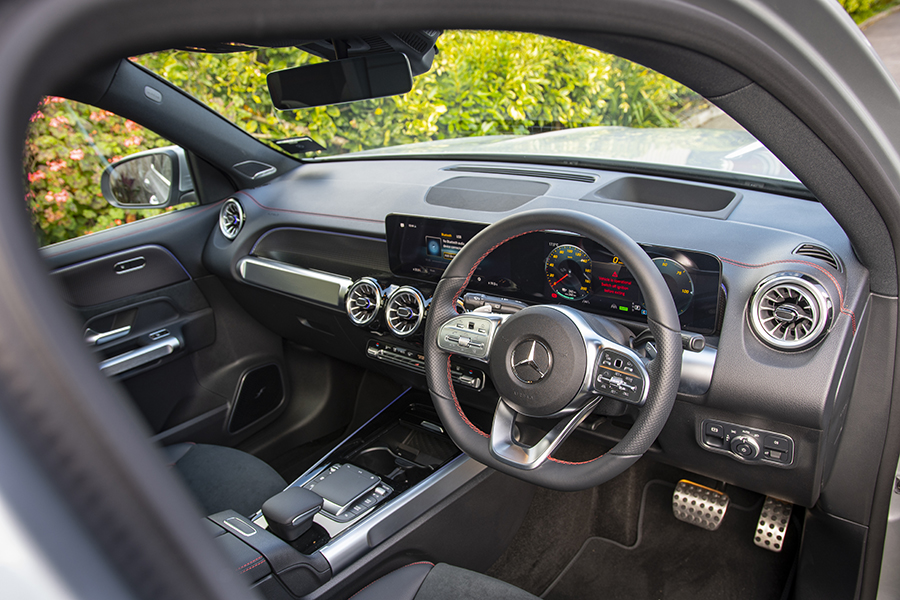
All of the cars we drove at the launch came equipped with Merc’s AMG-Line Sports Package (optional on the 250 and standard on the 350), adding a pair of gaping front air curtain vents, larger 20-inch wheels, a rear diffuser, and some sporty elements inside like bucket seats and a flat-bottom steering wheel.
Underneath the shiny metalwork sits a battery that Mercedes claims can travel up to 370km (360km in the 350 4Matic) on the WLTP cycle, paired to an onboard thermal management system and two refrigerant circuits.
Granted the EQB isn’t a particularly small car but given the size of the battery one would’ve thought a more ambitious range figure could have been on the table. The iX3 we mentioned before manages to extract 460km of WLTP-rated range from its 80kWh battery. The BYD Atto 3 gets 420km out of its 60kWh ‘Blade’ unit, although it is a lighter vehicle overall.
Range wasn’t really a factor on our Melbourne drive route admittedly. Indeed, it’s worth re-reminding ourselves that a 360km range is plenty for the average commuter.
Having miraculously dodged the worst of Victoria’s recent spate of hideous weather, we sampled the 250 first. As the name and platform stuff all suggests, the EQB 250 gets the same powertrain as the EQA 250, down to the power and torque output.
Given it’s a physically larger car, it’s no surprise that it feels a little more sedate behind the wheel compared to the A. It’s fairly poised when it comes to the corners; it just takes a little bit more time to tackle the straight bits in between the corners. Mercedes quotes a 0-100km/h time of 8.9 seconds, and that feels about right.

Those who aren’t fussed on seven seats are much, much more likely to opt for the 350 4Matic. Especially given that once you’ve optioned the 250 with the AMG-Line visual package, the price gap between the two models is less than six grand.
It isn’t going to frighten any Performance-grade Teslas any time soon, but the 350’s additional motor and extra pair of driven wheels makes it so much more interesting … and rapid. Mercedes claims 100km/h comes up in 6.2 seconds. In real-world driving it feels much more eager, with commendable off the line performance.
Threading through Victoria’s slightly damp, flood-impacted b-roads, it was reassuring to know that there was all-wheel drive under foot, too. Its ride is a little on the firm side, thanks potentially to those 20-inch feet.
Interestingly, the EQB isn’t offered with a tow rating in Australia or New Zealand, despite it being granted one in Europe. Similarly, in Europe you can buy the 350 4Matic with seven seats, but not here.
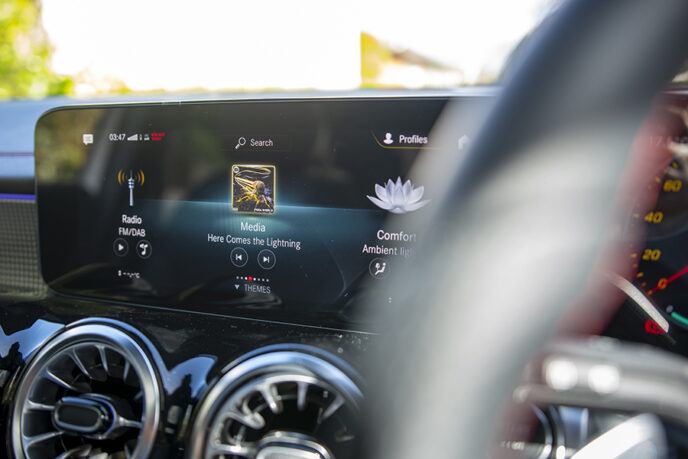
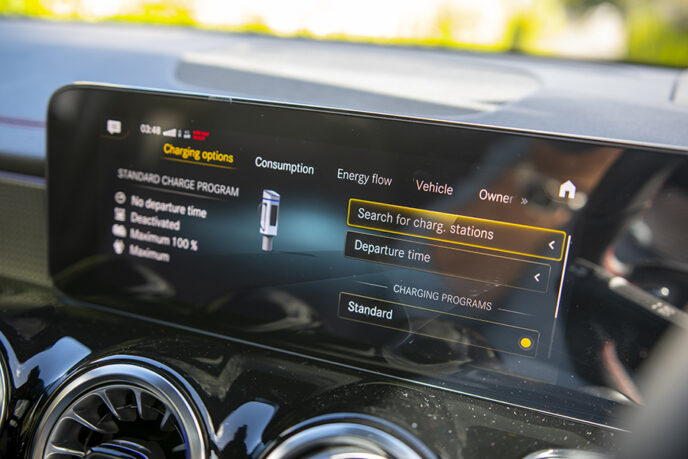
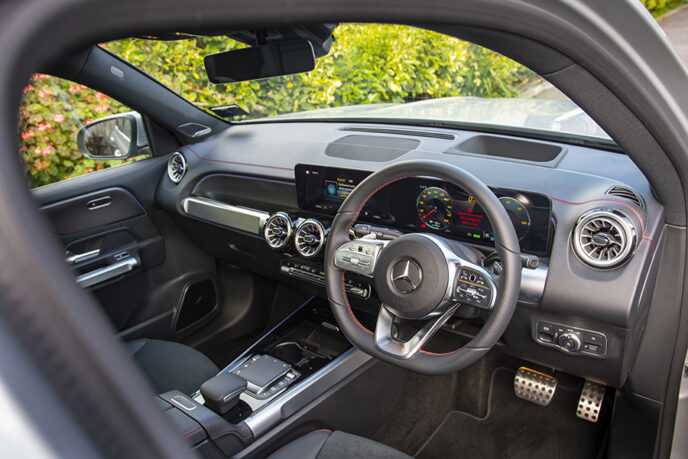
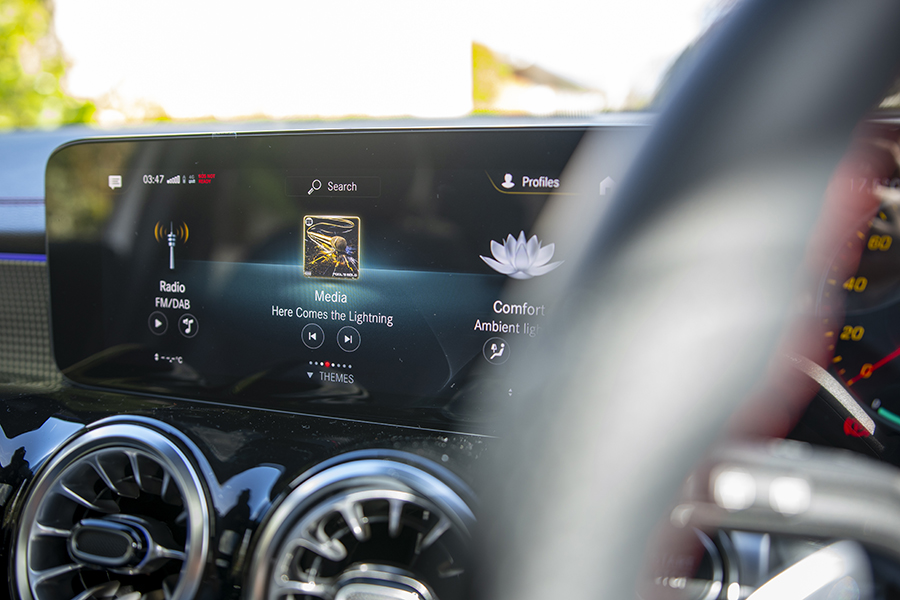
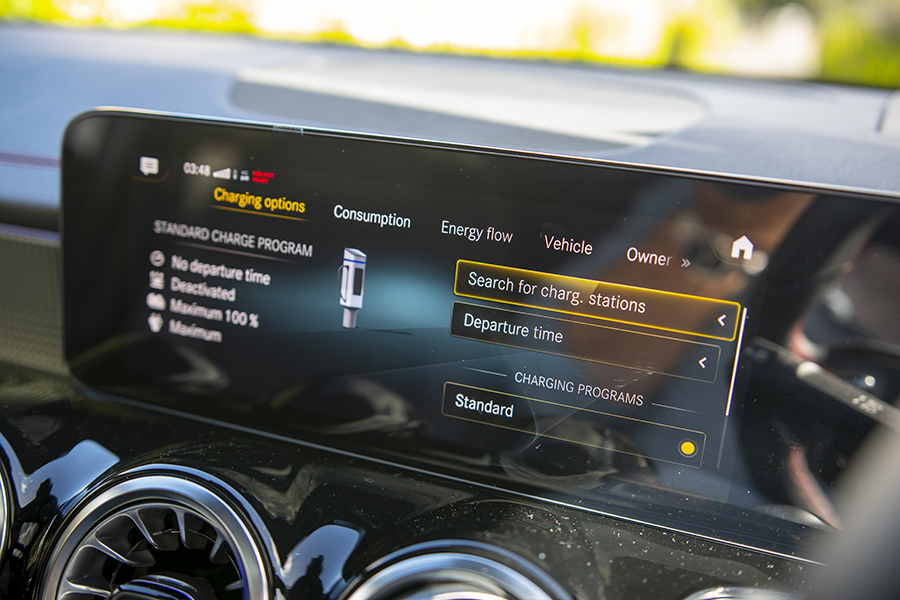
Those who’ve been in an EQA will be instantly familiar with the EQB’s cabin, which adopts more-or-less the same layout; complete with dual 10.25-inch screens, satnav, Apple CarPlay, Android Auto, dual-zone climate, an attractive array of material finishes and ‘Hey Mercedes’ voice functionality.
The Driver Assistance Package is also standard, bringing radar cruise, active lane keep assist, active blind spot assist, and more. Park assist and a 360-degree camera are standard fare, too.
Both models come with a healthy amount of kit, with Mercedes admirably giving the 250 almost all the tech of the 350. Inevitably though there are some features locked behind options packages. Some make sense, like the leather upholstery and the swanky Burmester audio. The lack of standard electric front seats across both models, though, is a little confusing.
Whether the EQB is the seven-seater EV you’ve been craving will largely depend on whether you’ve got six figures burning a hole in your back pocket (and if you’re happy with the 250’s more humble performance). But regardless it’s still a compelling package for premium shoppers. We expect it will have company in the space sooner rather than later.


Join the conversation