
Third low emission transport funding round successful applicants
The first marine project under the Low Emission Transport Fund (LETF) is among 11 projects getting $2.14 million funding.
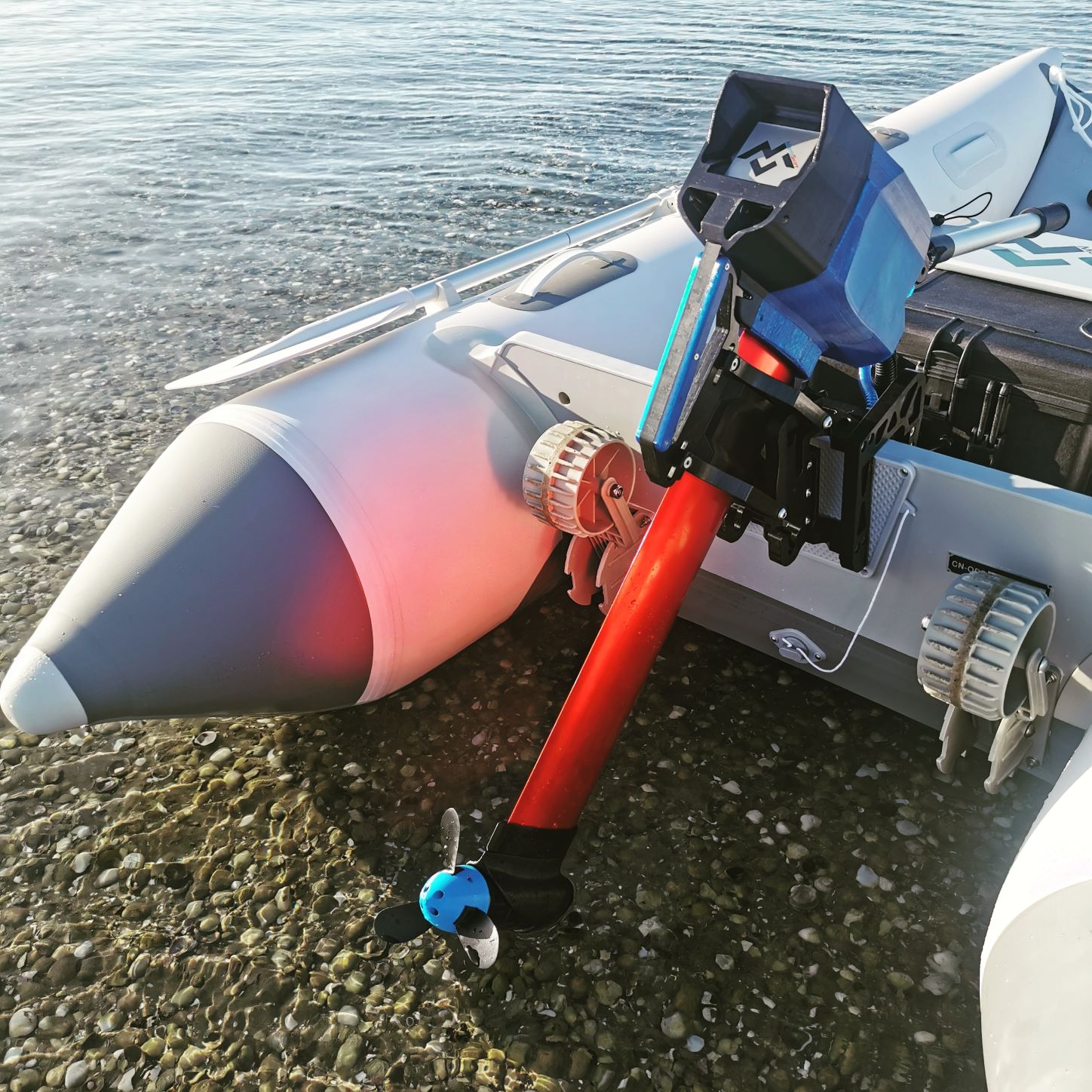
Core Technology receives $112,000 for a marina-based pilot with supplied electric outboard motors including ‘handbag’, ‘briefcase’ and ‘carry-on’ sized battery options to enable real-life marina experiences and adoption.
The company has designed and built 2.237kW, 4.474kW and 7.457kW electric outboard motors for use on small watercraft and tenders which will be offered as part of a pilot with the three different sizes of battery for marina owners and boat owners to trial for optimal configuration of motor, battery size and use case.
The pilot will be based at Northland and Auckland North marinas.
The new transport projects approved also include clever solutions for EV charging, and ways to cut fuel costs in heavy freight, says energy and resources minister Dr Megan Woods.
“In total, the projects will receive $2.14 million from the Government’s third round of The Low Emission Transport Fund so they can trial new ways of slashing emissions in the transport sector, in areas that were previously seen as hard to decarbonise,” she says.
“It’s also great to see projects looking at saving money and waste at the same time by targeting inefficiencies in freight.,” says Woods.
“Freight and transport management companies Findatruckload and iCOS LIVE will partner to identify “empty legs” – when trucks return empty. This will allow them to increase revenue, and significantly reduce wasted fuel. It’s a win-win.
Woods says the projects come in all shapes and sizes.
Ngāti Whātua Ōrākei, ahi kā from Tāmaki Makaurau (Auckland) will run a car share service using a community app with chargers, three EV cars, and an EV van so whānau in the local community have accessible and affordable transport without needing to run an expensive private car.
“We are also happy to support work on one of the big reasons that stop prospective buyers from purchasing EVs – slow charging,” says Woods.
“For example, Red Phase Technologies will work with Z Energy and Powerco to integrate a super high-speed charger at a Waiouru site, using technology that will reduce the impact on the grid.
“Jump Charging will build a portable skid-mounted 75kW DC rapid charging station that can be installed in locations that require temporary increases in EV charging demand such as special events or emergency situations.”
Wood says the projects are all part of the national effort to reduce New Zealand’s transport emissions by 41% by 2035.
The LETF, administered by the Energy Efficiency and Conservation Authority (EECA) supports the demonstration and adoption of low emission transport technology, innovation and infrastructure to accelerate the decarbonisation of the New Zealand transport sector.
Organisations can apply for up to 50% of the cost of projects that met specific objectives, for instance projects that demonstrate replicability, overcome significant barriers within sectors, or encourage innovative approaches to smart charging and/or vehicle use.
The fund focuses on activities in the transport sector that move people and/or goods on roads, off-road, and in the marine and aviation sectors.
Wider transport systems and activities (such as building roads, urban design, and mode shift policy) are excluded.
Each round of the LETF will provide co-funding to a particular area of interest (unlike the previous LEVCF, in which each round welcomed the full range of applications).
An announcement will be made in advance of each funding round advising which areas of interest will be included.
Approved projects in the latest round feature in the November EVs and Beyond magazine.

Join the conversation