
Tranzit’s electric bus initiative wins environmental excellence award
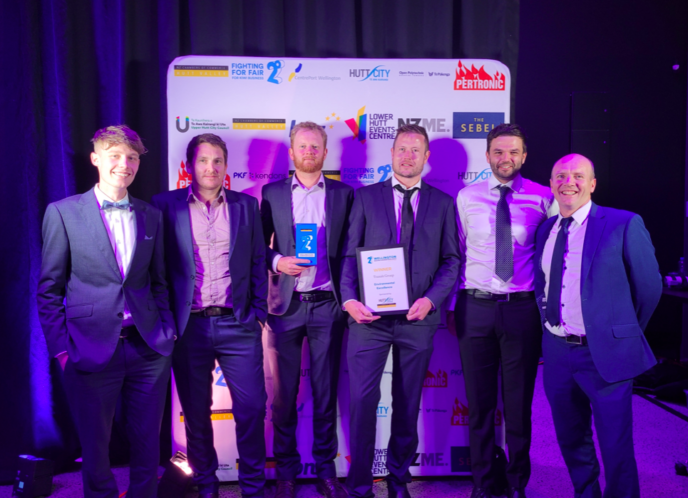
A commitment to decarbonising its bus fleet has earned New Zealand family-owned transport and tourism company Tranzit Group one of the top awards at the 2degrees Wellington Regional Business Excellence Awards.

Tranzit was awarded the Environmental Excellence Award at the Lower Hutt Events Centre on November 18 for its industry leading initiatives and investment in electric buses and supporting infrastructure.
Accepting the award on behalf of Tranzit Group, project manager James Howard told the audience that the most pressing issue facing the transport industry was the decarbonisation of its fleet.
This follows the Government’s Emissions Reduction Plan which requires only zero-emission public transport buses to be purchased from 2025 and the decarbonisation of the entire public transport fleet by 2035.
“In the cities we operate in, we want to ensure people can travel on clean, quiet and zero emissions buses so what we are doing is investing heavily in electric buses and electric bus charging infrastructure to support our journey,” Howard says.
“I want to thank EECA (Energy Efficiency and Conservation Authority) for co-funding some of our projects, to our company directors for having such great foresight to begin this decarbonisation journey seven years ago and to our team for making it happen.”
Tranzit is committed to a sustainable future and currently operates 32 electric buses – 30 double deck e-buses in Wellington and one single deck in both Auckland and Palmerston North. The company will introduce more EV double-deckers into Wellington and another single deck e-bus into regional NZ in 2023. These vehicles are built in Tauranga at Kiwi Bus Builders using best global parts.
To support Tranzit’s growing electric bus fleet, the company has invested in and built charging infrastructure. This currently stands at a total of 2,820kW – enough to power 3,400 homes or approximately the town of Foxton – and is the largest privately owned charging network in New Zealand.
It includes:
- two super-fast 450kW chargers – one located in Island Bay and one in the soon-to-be completed Wellington Interchange in Thorndon. At these locations, e-double deck buses can be charged from 20% to 100% in 12 minutes
- a total of 1080kW installed at Grenada depot, north of Wellington
- a 1MW substation installed at Rongotai depot, with a 300kW upgrade planned for later in 2022
- a 120kW charger operational at Palmerston North depot
- a portable 25kW charger at its new Taupō depot
In addition, the company came up with an alternative solution to decarbonising bus fleets by successfully converting a diesel double-decker bus to 100% electric in 2021 in a southern hemisphere-first.
The conversion took place in Tranzit’s Masterton workshop and trials undertaken this year in Wellington and in Auckland proved its operational and financial viability. Tranzit is proposing to convert more of its diesel buses to electric to help meet New Zealand’s public transport decarbonisation goals on time. This proposal is currently before government officials.
Tranzit transport and operations director Keven Snelgrove says meeting the Government’s commitments and priorities outlined in the Emissions Reduction Plan will take coordinated and considered action across a range of central government ministries, agencies, regional authorities and public transport operators.
“No single organisation can work in isolation to achieve our collective commitment and Tranzit is actively working to bring together these organisations with the view plan the most effective way to transition our national fleet of diesel buses to zero emissions.
“This includes building new electric buses but also offering alternative solutions,” Snelgrove says.

Join the conversation