
Kia aims for ‘scalable sustainability’
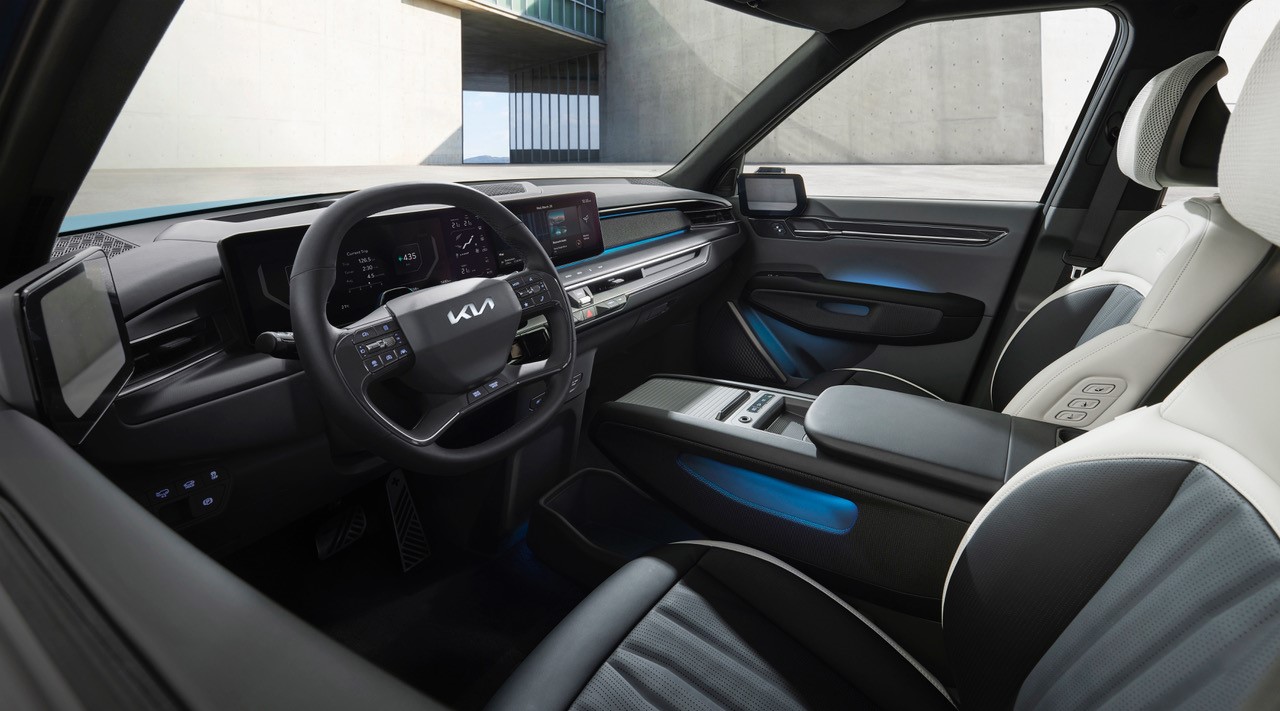
Kia’s 10 “must-have” sustainability items will be applied to all new Kia model lines, starting with its EV9, aiming to achieve sustainability at scale.
Policy forms part of Kia’s Design Sustainability Strategy, which includes commitments to phase out leather and invest in the development of new bio-based materials as part of its intention to reduce short-term carbon emissions and achieve carbon neutrality across its operations by 2045.
Kia began using bioplastic and sugar cane bio-fibre in the 2014 Soul EV. It now uses a range of plant-based components and use of recycled PET and discarded fishing nets in the production of its fabrics and carpets.
Beginning with the EV9, Kia says it will continue its sustainability moves, investing in testing and development to accelerate the implementation of bio-fabrication.
It’s 10 “must-haves” for the EV9 include bioplastic – produced using a variety of renewable biomass sources such as vegetable oils, corn extract, sawdust and sugar cane – post-consumer material (PCM) plastic made using recycled material from existing products rather than new, bio polyurethane (PU) rather than leather, recycled polyethylene terephthalate (PET) fabric – with Kia adding recycled PRT yarn, recycled PET carpet and fishing nets, bio PU foam (EV9 headrests), bio paint, benzene, toluene, and xylene (BTX)-free paint; and recycled PET felt (EV9 luggage board).


Join the conversation