
Nissan’s ‘The Arc’ business plan includes EVs

Nissan intends strengthening its product portfolio, advancing electrification, introducing new ways of developing and manufacturing, and harnessing partnerships to achieve its Ambition 2030 vision.
It targets a million-unit sales extra compared to fiscal year 2023 and an operating profit margin of more than 6% by the 2026 fiscal year’s end (March 31, 2027).
Just over half (16) of 30 new models to be launched by fiscal year 2026 will be electrified.
An EV pioneer with its Nissan Leaf, the company aims to make EVs more affordable and increase profitability.
By developing EVs in families, integrating powertrains, utilising next-generation modular manufacturing, group sourcing, and battery innovations, Nissan aims to reduce the cost of next-generation EVs by 30% (when compared to the current model Ariya crossover) and achieve cost-parity between EVs and internal combustion engine (ICE) models by fiscal year 2030.
“In the area of family development alone, the cost of subsequent vehicles – those developed based on the main vehicle in the family – can be reduced by 50%, the variation of trim parts reduced by 70% and development lead time shortened by four months,” says Nissan.
“By adopting modular manufacturing, the vehicle production line will be shortened, reducing the production time per vehicle by 20%.”
More plants in Japan and overseas will adopt the Nissan Intelligent Factory concept, with the Oppama and Nissan Motor Kyushu plants in Japan, the Sunderland Plant in the UK and Canton and Smyrna plants in the US starting the adoption from fiscal year 2026 through 2030, Nissan says.
“Meanwhile the EV36Zero production approach will be extended from Sunderland in the UK to plants including Canton, Decherd and Smyrna in the US, and Tochigi and Kyushu in Japan from fiscal year 2025 through 2028.”
Strategic partnerships will be expanded into technology, product portfolio and software services, under The Arc plan.
The new plan is split into mid-term imperatives for fiscal years 2024 through 2026, and mid-long-term actions to be carried out through 2030.
“The Arc plan shows our path to the future,” says Nissan president and chief executive Makoto Uchida.
“Faced with extreme market volatility, Nissan is taking decisive actions guided by the new plan to ensure sustainable growth and profitability.”
That includes a tailored regional strategy and preparation for an accelerated transition to EVs, supported by a balanced electrified/ICE product portfolio, volume growth in major markets and financial discipline.
In Japan, Nissan will refresh 80% of its passenger model line-up, launch five new models and achieve a 70% electrified level in its passenger vehicle line-up.
In Oceania (including New Zealand and Australia) Nissan will launch a one-ton pickup (ute) and introduce a C crossover EV, while in Europe Nissan will launch six new models and aim to achieve a 40% EV passenger-vehicle sales mix.
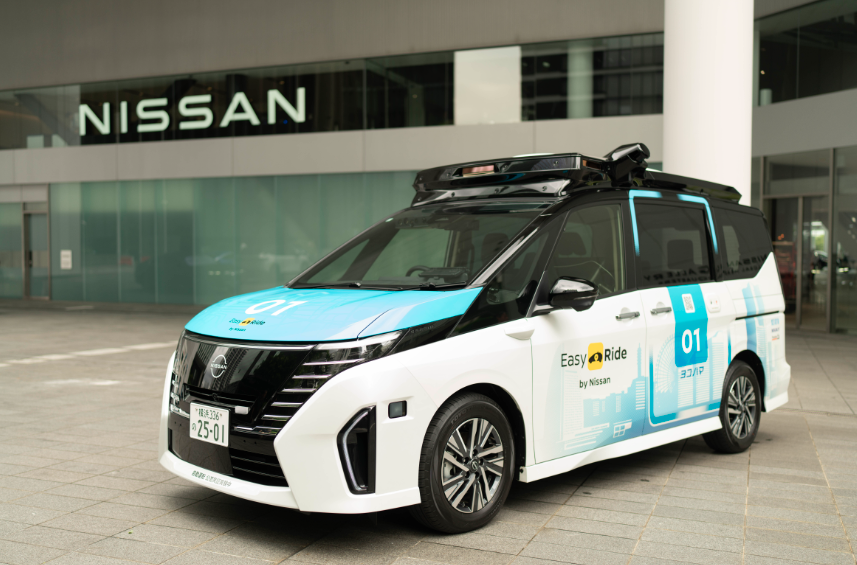
The plan includes proposals to accelerate the evolution of vehicle intelligence technologies such as next-generation ProPILOT driver-assistance system, which realise door-to-door autonomous driving technology from on-highway to off-highway, private premises, and parking.
Nissan says it will offer enhanced NCM lithium-ion, LFP and all solid-state batteries to provide diversified EVs to meet different customer needs, the new EVs with these batteries launching in fiscal year 2028, reducing quick-charging times by 50% and increasing energy density by 50% compared to the Ariya.
The company says it will continue to leverage the alliance with Renault and Mitsubishi Motors in Europe, LATAM, ASEAN and India.

Join the conversation