
NZGIF raises more international finance for solar energy
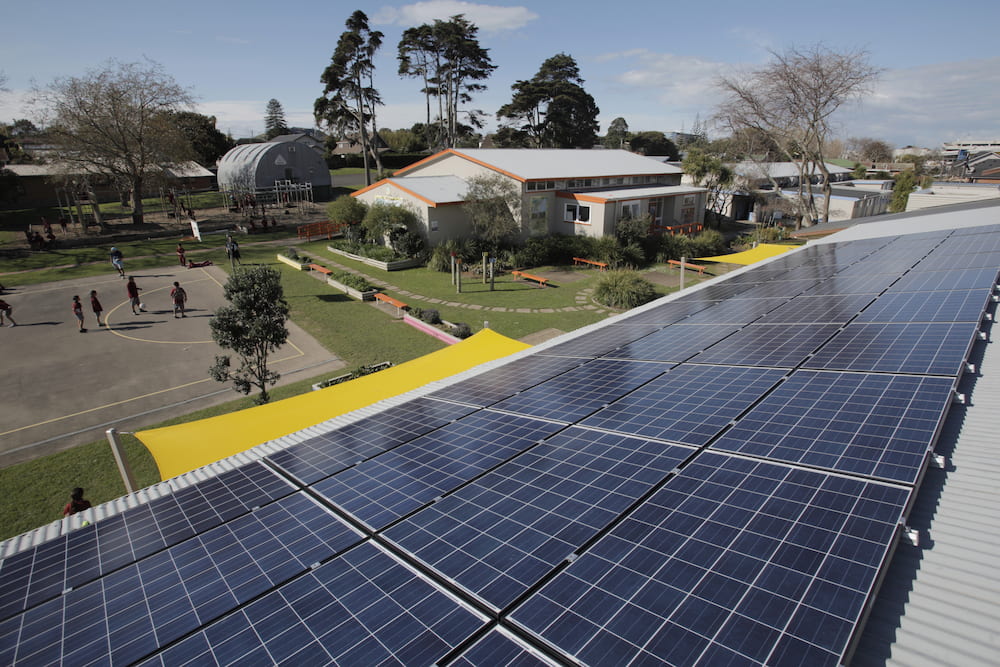
New Zealand Green Investment Finance (NZGIF) has led a second debt issuance, making a total $365 million available for medium- to long-term debt to solar providers.
In addition to $90m of private sector debt sourced in September 2023 from First Sentier Investors and Natixis Investment Managers, Societe Generale has now financed a further $130m of available debt into NZGIF’s Solar Finance programme.
NZGIF says it has invested $145m into the programme.
The new solar lending will further finance New Zealand’s largest residential Power Purchase Agreement (PPA) portfolio, managed by SolarZero.
The total lending will help provide access to affordable renewable generation for more than 20,000 New Zealand households, says NZGIF.
“NZGIF Solar Finance is structured for growth,” says NZGIF chief investment officer Jason Patrick.
“Private capital provides the scale that’s needed to accelerate investment into decarbonisation,” he says.
“Having the support of a major European bank like Societe Generale is significant and welcomed.
“Societe Generale, First Sentier Investors and Natixis Investment Managers all see value in New Zealand’s renewable energy sector.
“Our opportunity is to now harness this type of financial support, from domestic and offshore investors, towards other sectors and additional partners, capable of reducing New Zealand’s carbon emissions.”
Societe Generale Asia Pacific securitisation and fund financing co-head Arkady Lippa says NZGIF Solar Finance represents an excellent investment opportunity for New Zealand.
“We are pleased to leverage our innovative financing solutions and support New Zealand’s energy transition as part of Societe Generale’s long-term commitment to decarbonisation.”
SolarZero chief executive Matt Ward says: “Our electricity demand is going to increase by 50-60% by 2050.
“Solar is the cheapest form of generation on the planet right now, so it’s only logical that solar plays a part in that.”
Solar energy makes up about 1% of New Zealand’s delivered electricity.
Transpower predicted in 2020 that this would rise to 13% of New Zealand’s delivered electricity by 2050 under a scenario where electrification of the economy is accelerated.
“So, on the 10th of May, for instance, when New Zealand had its grid energy crisis, SolarZero deployed 30 megawatts of power and effectively helped keep the lights on,” says Ward.
“We need alternative funding models and capital models to do that,” he says, adding the Kiwi energy “trilemma” needs to be solved, such as decarbonising the economy, making sure energy is reliable so there are no blackouts, and ensuring it’s affordable.


Join the conversation