
New electric buses start in West Auckland

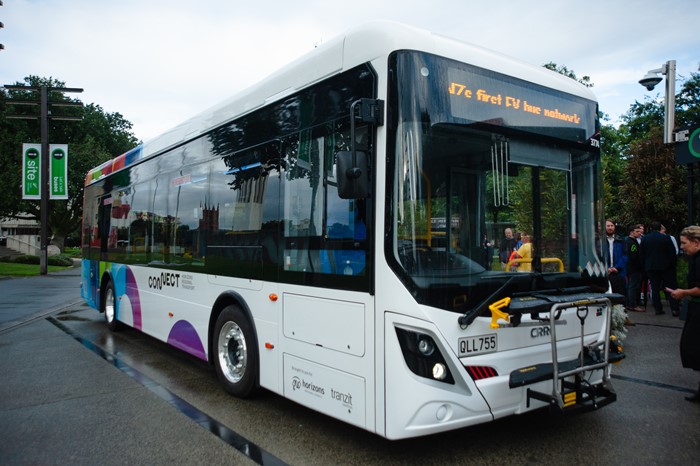
Auckland Transport (AT) has launched 44 electric buses to better serve a rapidly growing West Auckland population.
The new e-buses include 26 double-deckers and will run every 10 minutes on AT’s WX1 Western Express frequent service from Westgate to the city centre via the Lincoln and Te Atatū bus interchanges.
They have about 300km range from their 508kW CATL batteries and can carry 83 seated and 17 standing passengers along with one wheelchair space.
Over coming months these-new electric buses will also replace diesel buses on the 11T, 11W and 12 routes, says AT, adding phones and other smart devices can be charged on the e-buses too.
Waitākere councillor Shane Henderson and his family boarded one of the electric double-deckers on its inaugural journey into the city centre on Sunday April 27.
“It’s a really exciting day for West Auckland, and it’s going to build on what was already a really successful bus service which has smashed patronage targets,” he says.
West Auckland is one of the fastest growing areas in Auckland, and these expanding communities need high quality public transport options, says AT.
With the Government’s announcement that it will fund a new dedicated busway and stations between Westgate and into the central city, the future of public transport is looking brighter for West Auckland communities, it says.
The new buses are operated by Tranzit’s Tranzurban division and general manager Catherine Jones says they are a win-win for West Aucklanders and the environment.
“Electric buses will contribute to net neutral carbon emission on transport services, so having this eye-catching fleet on the road in West Auckland supports AT’s environmental goals,” she says.
“Based on Tranzit Group’s experiences in delivering urban passenger services in electric buses across Aotearoa New Zealand, passengers notice how much quieter and smoother their bus journey is, and our drivers enjoy driving them.
“With less noise and air pollution there’s also a benefit to the communities and businesses where this fleet operates.”
Transport is the second biggest contributor to New Zealand’s greenhouse gas emissions.
“One of our key targets is that by 2030 we want all buses coming into the city centre to be electric,” says AT infrastructure and fleet specification manager Edward Wright.
“And right now Auckland has more electric buses, 224 of them to be exact, than any other city in Australasia.
“Each of these new double-decker electric buses can fit 100 passengers, and we have boosted capacity on the WX1 service by an additional 7333 seats every weekday, and 51,000 seats every week,” says Wright.
“We’re adding another 31 electric buses to our fleet by the end of June. By August next year, we will have a fleet of 450 electric buses, which is around a third of the 1350 buses that operates AT’s services,” he says.
“Longer term, we have plans in place for Auckland’s bus fleet to be fully electric by 2035.”
AT public transport services and planning development head Pete Moth says AT has also implemented a new frequent bus service in West Auckland.
“We have replaced the old 120 service with the Frequent 12 service,” he says.
“This new route links Greenhithe and Constellation Station on the North Shore, and unlike the old service it will run along the motorway instead of residential roads – meaning faster journeys for most users.”
It will initially run every 12 to15 minutes in peak times, and every 30 minutes at off-peak times. Once necessary charging facilities are in place, route 12 will run at least every 15 minutes, 7am-7pm, seven days a week, Moth says.
“This will bring around 40% of West Aucklanders within walking distance of a turn-up-and-go bus or train service,” he says.
“We have also added more trips to the WX1 and 11T/W services. The WX1 will now run every 10 minutes until 9pm, and the 11T/W services will provide a combined 20-minute frequency between 6am and 8pm during weekdays.”
Click here for more information.

Join the conversation