
More than 100,000 bikes parked at Locky Docks
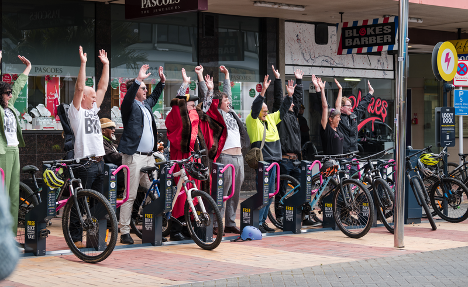
Big Street Bikers’ Locky Docks self-locking bike racks around New Zealand have passed 100,000 bikes parked.
Free to the public, Locky Docks began in Christchurch in 2020 as the country came out of the first COVID lockdown.
The 100,000th bike parked outside the Whangarei library is a testament to how the network has grown, now spanning 10 cities with scope to grow much further, says Big Street Bikers (BSB).
“It’s vindication not only for Locky Docks but also vindication for the popularity of biking in our urban centres,” says founder Cleve Cameron.
“It’s a great proof point that when infrastructure is reliable, convenient and free, people will use it,” he says.
“Now we’re ready for bigger, bolder integrations with transport and urban hubs across the motu.”
The business began out of insight that councils were investing significantly on cycle lanes, but had no investment into secure places for people to park, says BSB.
“With an estimated 10,000 bikes stolen every year and e-bikes costing upwards of $5000, Locky Docks closed the loop when it comes to making active transport an actual option for most people,” the company says.
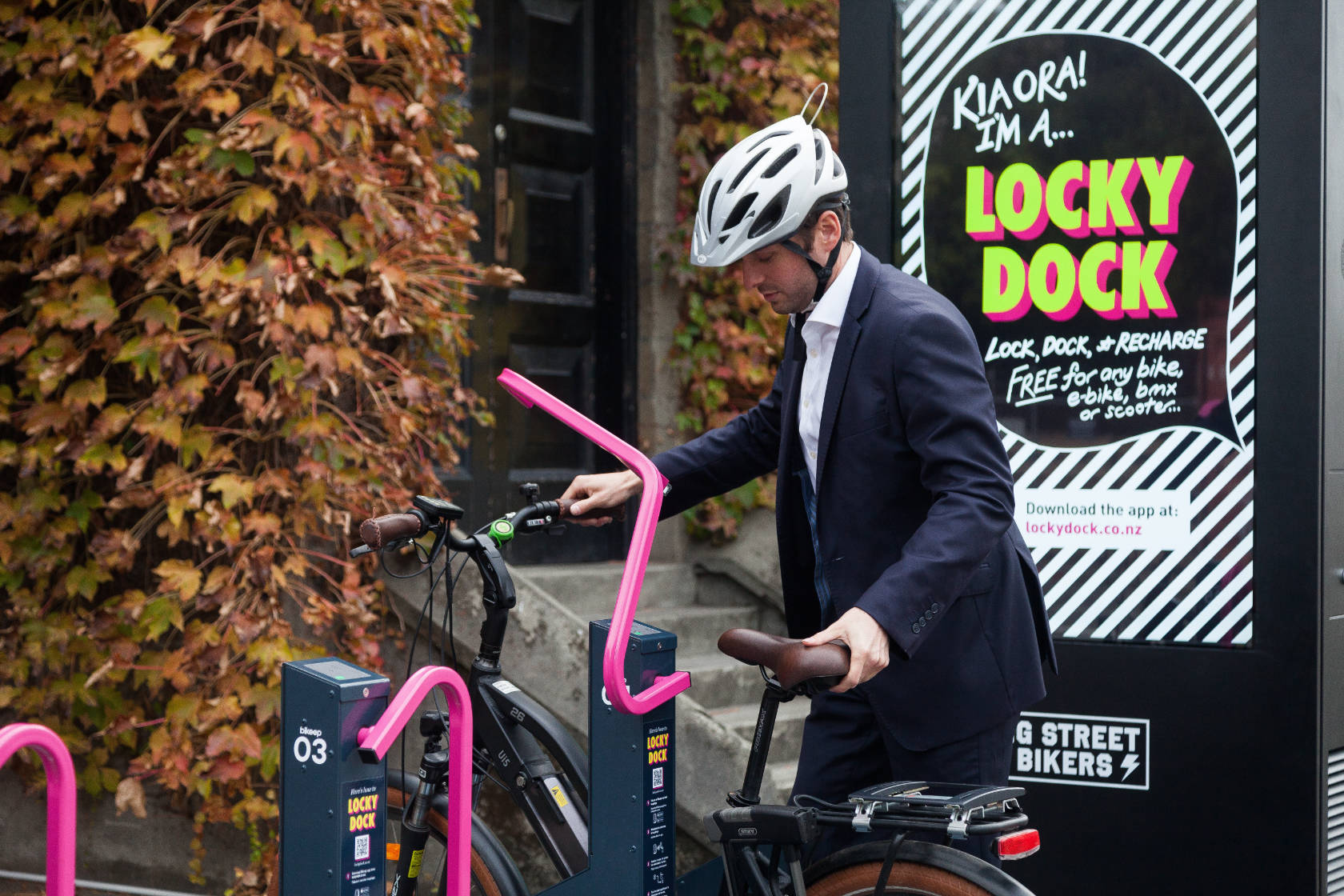
“This includes by providing free charging for e-bikes and e-scooters, screens that display safe cycling routes and CCTV cameras for extra security.”
Mercury has been a cornerstone supporter since the start, says BSB.
“We’re all about supporting transport that uses Aotearoa’s homegrown electricity,” says Mercury chief sustainability officer, Lucie Drummond.
With the average urban car journey around 7km, the Locky Dock Network has helped to save almost 370 tonnes of CO₂ (assuming users would otherwise drive) – equivalent to a forest of 16,800 mature trees sequestering for a year, says BSB.
An economic study in Christchurch done by Sense Partners projects that every 100 Locky Docks delivers $320 million net social benefit over a 10-year term, it says.
“The impact of the network really drives the purpose of the business,” says Cameron.
“Locky Docks aren’t just infrastructure, they’re behaviour change machines, making it easier for people to switch to biking.”
He says the Locky Dock network now has 74 stations across 10 cities with interest coming regularly from around the world.


Join the conversation