
AAA tests show EVs fall short of advertised range in real-world conditions
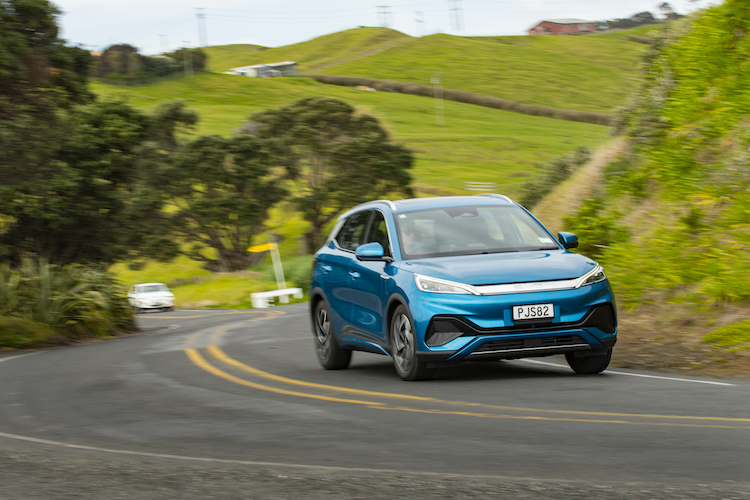
Australia’s peak motoring body has released results from the country’s first independent electric vehicle (EV) range tests, revealing that several popular models travel significantly less on a single charge in real-world conditions than claimed by their manufacturers.
The Australian Automobile Association (AAA) today published findings from its Commonwealth-funded Real-World Testing Program, which assessed five EVs across a standardised test route. The results showed battery ranges were between 5% and 23% lower than those achieved in mandatory laboratory testing.
The AAA says the findings aim to provide more accurate performance data for consumers and reduce uncertainty surrounding EV range.
Polling conducted by the AAA in late July found that 60% of people who identified as likely EV buyers listed range and recharging concerns as the main reason they may avoid purchasing an EV.
The 2024 Smart #3 EV performed closest to its advertised range, with a real-world range of 432km – just 5% or 23km less than in lab testing. In contrast, the 2023 BYD Atto 3 showed the largest variation, with a real-world range of 369km, 23% below its lab-rated 480km.
The results for the five tested vehicles are below:
| MODEL | CATEGORY | RANGE VARIATION | LAB RANGE# (km) | RWT RANGE (km) | ENERGY CONSUMPTION VARIATION | LAB ENERGY CONSUMPTION# (Wh/km) | RWT ENERGY CONSUMPTION (Wh/km) |
| Tesla Model 3 | Medium car | -14% | 513 | 441 | +6% | 132 | 140 |
| BYD Atto 3 | Medium SUV | -23% | 480 | 369 | +21% | 149 | 180 |
| Tesla Model Y | Medium SUV | -8% | 533 | 490 | -1% | 169 | 167 |
| Kia EV6 | Medium SUV | -8% | 528 | 484 | +1% | 165 | 166 |
| Smart #3 | Medium SUV | -5% | 455 | 432 | +4% | 163 | 170 |
AAA Managing Director Michael Bradley said the results will assist buyers in assessing EVs more accurately.
“As more EVs enter our market, our testing will help consumers understand which new market entrants measure up on battery range,” Bradley said.
The Real-World Testing Program began in 2023 with $14 million in federal government funding. It was developed in response to concerns that laboratory testing does not always reflect actual vehicle performance – a practice highlighted during the Volkswagen emissions scandal of 2015.
The testing is conducted on a 93km circuit in and around Geelong, Victoria, using standardised European-style protocols. The program is designed to minimise variables such as driving behaviour and traffic conditions and includes measurements of both energy consumption and charging needs.
To date, the program has also tested 114 internal combustion and hybrid vehicles, with 77% showing higher fuel consumption in real-world testing compared to their lab results. Around 20% also exceeded regulated noxious emissions limits.
The AAA says it will continue to publish EV test results at realworld.org.au.

Join the conversation