
New study ranks world’s cheapest and costliest nations to charge an EV
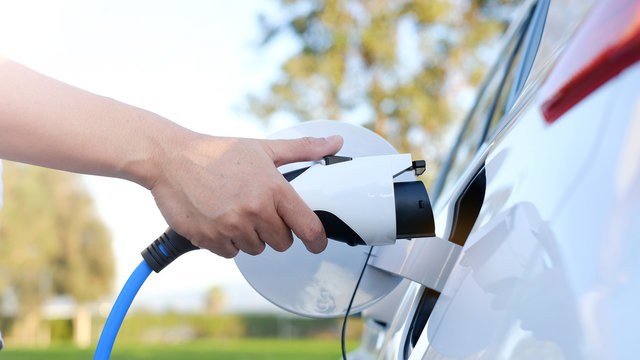
Ireland is the most expensive country in the world to charge an electric vehicle at home, while Laos is the cheapest.
That’s according to new analysis by energy comparison site Compare the Market AU, which examined average residential electricity tariffs across 68 nations using a Tesla Model Y as the example vehicle.
Compare the Market AU says Ireland’s average electricity tariff of A$0.67 (NZ$0.76) per kWh would put a full home recharge at A$50.50 (NZ$57.46), equating to A$10.57 (NZ$12.03) per 100km. Italy, Liechtenstein, Germany, Belgium and the United Kingdom followed, each costing A$45 (about NZ$51) or more for a full charge. Australia ranked 16th, at A$28.96 (NZ$32.95) for a full recharge.
While Ireland tops the list for EV home-charging cost, Compare the Market AU notes it is still cheaper to run than a comparable petrol hybrid. Based on average Irish fuel prices, a Toyota RAV4 RWD Cruiser (55L tank, 4.8L/100km) would cost A$14.77 (NZ$16.81) per 100km—A$4.20 (NZ$4.78) more per 100km than the EV scenario.
At the other end of the spectrum, Laos’ average tariff of A$0.04 (NZ$0.05) per kWh puts a full recharge at A$3.31 (NZ$3.77), or A$0.69 (NZ$0.79) per 100km. A petrol hybrid there would cost about A$9.54 (NZ$10.86) per 100km on fuel.
Hong Kong recorded the largest gap between EV and petrol running costs among the 68 countries analysed: A$4.46 (NZ$5.08) per 100km for EVs versus A$25.92 (NZ$29.49) for petrol—a difference of A$21.46 (NZ$24.42). Iceland had the next-largest difference at A$14.27 (NZ$16.24) per 100km, followed by Norway at A$11.36 (NZ$12.93).
Compare the Market’s head of energy, Meredith O’Brien, offered home-charging tips for EV owners.
“Depending on where you live, you might be eligible for subsidies and grants to install a home charger. Some home chargers also have ‘eco’ modes that work by prioritising any available solar power to charge the car, charging when electricity is cheapest, and by charging when the home is using minimal power – but reducing the charge when other appliances are in use to lower the home’s kWh usage in that moment,” O’Brien says.
“If you have solar power and your schedule means you’re home during the day, you can effectively charge it for free using solar power while the sun is shining. If you have solar batteries, you can use this solar power to charge overnight; otherwise, you would be drawing from the energy grid at your own cost.
“Another thing you can do is consider comparing electricity plans to see if you could be saving money with a different supplier, particularly if you live in an area with a competitive market.”

Join the conversation