
Kia pilots cell-level ‘battery passport’ ahead of EU mandate
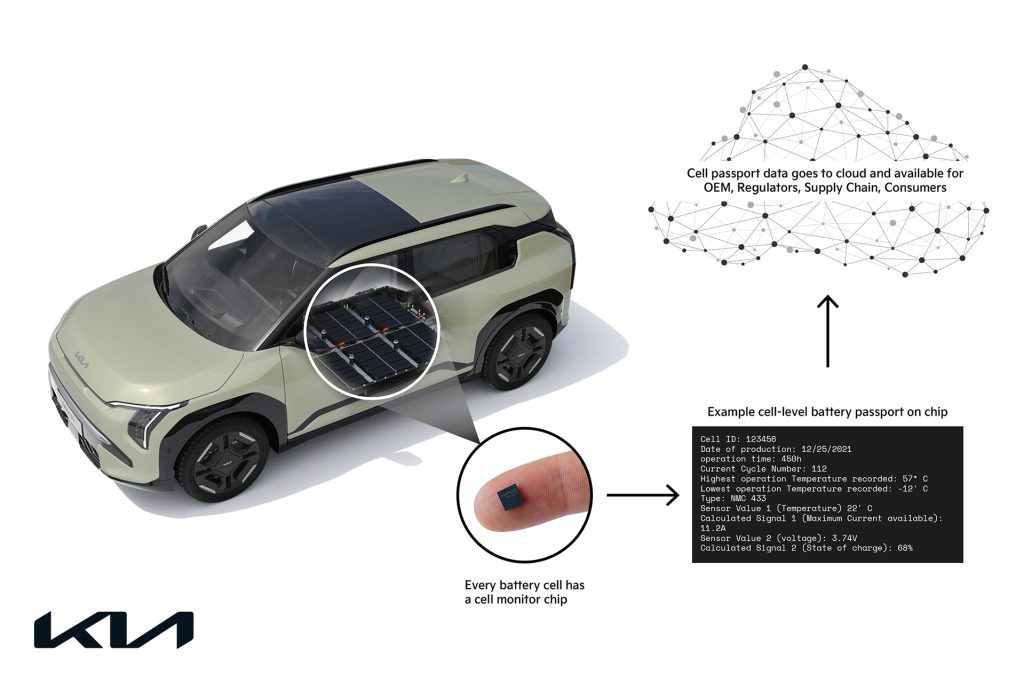
Kia has begun Europe’s first public trial of a digital battery passport at the cell level, using an EV3 prototype fitted with a Dukosi monitoring system that tracks the state of health of individual cells and displays the data via the car’s infotainment system.
The move comes ahead of European Union rules requiring a digital battery passport on all EVs sold from 2027.
“Kia aims to set a new standard for customers regarding battery transparency and performance,” Kia Europe president and chief executive Marc Hedrich says.
“Through testing cell-level battery passports, we gain insights on what ownership benefits we can offer our customers.
“On top of advantages such as extended battery life, we will be building on a relationship of trust as well.”
Kia’s approach goes beyond traditional pack-level diagnostics, enabling targeted repairs such as swapping individual cells rather than full modules, which could cut maintenance costs and waste, and give used-EV buyers greater confidence — potentially supporting resale values and a more circular battery economy.
The carmaker has set up an internal programme to build a full-scale battery passport service and plans to include safety and repairability data in addition to what regulators require.
It intends to roll the system out across all Kia EV and hybrid models in Europe by February 2027. The trial sits within a multi-partner EU research effort coordinated by Delft University of Technology and Hyundai Motor Group, supported by the EU-funded DATAPIPE project.


Join the conversation