
TR Group highlights major progress in EV and hydrogen fleet in latest FY25 ESG report
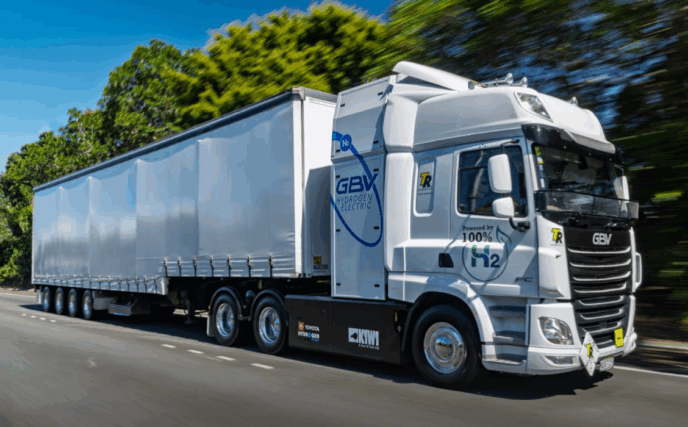
TR Group is expanding its low- and zero-emission fleet across New Zealand and Australia as outlined in its FY25 ESG Report, adding more battery-electric trucks, hydrogen fuel-cell vehicles and hybrid technology while advancing several decarbonisation trials across its rental and lease fleet.
The company says its fleet strategy is designed to support customers’ transition to cleaner transport technologies.
“We are committed to taking meaningful action to reduce our impact on the environment and support the global transition to net zero emissions,” TR Group says in the report.
In achieving this, the company has two overarching goals:
- To achieve net zero scope 1 and 2 emissions by 2040.
- To take a leadership role in the transport industry in the transition towards greener transport.
TR Group now operates 47 battery-electric trucks, which have collectively travelled more than 1.5 million kilometres. The report notes that electric trucks offer a quiet, smooth driving experience and zero tailpipe emissions, though cost, weight, range and charging remain barriers in some applications.
“These limitations have an effect on customer uptake, but it is our expectation that over time technological advancement, economies of scale and infrastructure improvement will see customer uptake accelerate,” TR Group says.
Hydrogen is also becoming a significant part of the fleet. TR’s first fuel-cell electric truck, which entered the fleet in May 2023, has travelled more than 182,000 kilometres, and 20 more FCEVs are on order.
The first GBV-assembled hydrogen truck has also completed more than 11,000 kilometres of testing.
The range on an FCEV is typically better than a BEV at 400km when carting higher weights, the company notes.
“Hydrogen trucks, like all emerging technologies, come with some early-stage considerations. At present, they have a higher upfront purchase price than comparable diesel trucks, and hydrogen fuel remains relatively costly. The technology is still evolving, and current tank configurations create some dimensional challenges that we are continuing to refine.
“Hydrogen heavy vehicles are still in the early phases of adoption, and – similar to the early progression of electric trucks- these factors may influence the speed of customer uptake in the near term.
“However, we expect that continued technological development, increasing scale, and improvements in production and refuelling infrastructure will drive efficiencies and make hydrogen fuel-cell vehicles an increasingly practical and attractive option for more operators over time,” TR Group says.
The hydrogen ecosystem is expanding too, with three Hiringa refuelling stations operating in the North Island and more to open. The company’s next phase includes commissioning additional Hyundai Xcient FCEV curtainsiders.
TR Group is also progressing hydrogen dual fuel trials, with two DAF CF 6×4 tractor units each travelling more than 19,000 kilometres. Early results show the dual fuel units have reduced CO2 emissions by 2,828kg.
Hybrid technology continues to enter the fleet, including Hino hybrid trucks for metro delivery, traffic management and tipper duties. Customer trials have demonstrated reduced emissions and fuel savings.
The company also added 144 Euro 6 trucks during FY25, continuing its fleet replacement programme, and partnered with Big Chill Distribution to introduce its first fully electric refrigerated trailer, achieving meaningful CO2 reductions.
Additional sustainability initiatives include:
- Tyre pressure management trials, with up to 20% reductions in tyre wear and improved fuel efficiency
- Oil bypass filtration, extending oil life and saving 14,822 litres of oil
- Expanded retread tyre use to reduce waste
- An increase in light electric company vehicles to 10 units
Click here to read the full report.


Join the conversation