
DHL takes delivery of its first Tesla Semi
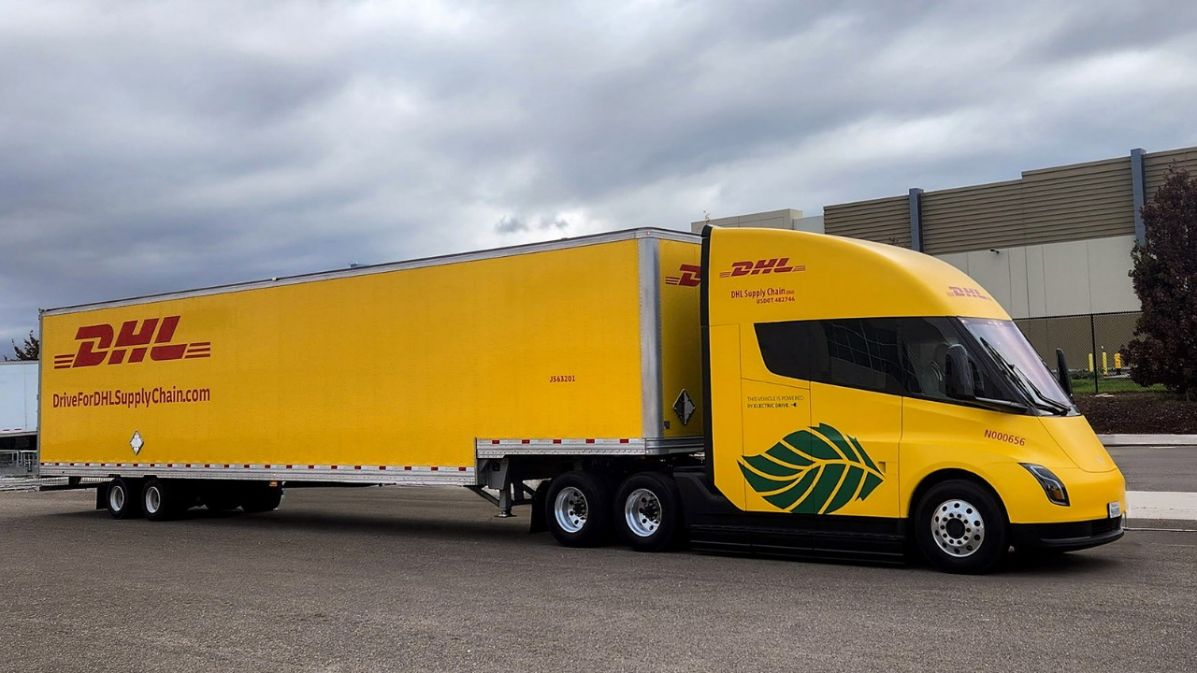
DHL Supply Chain has added its first all-electric Tesla Semi to its North American fleet, marking what the company describes as a major step in its global decarbonisation strategy.
The logistics provider is aiming to cut absolute CO2e emissions to 29 million tonnes by 2030 and reach net zero by 2050. The new long-haul truck expands DHL’s heavy electric vehicle fleet in North America to more than 150 vehicles.
The Tesla Semi enters service after a successful pilot in Livermore, California, where it completed more than 5,000km of regular line-haul work.
“Our pilot of the Tesla Semi exceeded expectations, proving its ability to efficiently haul a typical DHL freight over long distances on a single charge,” DHL Supply Chain North America transportation president Jim Monkmeyer says.
“Integrating the Tesla Semi into our fleet is an important step toward achieving our decarbonization goals and delivering more sustainable solutions for our customers. With its range of up to 500 miles (800km), the Semi unlocks opportunities that were previously beyond the limits of heavy-duty EVs, and we’re excited to partner with Tesla to make that a reality.”
During the trial, the Semi averaged 1.72kWh per mile while hauling a 34-tonne load over a 625km long-haul route.
Now operating from Central California, the truck is travelling roughly 160 kilometres per day, charging about once a week, and is expected to reduce greenhouse gas emissions by 50 tonnes per year.
Tesla Semi director Dan Priestley says DHL’s involvement helps the manufacturer refine the vehicle for broader markets.
“DHL has been a great partner to work with, and we appreciate their early and longstanding support for the Semi program. We are excited to support their deployment in North America, and their experience as a trusted logistics provider will help us make the product even better for future global markets,” Priestley says.
DHL expects to add more Tesla Semis in 2026 as Tesla moves into higher-volume production, supporting customers seeking lower-emission supply chain options aligned with their own sustainability targets.



Join the conversation