
ZEEKR’S NEXT MOVE CHINA’S RISING PREMIUM BRAND EYES NEW ZEALAND
Zeekr is preparing to enter the New Zealand market, directly challenging established names such as Tesla, BMW, and Mercedes. But can this fledgling Chinese brand—only four years old—deliver on its premium aspirations? Richard Edwards travelled to China to find out.
RAPID GROWTH AND SERIOUS BACKING
Despite its relative youth, Zeekr has already sold more than a quarter of a million vehicles and developed a range of high-end models that enjoy growing brand recognition. Much of its success stems from its parent company: Zeekr
is part of China’s massive Geely group, whose automotive portfolio includes Volvo, Polestar, Lotus, and Lynk & Co.
Zeekr’s roots can be traced back to 2013, when Geely was revitalising Volvo and investing heavily in CEVT (China Euro Vehicle Technology AB), a major research facility in Sweden. CEVT was
charged with creating the Compact Modular Architecture (CMA) platform, which underpins several Volvo and Polestar models, including the Polestar 2 and Volvo XC40. It then developed the Scalable Electric Architecture (SEA) used for the Polestar 3 and 4, the Lotus Eletre, and a variety of Geely vehicles.
The first SEA-based model was originally slated for Lynk & Co. However, Geely decided to spin it off under the new Zeekr brand. Buoyed by strong sales in China, Zeekr has since expanded its operations, establishing three research centres and acquiring CEVT—now Zeekr Technology Europe.
A BRAND FOR GENERATION Z … AND GEEKS
“Zeekr” blends references to Gen Z (those born in the late 1990s to early 2010s) and “Geek,” a term that evokes technology and innovation. The company aims to position itself as a tech leader in electric vehicles, with a clear focus on a sporty, lifestyle-driven brand identity.
Indeed, Zeekr competes with Tesla, Nio, and other premium EV makers, though the company appears keen to measure itself against established German luxury marques. Zeekr models are typically better specified than their Tesla equivalents, which may push prices higher.
In most markets, Zeekr favours direct sales and online ordering. Whether that approach applies to New Zealand remains to be seen, as the local distribution model has yet to be confirmed.
Zeekr also has significant technology credentials. It developed a driverless vehicle for Waymo and has partnered with Mobileye to produce an autonomous platform that aims for SAE Level 4 capability—just one step shy of full driverless operation. The brand counts Intel, battery giant CATL, and video platform Bilibili among its major investors, and it is listed on the New York Stock Exchange.
THE NINGBO CONNECTION
Although headquartered in Zeekr Tower in Hangzhou, much of the brand’s activity is centred in the city of Ningbo, across Hangzhou Bay from Shanghai. There, Zeekr operates an enormous plant capable of producing 300,000 vehicles a year, with around
520 units built per shift. It also houses research and development teams and an entire supplier campus.
Like Tesla, Zeekr employs massive sporty credentials, though perhaps more fun than a measure of real-world capability.
MODELS HEADED FOR NEW ZEALAND
Zeekr X
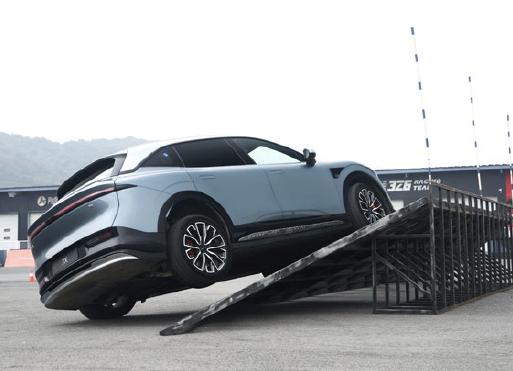
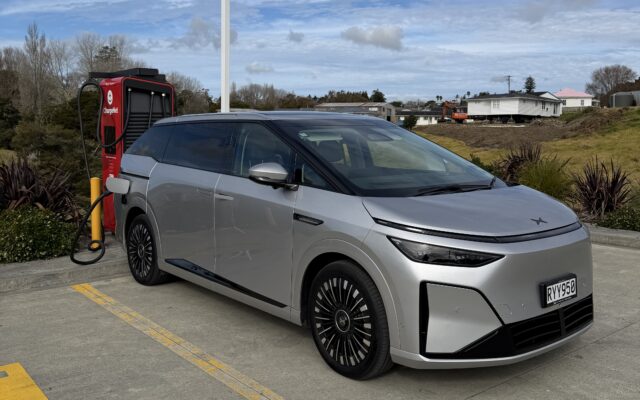
Zeekr’s first confirmed arrival in New Zealand is the X, a compact SUV sharing technology with the Volvo EX30 and Smart #1. In Australia, the X starts at around NZ$63,000. Both rear-wheel-drive (200kW) and all-wheel-drive (315kW) versions are available, with a 66kWh battery offering around 440km of WLTP range.
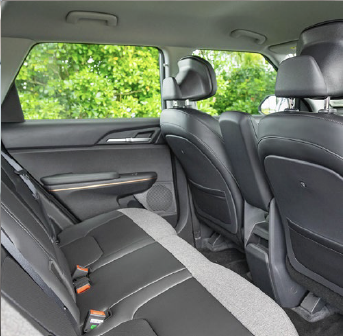
The X’s interior aims for a premium feel, featuring a panoramic glass roof, heated and ventilated seats, and a standout infotainment display. While it skews more toward a youthful “fashion-luxury” aesthetic than old-world opulence, it remains a sophisticated alternative in the small EV crossover segment.
Zeekr 009
Launching simultaneously will be the 009, a large, luxury people mover that shares its platform with the forthcoming Volvo EM90. Spanning 5.2 metres and tipping the scales at nearly three tonnes, it can seat up to seven or be configured as a lavish six-seater with “aviation” seats.
Its dual-motor drivetrain (450kW, 693Nm) and 116kWh battery enable 205kW charging speeds. While its 4.5-second sprint to 100km/h is overkill for a minivan, it underscores Zeekr’s performance-first philosophy. Australian pricing suggests an eventual New Zealand sticker of around NZ$150,000—steep, but potentially compelling for VIP transport when compared with BMW or Mercedes electric saloons.
ZEEKR 7X
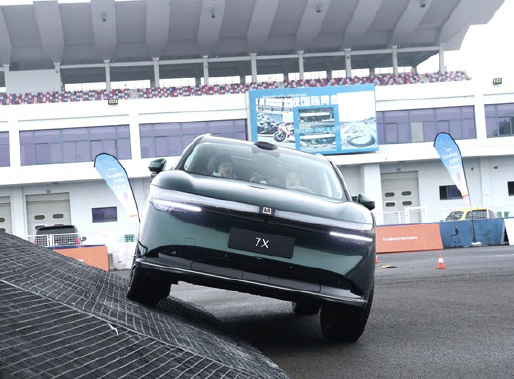
Though not yet confirmed, the 7X is widely believed to be on the brand’s New Zealand shortlist. This mid-sized electric SUV may appear at first glance to compete with the Tesla Model Y, but Zeekr positions it closer to the Audi Q6 e-tron, Polestar 3, and other premium EVs.
Inside, it elevates the “high-tech luxury” approach, offering Nappa leather, massaging seats, advanced infotainment, and a focus on rear-passenger amenities, including a built-in tablet and deployable table. Powertrain choices range from a 310kW rear-drive to a 475kW all-wheel-drive version, with battery capacities up to 100kWh. Pricing is expected to exceed that of a Tesla Model Y, potentially starting in the NZ$70,000 range.
THE AMBITIOUS MIX
Zeekr’s most audacious product may be the Mix, initially developed for Waymo’s driverless programme. It reimagines interior space with five lounge-like seats that can swivel to face each other or the view outside, plus sliding doors on each side—though one side is fully open and the other partially so. This asymmetry die-casting “giga-press” technology to form large underbody sections, aiming to streamline production and improve structural integrity.
Nearby is the Ningbo International Circuit, an FIA Grade Two track used for both motorsport and product testing. Unlike many tightly controlled media drives in China, Zeekr granted journalists extended track time in several models, reflecting the brand’s confidence in its engineering.
TRACK HIGHLIGHTS
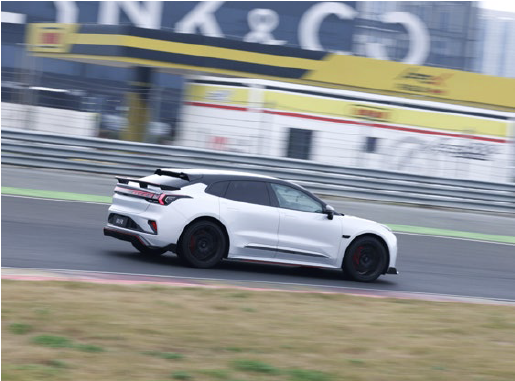
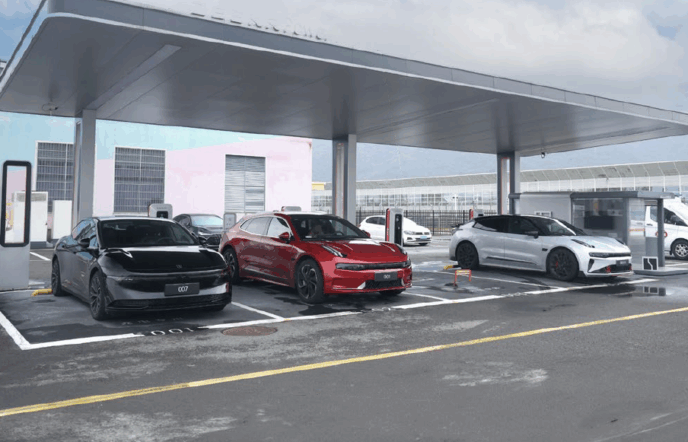
The most exhilarating machine on hand was the 001FR, limited to 99 units per month and unlikely to appear in right-hand drive. This performance wagon boasts four electric motors producing 931kW, a 0–100km/h time of 2.07 seconds, and a quarter-mile of around 9.5 seconds. Even the ‘standard’ 001, with a comparatively modest 400kW, felt taut and composed, testament to a well-engineered chassis hiding a large battery pack.
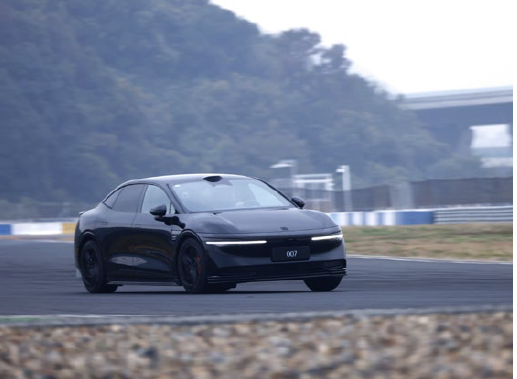
The 007 sedan, with up to 475kW and 710Nm, promises performance to rival the Porsche Taycan S and Tesla Model S Plaid. While the 007 was not available for a full track drive, its specification hints at impressive circuit potential.
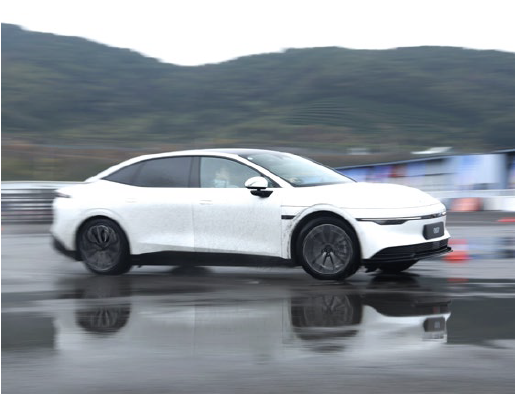
Zeekr also arranged a drifting session in a rear-wheel-drive 007, equipped with 310kW. Even on a deliberately slick surface, it was surprisingly controllable—an effective demonstration of the brand’s makes a right-hand-drive version a significant challenge, and it has not been confirmed for New Zealand. Single-motor rear-wheel-drive variants are available with 310kW, paired to either a 76kWh or 102kWh battery.
A DIFFERENT KIND OF CHINESE CAR
Zeekr’s arrival will upend expectations of “cheap and cheerful” Chinese vehicles. Its products are loaded with technology, strong performance, and aspirational design intended to compete directly with established premium brands. Moreover, its ties to Geely mean it has deep resources and proven engineering expertise.
While Zeekr may still undercut some German and American rivals on price, it appears determined to be seen as a legitimate luxury contender. Given its rapid progress in China, as well as its global manufacturing and R&D footprint, its expansion into New Zealand is one to watch—and may offer a glimpse of the future for Geely’s other international brands.
Join the conversation