
Government considers scrapping Clean Vehicle Standard entirely
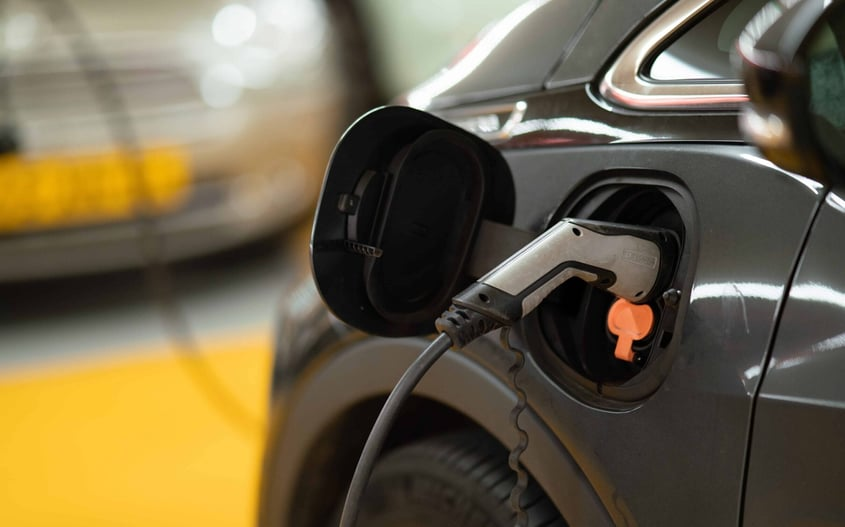
The Government is considering abolishing the Clean Vehicle Standard (CVS) as part of its review of the policy, raising concerns across the electric vehicle and wider automotive sectors.
The review follows the Government’s decision late last year to cut CVS penalties by nearly 80%. Industry consultation has now concluded, with submitters asked directly whether the emissions standard should be retained or removed altogether.
According to the Ministry of Transport, the review is being conducted in two stages, with the first focused on whether to retain or abolish the standard before Cabinet decides the policy’s future.
The consultation was limited to industry groups, international organisations, government agencies and subject-matter experts, and was not open to the public.
Imported Vehicle Dealers Association chief executive Greig Epps says the consultation included questions about the potential risks and impacts of removing the standard.
“After five years of looking at this sort of stuff and having a scheme in place, I think it’s very reasonable for us to all go back and go, how has this worked? What has the impact been? Do we keep doing this or do we do something else?” Epps says.
While Epps believes there may be appetite within Government to repeal the standard, he expects some form of alternative policy could replace it.
“We’ve seen them do this with the RMA. Their approach has been, we don’t like the existing settings and we’re going to change it and we’ll put in our own settings. So I think they do see the need or have a desire to change what’s here, but I don’t think that means that they won’t put something else in place.”
Epps says the association’s position is that any emissions standard should primarily apply to the new vehicle market, where distributors have greater influence over the vehicles manufacturers supply.
Used imports, he notes, already average around 135 grams of CO2 per kilometre, well below the overall fleet average of about 170 grams.
“Our vehicles are made and they already exist. We’re not fixing anything in terms of global CO₂ impact by stopping vehicles coming into New Zealand as used imports,” he says, adding that policy should focus on removing older, higher-emitting vehicles from the fleet.
Motor Industry Association chief executive Aimee Wiley says the organisation supports retaining the standard, but with adjustments to reflect affordability and supply realities.
“This is not about reducing ambition. It is about ensuring the settings work for importers and distributors as well as consumers, are durable over the long term and aligned with market realities, including affordability, supply and demand conditions,” Wiley says.
She adds that the framework needs to remain credible and stable in New Zealand’s small, import-dependent market, with alignment to Australia where possible to reduce regulatory friction.
Electric vehicle advocates have also raised concerns about policy instability.
Drive Electric chairwoman Kirsten Corson says consistent policy settings are critical for the entire vehicle sector.
“It doesn’t matter whether you’re selling petrol or diesel or EV, the whole industry needs consistent, stable policies,” she says.
Corson notes a 2023 Concept Consulting analysis found the Clean Car Standard accounted for about 70% of emissions reductions under the Clean Car programme. With penalties already weakened by 78%, she says removing the standard altogether would leave New Zealand alongside Russia as the only OECD country without an emissions standard.
“Adopting Putin’s policies wouldn’t be on my top 10,” Corson says, pointing to Australia’s penalty of A$110 per gram compared with New Zealand’s current $15.
Corson argues that weakening the policy could also slow EV uptake and increase long-term costs for motorists.
“The cost of them is less at the beginning, but they cost so much more to own and so much more to operate,” she says, noting New Zealand spends between $8 billion and $9 billion annually importing fossil fuels.
With around 86% of the country’s electricity generated from renewable sources, she says greater electrification would strengthen the economy and reduce fuel dependence.
Corson also warns policy uncertainty is discouraging investment in charging infrastructure.
“We need public-private partnership to get this economy growing, but the decisions that we’ve seen made by this Government aren’t supporting growth in this sector.”
Edward Harvey, founder and chief executive of New Zealand EV charging company Evnex, says it is “astounding” the Government is considering scrapping the standard entirely.
“I would hope that the current situation in the Middle East is giving the Government pause for thought. As an isolated country dependent on imported fossil fuels, we urgently need to start factoring supply risk and price volatility into our energy policies,” Harvey says.
“EV technology is ready. We have the renewable generation. Let’s see some common sense.”
Join the conversation