
Toyota reveals HiLux BEV pricing in Australia
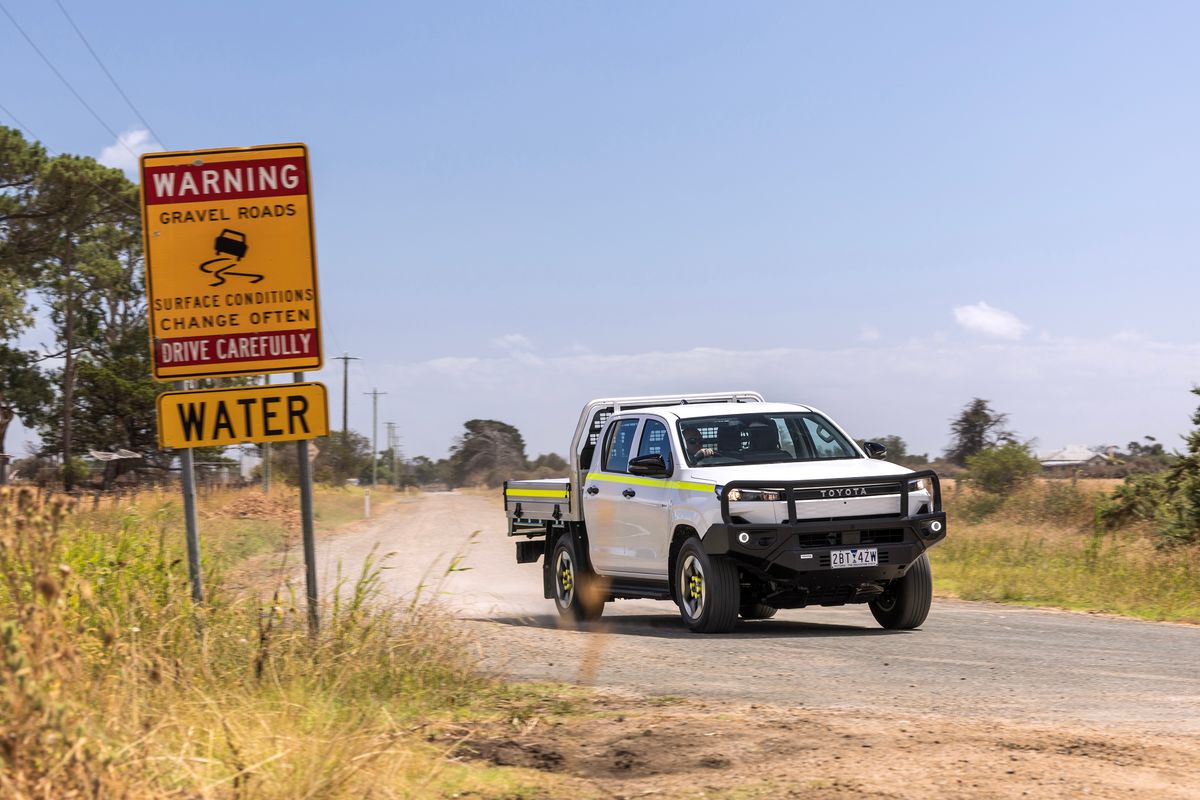
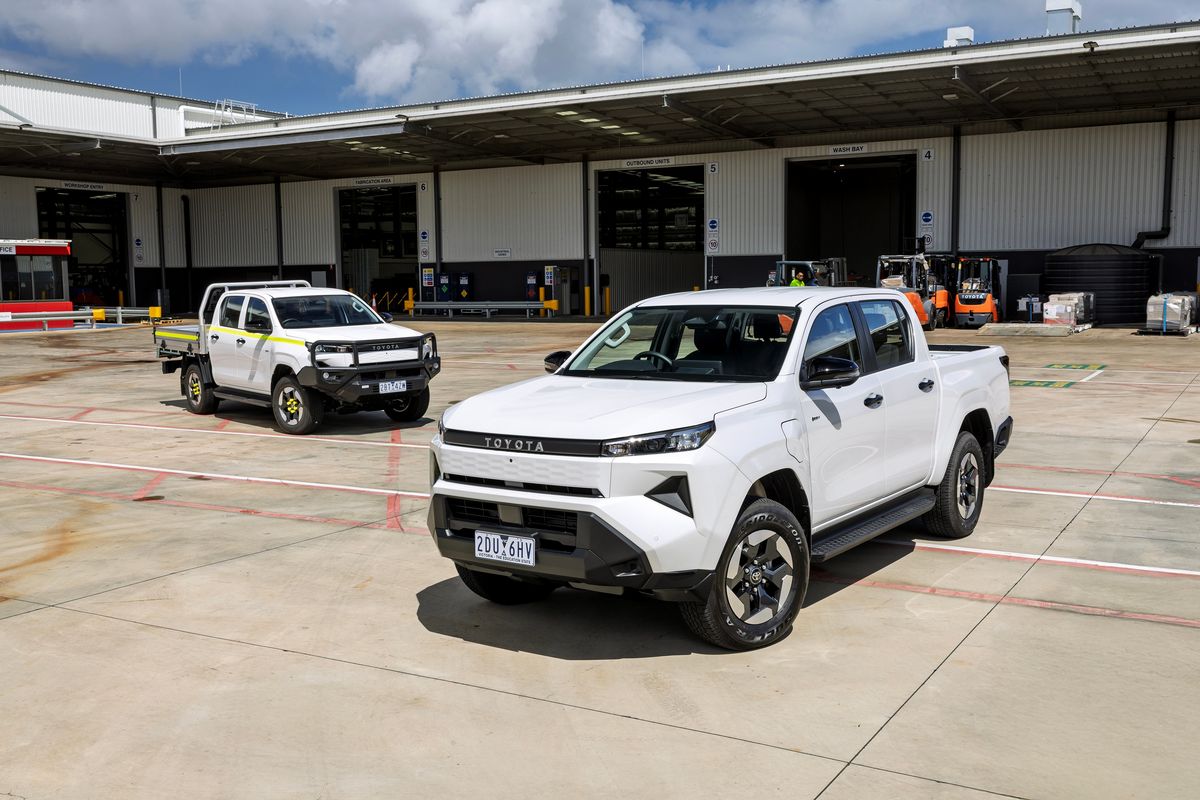
Toyota Australia has confirmed pricing for the first battery electric HiLux, with the dual-motor all-wheel drive ute set to arrive in Australian showrooms from May at A$74,990 plus on-road costs.
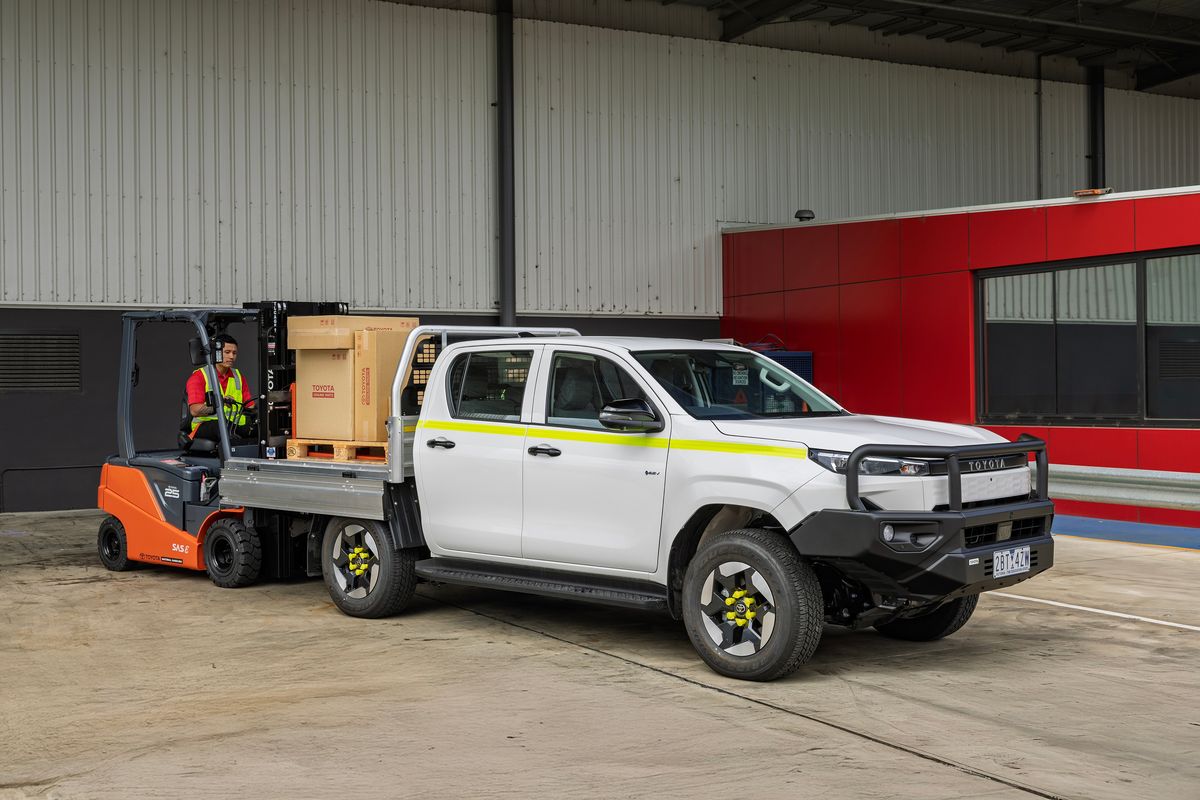
The HiLux BEV will be offered exclusively as a double cab in two grades: the SR available as a cab-chassis at A$74,990 and pick-up at A$76,490, and the SR5 pick-up at A$82,990. All variants feature a dual-motor AWD powertrain producing 144kW and 468Nm from a 59.2kWh lithium-ion battery.
Toyota New Zealand has confirmed the electric HiLux will arrive in this market in 2026, but local lineup, specification and pricing details have yet to be announced.
Potential New Zealand pricing
While local pricing remains unknown, the premium Toyota Australia is charging for the BEV over its diesel equivalent offers a useful guide. Moving from the diesel SR 4×4 double-cab pick-up with 48V mild hybrid (A$59,490) to the BEV SR pick-up (A$76,490) represents a premium of roughly 29%. At the SR5 level, the jump from the diesel 48V auto at A$65,990 to the BEV at A$82,990 is around 26%.
Applying those premiums to New Zealand’s driveaway pricing for equivalent diesel models gives an indication of where the BEV could land. The SR Hybrid 4WD Double Cab Wellside is currently $56,990 driveaway – a 29% premium would put the BEV equivalent at roughly $73,000. The SR5 Hybrid 4WD Double Cab Wellside at $60,990 with a 26% uplift would suggest around $77,000.
Those are indicative figures only. Toyota New Zealand may choose to position the BEV differently, and the local range may not mirror Australia’s exactly. Australia’s stronger emissions policy framework, particularly its New Vehicle Efficiency Standard, gives manufacturers greater regulatory incentive to price electric vehicles (EVs) competitively to generate credits. New Zealand’s Clean Vehicle Standard has been significantly weakened, with penalties slashed by nearly 80% in late 2025 and a first-principles review currently underway that could see the standard scrapped altogether.
With less regulatory pressure to offset high-emission vehicle imports with EV sales, there is less incentive for Toyota New Zealand to discount the BEV as aggressively as its Australian counterpart, meaning the New Zealand premium over diesel could be higher.
Target market and capabilities
The HiLux BEV’s 315km NEDC driving range for pick-up grades, likely to be lower under the WLTP protocol used for New Zealand labelling, and 2000kg maximum braked towing capacity place clear limits on how it can be used. The diesel HiLux offers 3500kg of braked towing and effectively unlimited range via the fuel network.
Toyota Australia is positioning the BEV squarely at fleet and commercial operators, particularly in the mining and resources sector, where fixed routes and on-site charging infrastructure make the range limitation manageable. The same logic would apply in New Zealand – council fleets, utility operators and businesses with depot-based vehicles that return to base each day are the natural buyers.
The timing is notable. The Iran conflict and effective closure of the Strait of Hormuz have sent fuel prices surging past $3 a litre and triggered New Zealand’s first fuel response alert system. EV and plug-in hybrid electric vehicle (PHEV) registrations hit their highest weekly total since the end of the Clean Car Discount in the week ending March 22, with one in five new registrations being an EV or PHEV. BYD New Zealand has sold out entirely.
Any vehicle that can bypass the fuel pump entirely is suddenly a more compelling proposition than it was a month ago, though for the HiLux BEV, the restricted range and towing capacity mean it remains a targeted solution rather than a like-for-like diesel replacement.
Competition in the electric ute space
The BYD Shark 6 plug-in hybrid ute is $69,990 plus on-road costs in New Zealand. It pairs a 1.5-litre turbo petrol engine with two electric motors for a combined 800km range, 2500kg braked towing and 80km of electric-only running. It is a different proposition to the pure-electric HiLux, but one that sidesteps range anxiety while still offering significant fuel savings.
The Geely Riddara RD6 Pro is a closer comparison as New Zealand’s first fully electric ute, also priced at $69,990 plus on-road costs. It offers 315kW from its dual-motor AWD system, a 73kWh battery with 360km of WLTP range, 3000kg of braked towing and a 1030kg payload. On paper, the Riddara outguns the HiLux BEV on range, towing and power, though it uses a monocoque platform rather than a ladder-frame chassis, and does not carry the Toyota badge or its associated dealer and parts network.
Technical specifications
The HiLux BEV’s dual-motor system pairs an 82kW/206Nm front motor with a 129kW/269Nm rear unit. Torque distribution is variably controlled between axles, and Toyota’s Multi-Terrain Select system provides six off-road modes.
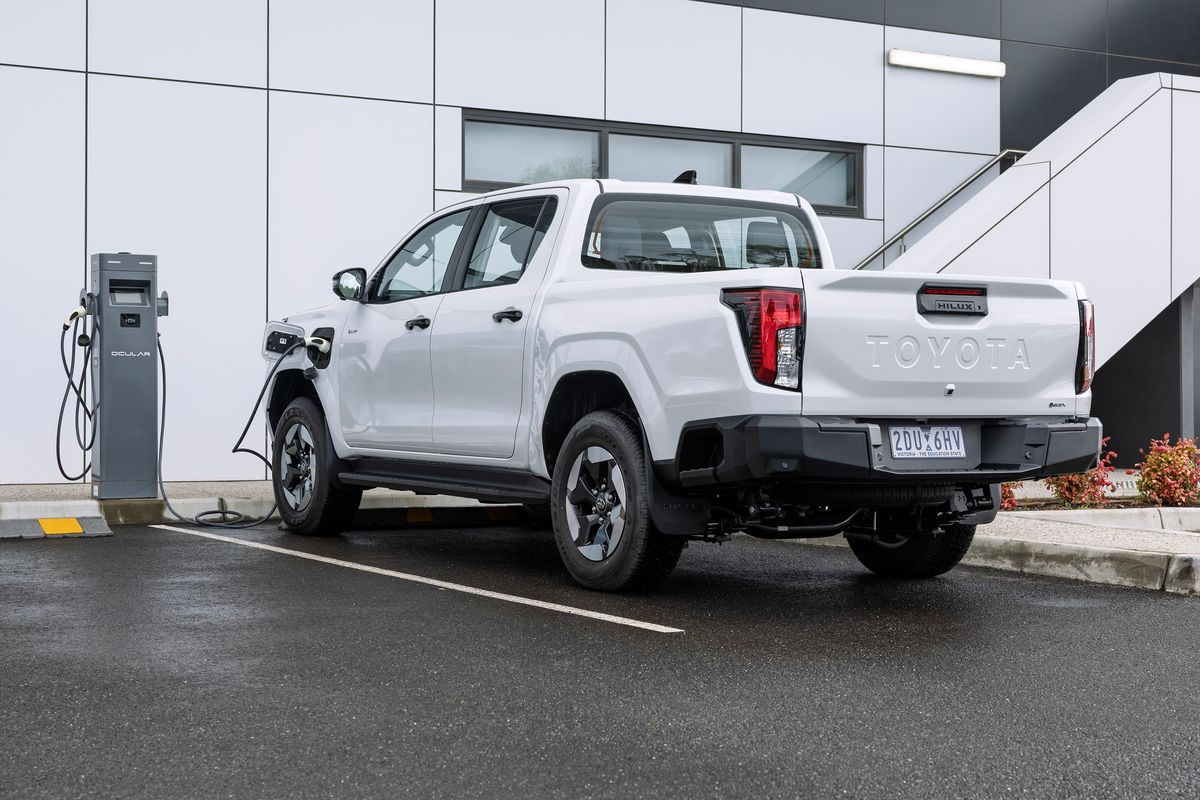
DC fast charging at up to 150kW via CCS2 takes the battery from 10% to 80% in around 30 minutes, while 10kW three-phase AC charging covers 10% to 100% in approximately 6.5 hours. The cab-chassis version is rated at

Join the conversation