
Electric aircraft achieves first human flight with solid-state batteries
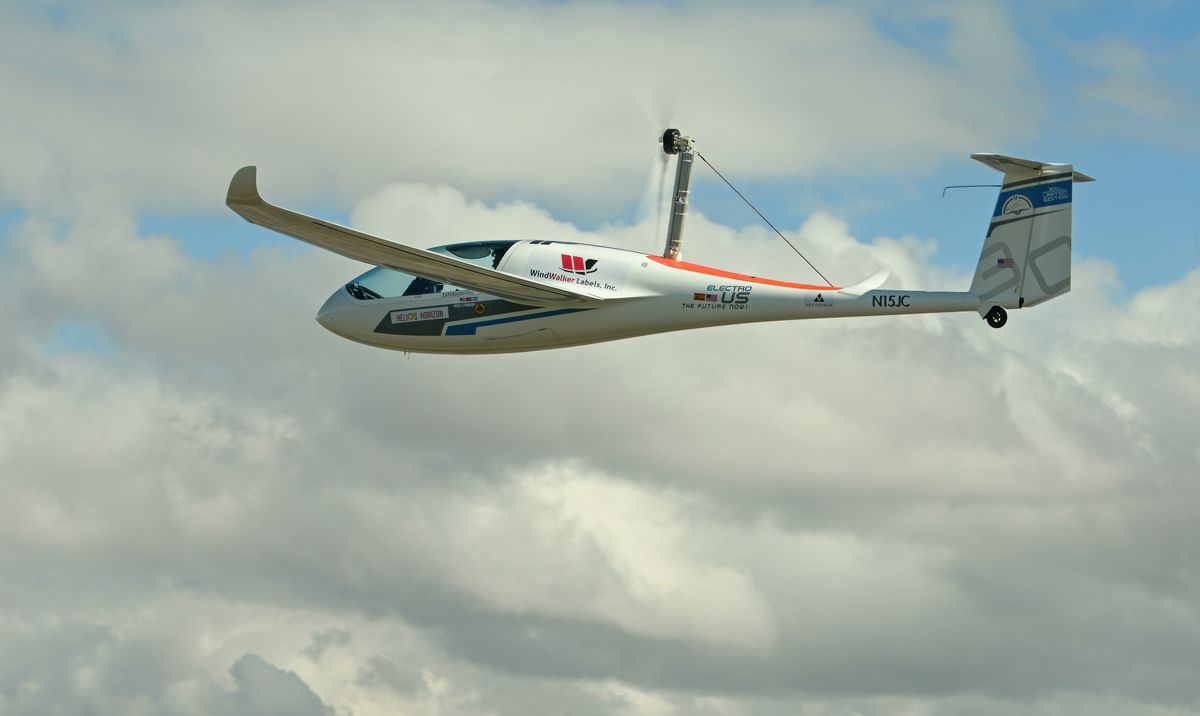
A Florida-based aviation project has achieved the first human flight of an electric aircraft powered by solid-state batteries, marking a potential breakthrough for commercial electric aviation.
Chief Test Pilot Miguel Iturmendi completed initial test flights of the Helios Horizon electric aircraft at Zephyrhills Municipal Airport on Friday, using solid-state battery technology that offers significantly improved performance over conventional lithium-ion cells.
The solid-state batteries deliver 60% to 80% greater energy density than the lithium-ion batteries used in most electric vehicles (EVs) today, while charging from almost empty to 80% capacity in less than 15 minutes.
“For the first time, we have a battery technology that yields the range and charging times necessary to make commercial electric aviation viable, while providing the safety the flying public will demand,” Iturmendi said.
Enhanced safety and performance
Unlike traditional lithium-ion cells, solid-state batteries demonstrate much greater stability when subjected to high temperatures or physical damage, drastically reducing combustion risk. The technology replaces liquid electrolyte components with solid materials, allowing more energy storage in the same space while improving safety characteristics.
The Helios Horizon aircraft’s new solid-state batteries achieve 410 watt-hours per kilogram, compared to 260 Wh/kg from its previous lithium-ion system. Iturmendi expects solid-state battery energy density to increase by another 40% within two years.
The improved energy density and different discharge characteristics positively impact aircraft range, altitude capability and flight duration. The batteries can be charged using standard AC electrical sources without special infrastructure, and the aircraft can also recharge in flight through solar panels and by using its propeller as a wind turbine.
“Regenerative flying, in which we glide and windmill the propeller during descents, can significantly increase the range of the airplane,” Iturmendi said.
Stratospheric ambitions
Helios Horizon currently holds the world altitude record for an electric aircraft in its weight class and has been been designed for stratospheric flight. While previous flights reached 24,000 feet, the team targets altitudes exceeding 40,000 feet – higher than most passenger airliners.
Friday’s test flights validated the aircraft’s weight and balance after incorporating the new batteries, while confirming ground testing results that showed better-than-expected performance over sustained operation periods.
The team plans to optimise Helios Horizon’s systems for stratospheric flights scheduled later this year, with the solid-state batteries expected to enable single-charge flights to those altitudes.
The Helios Horizon project, founded by Iturmendi and based in Sarasota, Florida, uses a modified Pipistrel Taurus airframe fitted with custom power delivery, battery management, propulsion and thermodynamic control systems. The aircraft features wing extensions and integrated solar panels.
The achievement comes as the aviation industry explores electric propulsion to reduce emissions, with solid-state battery technology potentially addressing key barriers around energy density, charging speed and safety that have limited commercial electric flight development.
For New Zealand’s aviation sector, which has committed to sustainability goals including net-zero carbon emissions, developments in electric aircraft technology could influence future domestic and regional flight operations.


Join the conversation