
Tesla Model Y L review: Going Long

Tesla’s six-seat, long-wheelbase Model Y arrives at exactly the right moment. With petrol prices at record highs and EV demand surging, the Model Y L offers something no other Tesla in New Zealand can: three rows, 681km of WLTP range, and the kind of real-world efficiency that makes the fuel crisis someone else’s problem.
There is a particular satisfaction to driving an EV through a fuel crisis. Easter weekend in New Zealand should have been the usual chaos: bumper to bumper out of Auckland, queues at the Brynderwyns, the works.
Not this year.
With pump prices at $3.50 a litre and the Middle East situation still unresolved, the highways were noticeably quieter. Plenty of Kiwis quietly decided the long weekend road trip was not worth the fuel bill. We had no such concerns, plugged into a Tesla Model Y L with 681km of claimed range and a full battery before we left Mangawhai.
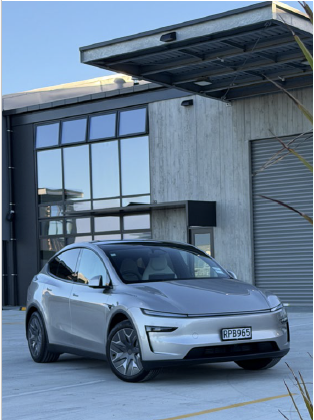
That timing matters, because the Model Y L is arguably the most significant EV launch in New Zealand this year. A six-seat, long-wheelbase version of the world’s best-selling EV, priced from $83,900 before on-roads or $86,250 in the Cosmic Silver tested here.
That is roughly $6,000 more than the standard long-range all-wheel-drive Model Y, and for the extra outlay you get a bigger battery, a third row of seats, a substantially larger body, continuously variable adaptive damping, and the longest range of any Model Y currently sold in New Zealand.
THE TRIP
We left our base in Mangawhai, drove through Auckland and across the central North Island to Wellington.
A good test of any EV: urban traffic, open motorway, rural roads and some serious hill climbs. The Tesla took it all in its stride.
The big number is efficiency. Over the full trip we averaged 15kWh/100km. On the second half, after coming down from the central plateau, that dropped to 10kWh/100km.
For a vehicle that is 180mm longer than the standard Model Y, 44mm taller, carries an extra row of seats and weighs 2,088kg, those numbers are remarkable. Tesla and Hyundai remain the two benchmark brands when it comes to extracting the most kilometres from each kilowatt hour, and the Y L extends that lead. For context, our long-term BYD Atto 3 averages similar numbers on the school run.
That efficiency is the entire point, because it dictates everything else about the ownership experience.
The Model Y L peaks at 250kW DC charging, which is no longer class-leading now that 800-volt platforms from Zeekr and others have arrived in market. But charge speed only matters when the car is thirsty.
Our Mangawhai to Wellington run needed just 11 minutes of charging across the entire trip. Auckland to Wellington? You could theoretically hypermile that in one hop without stopping at all. While petrol stations had queues over Easter and social media filled with photos of fuel price boards, we plugged in once, grabbed a coffee, and got on with it.
SIX SEATS, NOT SEVEN
Tesla has chosen a 2-2-2 layout rather than the conventional seven-seat configuration.
On paper that sounds like a compromise. In practice, it is a smart packaging decision.
The second row gets a pair of heated and ventilated captain’s chairs with a walk-through gap to the third row. They are wide, supportive, and finished in a new optional Zen grey synthetic leather that feels genuinely premium. An adjustable-height armrest pops up at the push of a button on each chair, which is clever, though long-term durability is an open question.
The third row is where things get interesting.
I clambered back there, and I am not a small person. The seat-back angle is comfortable, there are air vents, cup holders, USB-C charging and heated seats. But for anyone over about five foot ten, it is a short-trip proposition. Leg room is tight and foot space is limited.
My daughter, on the other hand, climbed back there at the start of our Easter trip and refused to move for the entire journey. For kids and smaller adults, it is a genuine, usable third row, which is more than you can say for most mid-size SUVs that claim to seat more than five.
The old seven-seat Model Y sold in the United States was widely criticised for a near-useless third row. The Y L, with its 150mm longer wheelbase, is a proper attempt at solving that problem.
With all three rows in place, boot space is still decent and better than most rivals with their third rows up. Fold everything flat via the electric switches in the cargo area and you have a huge load space.
Tesla’s sub-floor bin remains a great feature, and the magnetic cargo cover attachment is a simple, smart detail. There is also a 112-litre frunk up front for charging cables or anything you would rather keep separate from the cabin.
ON THE ROAD
The dual-motor all-wheel-drive setup produces 378kW and 590Nm. Tesla claims 5.0 seconds to 100km/h, and while nobody is calling this a Performance model, it feels properly quick. That instant Tesla shove is all there when you put your foot down.
The big change from the standard Model Y is the ride.
Tesla has fitted continuously variable adaptive damping to the Y L, and the difference is immediately tangible. Ride was one of the areas that marked the standard Model Y down at NZ Autocar Car of the Year earlier this year, so the improvement is welcome.
Two modes are available: Balanced and Rear Comfort, the latter softening things slightly for passengers at what Tesla says is a minor cost in steering feel. Neither mode jars on rough surfaces the way a standard Model Y can.
It is not quite at BYD Sealion 7 levels of plushness, which remains the ride benchmark in this segment for me, but it is close, and a long way removed from the firm character of the Model Y Performance.
If this suspension finds its way into the standard model, it would transform that car.
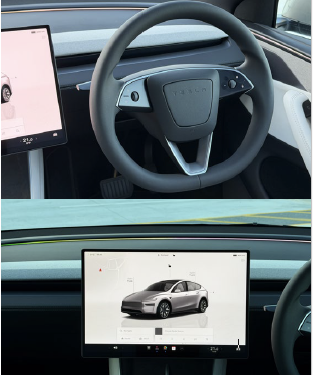
The interior is recognisably Model Y, with incremental improvements. Soft-touch materials around the doors, improved stitching on the dash, a 16-inch central screen and an 18-speaker audio system.
The front seats are a step change in comfort, with proper lumbar support and enough width for larger drivers. The driving position feels slightly further forward than in the standard car, a consequence of all that extra vehicle behind you, but it is not uncomfortable, just different.
I still despise having to use the touchscreen to open the glove box, but that is a long-standing gripe Tesla shows no interest in addressing.
V2L AND OTHER FIRSTS
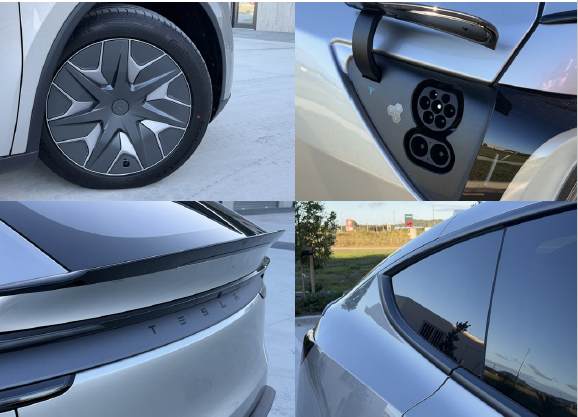
The Model Y L is the first Tesla sold in New Zealand with vehicle-to-load capability, offering 3.3kW of bidirectional power output.
Adapter arrangements are still being confirmed, but the use case is significant: camping, emergency backup during outages, or running tools on a remote site. It is a feature Chinese and Korean brands have offered for some time, and it is overdue from Tesla.
Grok, Tesla’s AI assistant, is also new and built into the car. It works well enough, though most owners will probably default to whichever AI they already use daily through their phone.
The Supercharger network made this trip seamless, but without FSD the standard Autopilot showed its age over the long haul, with a handful of phantom braking incidents and some overly aggressive lane-departure warnings on roads with imperfect markings.
If your Tesla has the hardware, FSD remains the upgrade that transforms long-distance driving.
THE VERDICT
At $83,900, the Tesla Model Y L is the best-value electric vehicle with more than five seats currently on sale in New Zealand.
It might be the best overall, too.
The Kia EV9 is the obvious rival, but good luck finding one at this price right now. The six-seat layout means everyone gets a window seat. The range is class-leading, the efficiency is exceptional, the ride is finally sorted and the packaging is properly thought through.
Over Easter, while the rest of the country was watching the pump price boards, we drove 750km without giving energy a second thought.
If you are looking at the standard long-range Model Y, spend the extra $6,000. This is the Model Y Tesla should have built from the start.
Join the conversation