
BYD unveils Great Tang flagship SUV

BYD has unveiled its new Great Tang flagship SUV in China, joining the growing trend for large three-row electric SUVs in the world’s biggest EV market.
The seven-seat model measures 5.2 metres long, two metres wide and 1.8 metres high, with a 3.1-metre wheelbase and rear-wheel steering designed to improve manoeuvrability despite its size.
The Great Tang rides on BYD’s DiSus-A intelligent suspension system, which combines dual-chamber air springs and predictive technology to adjust the vehicle’s ride height and suspension settings according to road conditions. The system offers up to 100mm of suspension travel adjustment.
Power comes from BYD’s second-generation Blade battery technology, with buyers offered a choice of 105.79kWh or 130.15kWh battery packs.
BYD claims a maximum driving range of up to 950km under the Chinese CLTC testing cycle for one rear-wheel-drive variant equipped with the larger battery. All-wheel-drive models are rated for up to 850km, while the entry-level rear-wheel-drive version with the smaller battery is claimed to deliver up to 800km.
Performance is equally impressive, with the dual-motor all-wheel-drive variant capable of accelerating from 0-100km/h in 3.9 seconds.
The Great Tang also adopts a 1,000-volt electrical architecture, allowing DC charging speeds of up to 1,000kW. BYD claims the battery can be charged from 10% to 70% in five minutes, or to 97% capacity in 10 minutes when connected to a compatible charger.
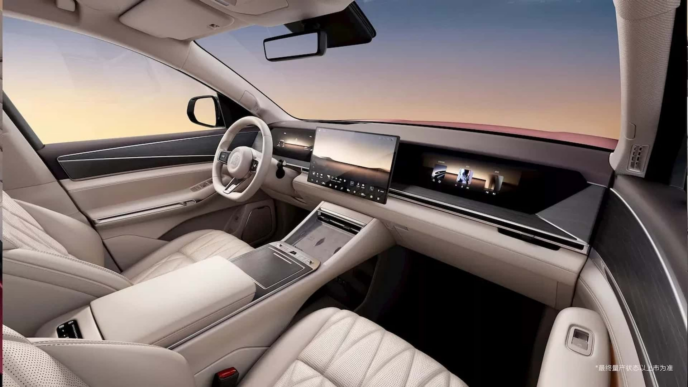
Inside, the SUV features a 2+2+3 seating layout, with front “zero gravity” seats, reclining second-row seats and a 17.3-inch roof-mounted entertainment display for rear passengers.
The model has launched in China with pricing ranging from the equivalent of about NZ$61,000 for entry-level variants to around NZ$80,000 for the flagship Shengshi Edition.
BYD has not announced plans for international markets, although the Great Tang is expected to compete against premium large SUV offerings from Chinese brands including Li Auto and Aito in its home market.


Join the conversation