
E-scooters cleared for cycle lanes under new transport rules
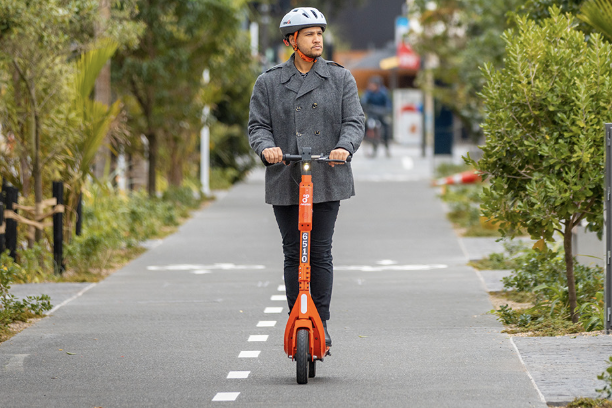
E-scooters will be allowed to use cycle lanes and children aged 12 and under will be able to ride bikes on footpaths with an accompanying adult under a package of transport rule changes confirmed by the Government.
Transport Minister Chris Bishop says the changes follow public consultation earlier this year, which attracted more than 6,000 submissions.
“Earlier this year we asked New Zealanders for their views on a range of changes designed to make our transport rules safer, simpler, and better suited to the way people travel today,” Bishop says.
“More than 6,000 people took the time to have their say. We’ve listened carefully to that feedback and, in some cases, changed our proposals as a result.”
One of the key changes will allow e-scooters to legally use cycle lanes, while another expands the Government’s original proposal on children riding on footpaths by permitting parents and caregivers to ride alongside them.
“One of the strongest messages we heard was that allowing children to ride on footpaths only solves half the problem if the grown up riding with them still has to use the road.
“That’s why we’ve adapted the proposal to allow parents and caregivers to ride alongside children on the footpath.
“Keeping kids safe while they’re learning to ride is common sense. This change strikes the right balance between protecting young cyclists and ensuring footpaths remain safe for everyone who uses them.”
Following feedback, the Government has also simplified its proposed overtaking rule for motorists passing cyclists, horse riders and other vulnerable road users.
“Instead of different distances in different circumstances, drivers will be required to leave a minimum gap of 1.5 metres when overtaking. That’s clearer for drivers and safer for everyone.”
Other confirmed changes include:
- Drivers will have to give way to buses leaving bus stops in areas where speed limits are 60km/h or less.
- Minor and technical changes relating to traffic control devices, including road signs, signals and markings.
The Government has also decided not to proceed with a proposal that would have given councils greater powers to fine motorists for parking on berms.
“We also heard strong views on the proposal relating to parking on berms, which would have given councils greater powers to fine the owners of vehicles parked on berms. After considering the feedback, we’ve decided not to proceed because it became clear the proposal wouldn’t solve the underlying problem.”
Bishop says the consultation process improved the final package of reforms.
“This is exactly what consultation should achieve. We’ve taken practical proposals, listened to New Zealanders, and refined them to get a better result.
“These changes are about fixing the basics: safer streets, clearer rules, and less bureaucracy getting in the way of everyday travel.”
The changes are expected to come into force before the end of the year through Orders in Council as part of the Government’s Land Transport Rules Reform programme.



Join the conversation