
Government appoints new chairs at EECA and Electricity Authority
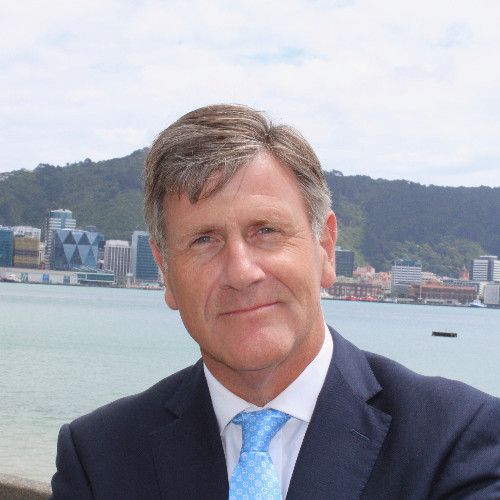
The Government has announced new leadership at both of New Zealand’s key energy regulators, appointing a new chair and three new board members at the Energy Efficiency and Conservation Authority (EECA) and a new chair at the Electricity Authority.
Wayne Eagleson takes over as EECA Chair for a three-year term, effective immediately, alongside new board members Nicholas Albrecht, Jonathan Kay and Jacqueline Cheyne. John Harbord has been appointed Chair of the Electricity Authority, also for three years and effective immediately.
Energy Minister Simeon Brown says reliable and affordable energy is central to New Zealand’s economic growth, and that the Electricity Authority must take an active role in delivering on the Government’s goals.
“Electricity should be an enabler of economic growth, not an inhibitor of it,” Brown says.
He expects Harbord to strengthen the Authority’s regulatory function to ensure the electricity market is delivering for households and businesses. On the EECA appointments, Brown says he looks forward to seeing how the expertise, new perspectives and fresh leadership will support the agency’s role.
EECA board refreshed with sector expertise
Eagleson is a well-connected figure in Wellington’s policy and governance circles. He served as chief of staff to Prime Ministers John Key and Bill English from 2008 to 2017, and previously as a senior adviser to Prime Minister Jim Bolger in the 1990s. Outside politics, he has held senior roles at Transpower, Westpac and DB Breweries, and is a director of government relations firm Thompson Lewis and of Wellington International Airport.
The three new EECA board members bring a range of electricity sector and governance experience. Albrecht is managing director of government relations firm Massey Coates and previously led government relations at Auckland lines company Vector for 14 years. He is also a trustee of the Eden Park Trust Board and a director of the Auckland Cricket Association.
Kay brings more than 30 years in the electricity industry, beginning as a process engineer at some of New Zealand’s largest industrial energy users before moving into senior roles at Vector, metering technology firm Landis+Gyr and Unison Networks. He currently chairs Waipa Networks and holds directorships at Counties Energy, Network Waitaki, Horizon Energy Group and Whitestone Contracting, giving the EECA board direct connections into the distribution businesses expected to carry significant load growth from electric vehicle (EV) uptake.
Cheyne is a professional director specialising in finance and sustainability, with 30 years in audit and advisory including 11 years as a Deloitte partner. She is deputy chair of the External Reporting Board, where she chaired the steering group that developed the Aotearoa New Zealand Climate Reporting Standards, and sits on the boards of Queenstown Airport, Pioneer Energy and EcoCentral.
New chair for Electricity Authority
Harbord arrives at the Electricity Authority from the demand side of the market. A barrister and solicitor with more than 20 years of experience on complex policy and regulatory matters, he is executive director of the New Zealand Shipping Federation. He has stepped down as Chair of the Major Electricity Users’ Group, the body representing the country’s largest industrial power consumers, to take up the role.
Brown also acknowledged the contribution of Erik Westergaard, who served as Acting Chair of the Electricity Authority and has agreed to continue on the board as Deputy Chair.
At EECA, the board farewells Chair Elena Trout along with members Judi Jones, Daniel Tulloch and Christopher Boyle.
Changes come at a critical time for EV and grid policy
The appointments come as both agencies are progressing significant work relevant to the EV sector. EECA is currently consulting on New Zealand’s first mandatory smart functionality requirements for EV chargers, with submissions closing on 4 September.
The Electricity Authority, meanwhile, is advancing complementary work on distributed energy resource interoperability, energy flexibility and distribution system operator capabilities, all of which will shape how millions of future EVs interact with the national grid.
Together, the two regulators will play a central role in determining how New Zealand’s electricity system adapts to growing EV uptake in the years ahead.

Join the conversation