
Smart charger rules take shape as EECA opens consultation
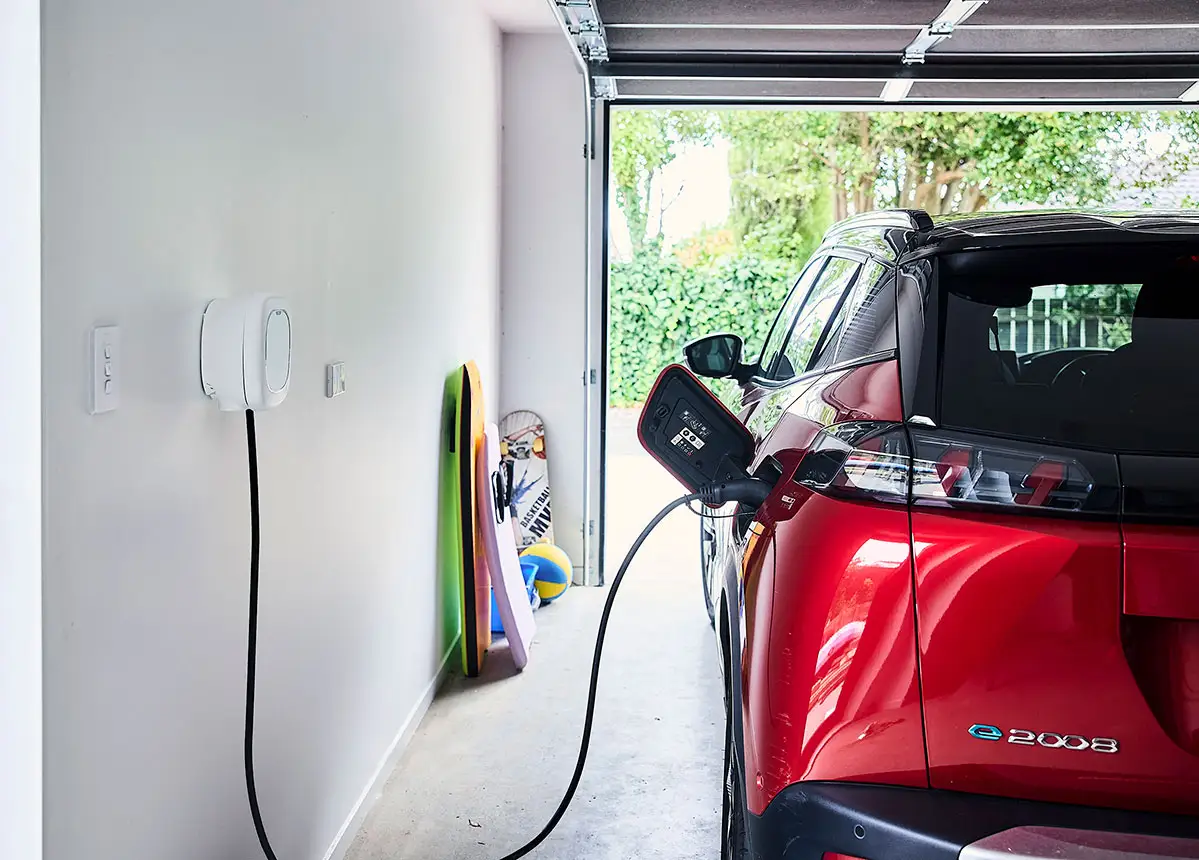
New Zealand’s first mandatory smart charging rules are a step closer, with EECA releasing a consultation paper on proposed technical requirements for EV chargers supplied here.
The Government agreed in April 2025 to regulate EV chargers for energy flexibility and labelling, and EECA is now seeking industry feedback on how the rules should work in practice. Submissions close on 4 September 2026.
The rules will apply to any charger with a maximum output above 2.4kW, making EV chargers the first product in New Zealand to be regulated for smart functionality. The initial focus is on residential AC units of around 7.4kW, which EECA says will contribute the most to managing evening peaks. DC chargers, AC and DC combination units, and AC chargers above 23kW are proposed to be excluded, as are second-hand units and chargers supplied before the rules commence.
At its core, the regime requires chargers to talk to the outside world. Every regulated charger must be able to receive external signals to start, stop, increase or decrease charging, using either an open standardised protocol such as OCPP 1.6 or above, or a proprietary protocol with published documentation that lets third parties build systems to control it.
Notably, EECA wants communication to be direct, without a cloud intermediary that translates or brokers the signal. The regulator says this reduces lock-in, allows consumers to switch between flexibility providers, and keeps smart functionality alive if a supplier’s cloud service is withdrawn or the company stops operating. That addresses a real risk in the current market, where a charger’s smart features can die with its manufacturer’s app.
Consumers keep the final say. Owners must be able to override any managed charging response, and chargers must keep charging on their last settings if they lose their communications connection.
The paper also proposes anti-herding measures to protect the grid. When thousands of chargers restart at once after a power cut, or multiple aggregators send signals to the same street, the simultaneous load swing can cause voltage and frequency problems. To manage this, chargers must apply either a randomised delay of up to 600 seconds before responding, adjustable up to 1800 seconds by networks or other systems, or a ramp rate limit of 0.75kW per minute for chargers of 7.4kW and below.
Other proposals cover data capture, with chargers required to log session start and end times and cumulative energy figures and store them for at least 30 days, overload protection for the local circuit, and a requirement that software updates cannot be used to strip out compliant functionality after supply. Labelling showing the supported protocol and version must be visible after installation and displayed in advertising, in store and online.
Suppliers will need to notify EECA before supplying a charger, through the joint trans-Tasman Energy Rating registration system, and provide annual sales data. Breaches will be a criminal offence carrying a fine of up to $10,000. Chargers imported via Australia can still be supplied under the Trans-Tasman Mutual Recognition Agreement.
EECA proposes two compliance pathways: a defined route spelling out exactly how to comply, and an outcomes-based route that leaves the door open for new approaches. The consultation asks whether the strict pathway should specify OCPP 1.6, 2.0.1 or 2.1, and whether older protocols should be ruled out.
Cyber security is the notable gap. EECA acknowledges unauthorised access to connected chargers could jeopardise energy security at scale, but says it has no mandate to set security requirements and none are proposed.
The rules depend on amendments to the Energy Efficiency and Conservation Act, with a Bill due before Parliament later this year. The Minister for Energy will make the final rules after a further consultation on the draft rules themselves, and EECA says there will be a sufficient run-off period for non-compliant stock before the requirements take effect.
The consultation paper is available on the EECA website. Submissions go to star@eeca.govt.nz by 4 September 2026.


Join the conversation