
Video: Honda Super-ONE first drive: the case against being sensible

At a glance
- Price
- $41,900 / $44,900 Kuro, + ORC
- Range
- 253 km NEDC (approx. 206 km WLTP)
- Battery
- 29.6 kWh
- Power / torque
- 70 kW / 162 Nm (BOOST)
- Drivetrain
- FWD
Honda is back in the battery electric vehicle (BEV) game in New Zealand, and this time it says it intends to stay.
The Super-ONE, the brand’s first kei-derived model sold here, goes on sale on 1 August at $41,900 for the standard car and $44,900 for the Kuro Edition, both plus $1,395 on-road costs. The Kuro is a trim package, adding a Crystal Black roof, larger piano black spoiler and black exterior detailing over the same mechanicals.
It arrives with recent history to answer for. Honda’s last electric vehicle (EV) here, the e:N1, launched in 2025, sold through its allocation and left the price list within a year. Honda New Zealand managing director Carolyn McMahon says the Super-ONE is a different proposition.
“Super-ONE is a long-term product. We’ve got plans for this model going out into the midterm,” she says, acknowledging the e:N1 was an opportunity taken rather than a strategy. “It’s not part of the product plan at the moment.”
She is candid about the global picture too, with Honda redirecting investment from battery electric toward hybrids. “I think the end destination is still the same, but we’re just calibrating how we’re getting there at the moment,” she says. “The investment and the development isn’t lost. I like to say it’s just paused for the moment.”
Supply is thin either way. Honda has secured around 50 cars through to March 2027, a quarter of them already sold before the on-sale date, with more volume under negotiation for 2027 and 2028.
The engineering
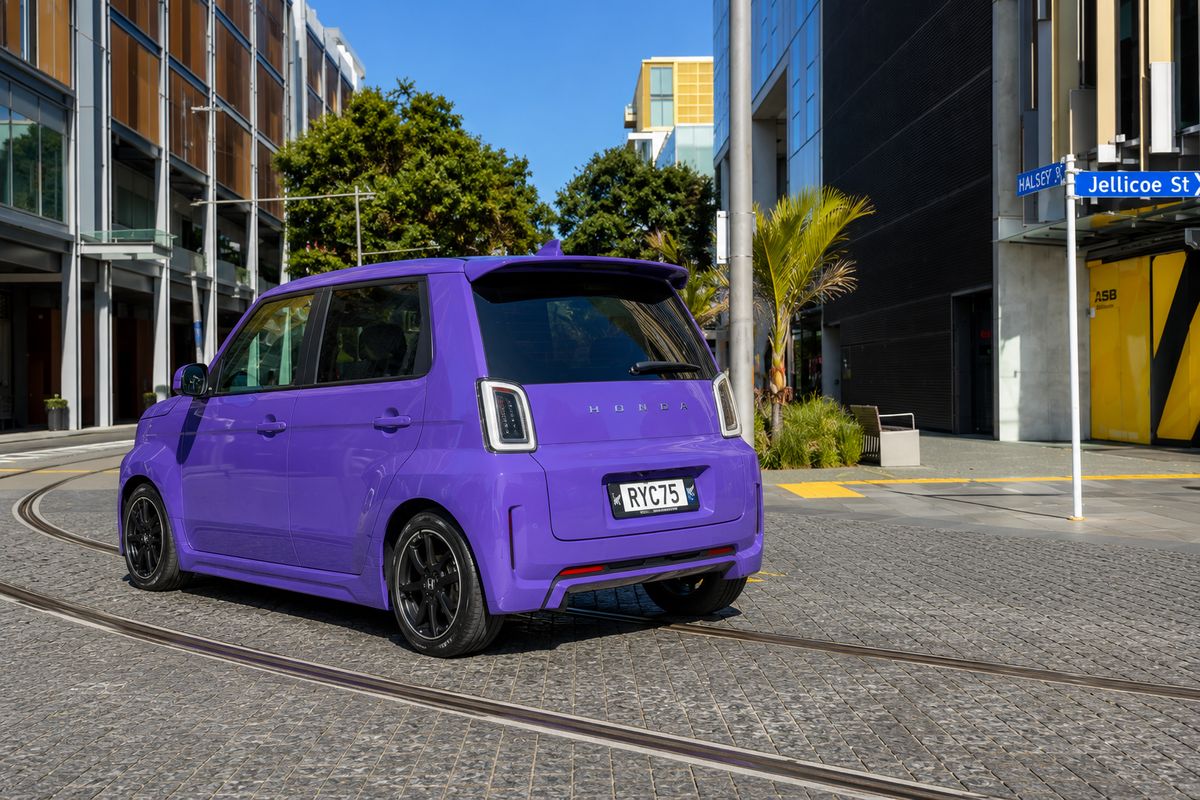
The Super-ONE is the widebody export version of the N-ONE e:, stretched 194mm longer and 98mm wider than the kei-regulation original on the same 2520mm wheelbase. At 3582mm and 1093kg it remains a genuinely tiny car by New Zealand standards.
The 29.6kWh pack comes from AESC’s Ibaraki plant, using the same fifth-generation laminated pouch cells as the incoming third-generation Nissan Leaf. Honda doesn’t officially confirm the chemistry, but it is understood to be nickel-based rather than the lithium iron phosphate (LFP) that dominates this end of the market — a choice that prioritises energy density in a car with very little floor to work with. That has real-world implications both ways: better cold-weather behaviour and more capacity per kilogram, but without LFP’s tolerance for daily 100 percent charging.
Honda claims 253km of range, and here the spec sheet deserves a raised eyebrow, because that is a New European Driving Cycle (NEDC) figure. On the Worldwide Harmonised Light Vehicle Test Procedure (WLTP), overseas listings for the same car say around 206km. Quoting NEDC in 2026 is an odd look for a brand-new model, and buyers comparing against WLTP-rated rivals should do the mental conversion.
Charging is 6kW AC via Type 2 and 50kW DC via Combined Charging System 2 (CCS2), with 15–80 percent taking around 30 minutes. The included cable is a 10-amp portable lead for a household socket, good for a full charge in roughly 12 hours, so a wallbox is effectively part of the purchase for most owners. Notably, the Japanese-market car uses CHAdeMO, so our CCS2 version is a distinct specification.
The single front motor delivers 47kW in normal driving, rising to 70kW and 162Nm when the BOOST button is pressed. BOOST also triggers a synthesised engine note and a simulated seven-speed gearbox with paddles, which is either the best or silliest thing Honda has done in years, and after a day with it I lean toward best. City mode enables one-pedal driving, and regen is adjustable on the paddles outside BOOST.
The drive
Around Auckland the Super-ONE is quick-steering, tidy and confidence-inspiring, with superb visibility. Push the full 70kW through the front tyres and there is genuine torque steer, though the launch cars’ liberally siliconed tyres may share the blame, and normal mode’s 47kW runs out of ideas at motorway speeds, making BOOST close to a permanent setting on the open road. Wind noise builds around the rear arches at 100km/h. The full Honda SENSING suite is standard and, refreshingly, does its work without unnecessary chimes.
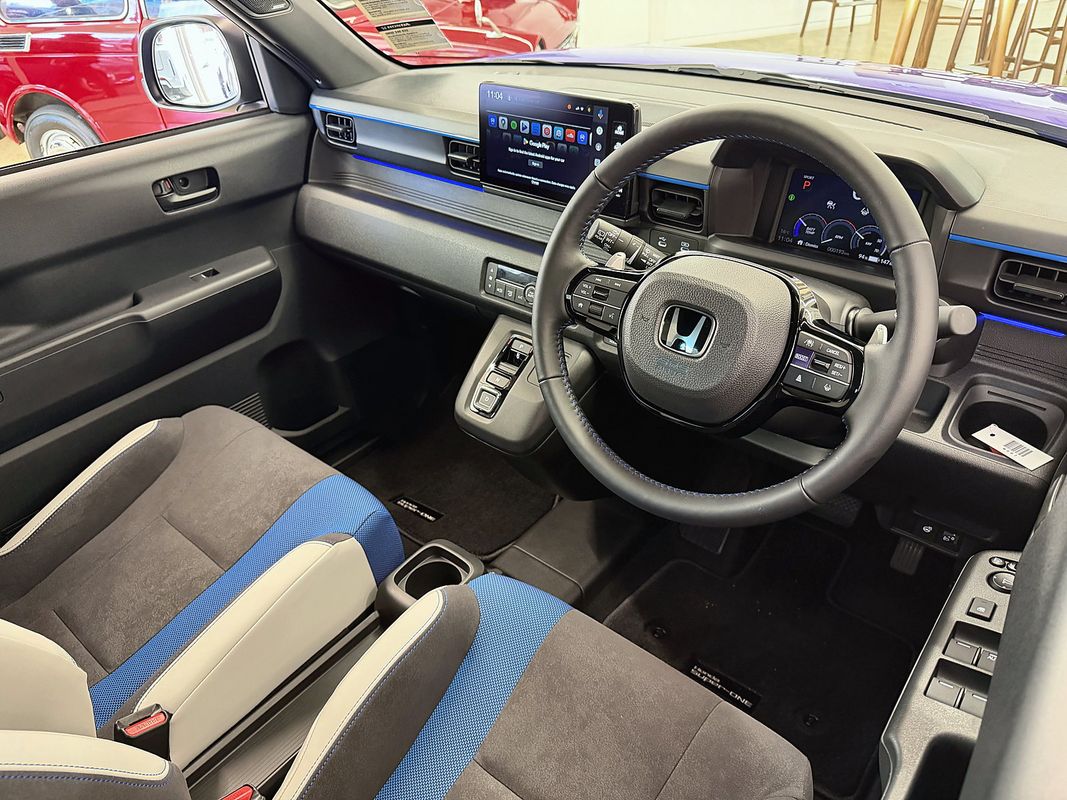
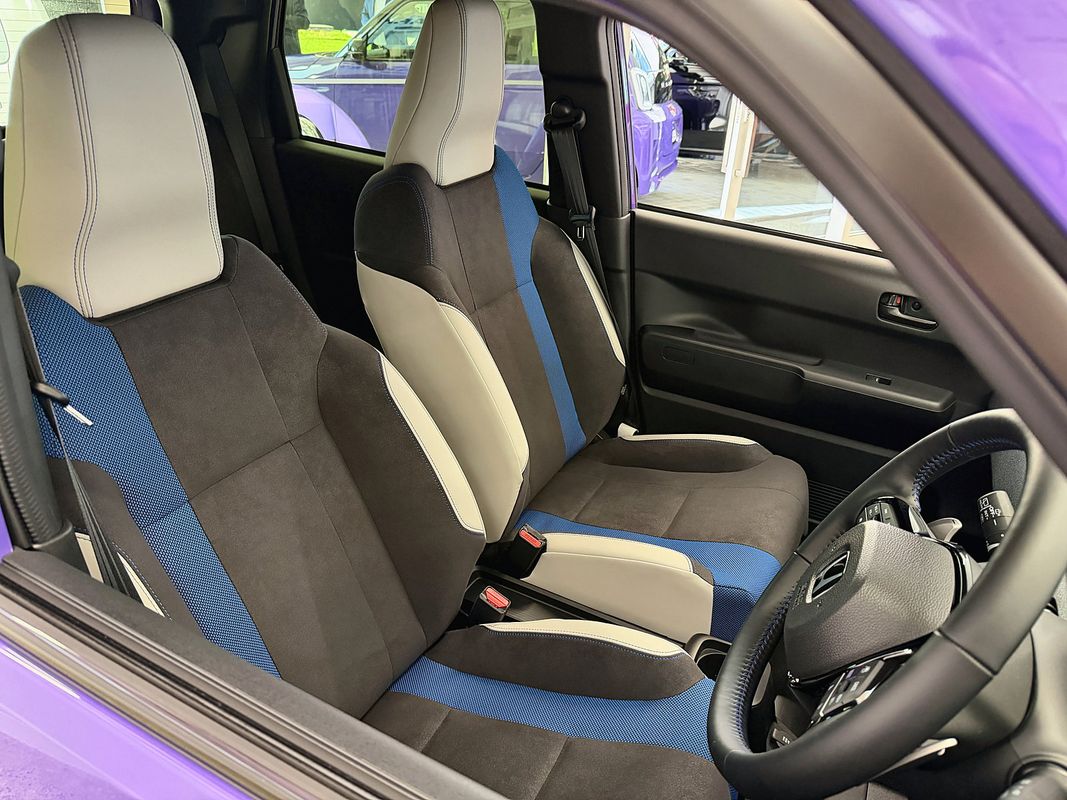
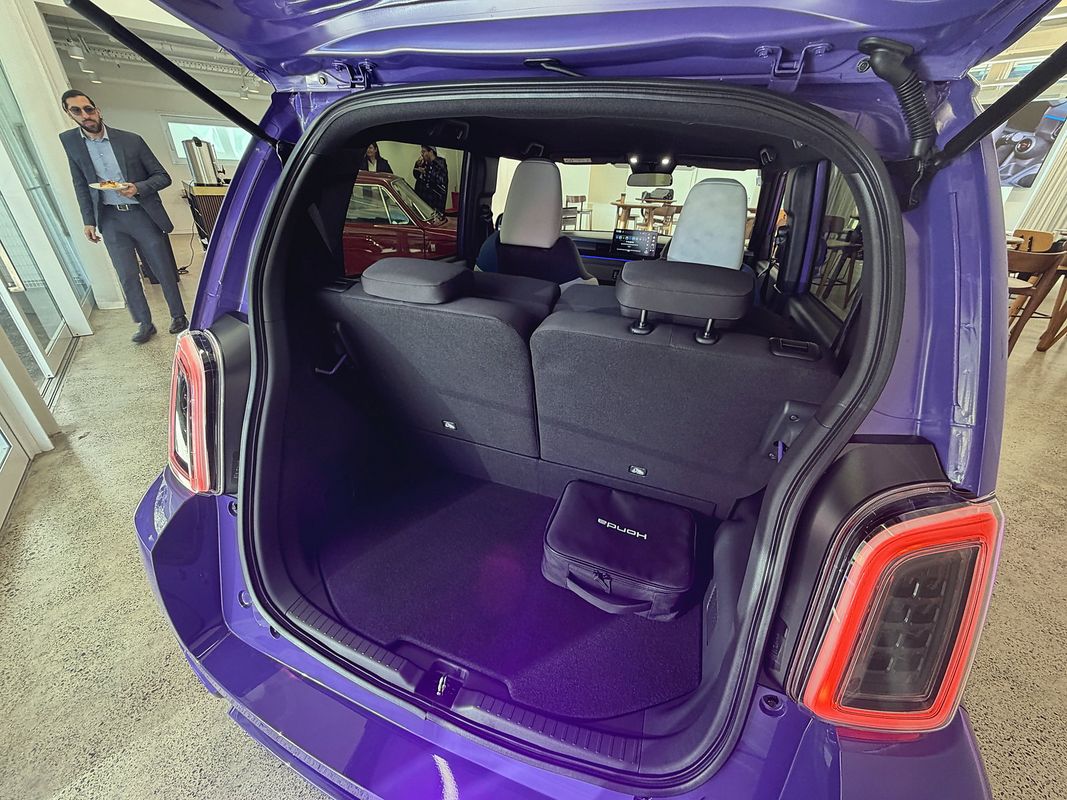
Packaging is the party trick. The 162-litre boot is small, but the 50:50 rear seats fold to open around 900 litres, and Honda’s Magic Seats tip up cinema-style for tall loads. The cabin gets built-in Google on a nine-inch screen, an eight-speaker Bose system with subwoofer, heated seats and steering wheel, and Honda Connect with app-based remote charging and pre-conditioning, free for three years with the renewal price still unannounced.
Servicing is where EV economics show up in Honda’s own numbers: its prepaid plans price a BEV from $1,299 over three years against $1,899 for a petrol car, with intervals at 12 months or 15,000km. Warranty runs to five years unlimited kilometres, with eight years or 160,000km on battery capacity.
The company it keeps
Here is the awkward part. The Super-ONE lands in a market where the small electric car has suddenly become very good value, and it is not competing on the numbers.
BYD’s Atto 1 Essential is $29,990 with a 30kWh Blade LFP pack and 220km on the proper WLTP cycle, and the $35,990 Premium brings 43.2kWh, 115kW and 310km. The Premium undercuts the base Super-ONE by six thousand dollars while offering roughly 100km more real range, more power and faster DC charging.
MG’s 4 Urban makes the gap wider still. At $38,990 it is a size class up, with a 54kWh LFP battery, 405km of WLTP range, 120kW, a five-star ANCAP rating and a conditional ten-year warranty. On any rational measure, it is twice the car for three thousand dollars less.
The Super-ONE’s counterargument is that neither of those cars makes anyone grin in a supermarket carpark. It has the design, the fake gearbox, the City Turbo II lineage and the sheer scarcity, and Honda is betting there are 50 buyers a year who will pay for character over kilowatt-hours. On the evidence of pre-launch orders, the bet is landing.
One more asterisk: unlike both rivals, the Super-ONE will carry no ANCAP rating, with Honda confirming the volume doesn’t justify local assessment.
For the segment, the Super-ONE is a healthy signal regardless of how many Honda sells. Every brand that treats a small EV as something desirable rather than merely dutiful widens the market, and a Japanese legacy maker doing it with this much conviction is worth having on our roads. We will put range, efficiency and charging claims to the test properly soon, with a full review coming on the EVs and Beyond YouTube channel.
Honda Super-ONE
Price: $41,900 / $44,900 (Kuro Edition), plus ORC
Motor: 70kW/162Nm front (47kW outside BOOST)
Battery: 29.6kWh AESC
Range: 253km NEDC (approx. 206km WLTP equivalent)
Charging: 6kW AC, 50kW DC CCS2, 15–80% approx. 30 min
Weight: 1093kg
Seats: 4
Join the conversation